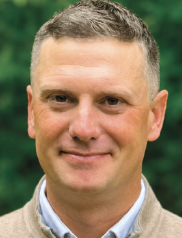
Noah Vinyard, PGA,Director of Instruction,Countryside Country Club,Clearwater, Florida
For many PGA of America Golf Professionals, the challenge in instruction isn’t identifying what’s wrong – it’s creating a system that helps players improve consistently while building confidence along the way.
At Countryside Country Club in Clearwater, Florida, PGA Director of Instruction Noah Vinyard (pictured below) has developed a framework that does just that. Coined as the “Triad Approach,” it centers on three core elements: physiology, language and belief.
The 2024 North Florida PGA Section Teacher & Coach of the Year, Vinyard credits his foundation to time spent learning from some of the game’s most respected instructors, including PGA of America Professionals Mike Adams, Jim McLean and Steve Atherton. Their combined influences have helped shape a philosophy focused not just on mechanics, but on the complete player.
“One of the biggest things is building the swing around the golfer, not forcing the golfer into a specific model,” Vinyard explains.
That principle forms the first pillar: physiology. Rather than teaching a one-size-fits-all motion, Vinyard tailors mechanics to each player’s physical traits – including height, mobility, strength and even eye dominance. When the motion matches the body, consistency and solid contact tend to follow.
The second pillar, language, addresses how golfers think and communicate with themselves. Vinyard emphasizes what he calls “transformational vocabulary” as using simple and intentional phrases to replace technical clutter and reduce tension.
“Technical overload can hold players back,” he says. “Simple, confident language frees them up to perform.”
Belief, the third pillar, ties everything together. Through visualization exercises, competitive games and structured drills, players learn to trust their swing and commit fully to each shot.
“Golfers have to see success before they can produce it,” Vinyard notes.
The results have been tangible. One of Vinyard’s long-term students arrived as a beginner and, over four years, developed into a scratch player now being recruited by major college programs. More broadly, he has seen players of all levels lower handicaps, compete with greater confidence and rediscover enjoyment in the game.
“When those three elements line up, golfers stop fighting themselves,” Vinyard says. “They start playing more freely.”
From a business standpoint, the structured approach has helped differentiate Vinyard’s instruction while building long-term relationships with students. The clarity of the system makes it easier for players to understand their progress and stay engaged over time – leading to retention, referrals and sustained growth.