The annual PGA of America Member Offering Survey collected a record 9,000-plus responses this year across all 41 PGA Sections. Overall, the results showed strong satisfaction for the programming offered by the Association, and for the value of PGA of America Membership.
For example, 80 percent of survey respondents reported satisfaction with PGA of America Membership, a year-over-year growth of 9.57 percent. Members are also satisfied with the Association’s redesigned logo, with the performance of their PGA Sections and with the value of PGA Membership.
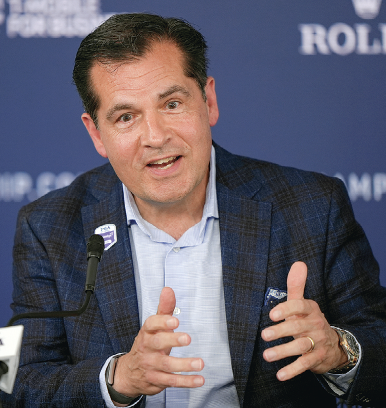
To go into greater detail on the PGA of America Member Offering Survey and how its results are used by Association leadership, we asked PGA of America CEO Derek Sprague and PGA of America Senior Director of Member and Section Operations Mike O’Donnell, PGA, to discuss it and what their biggest takeaways were from the 2025 survey, which was conducted by research firm Nielsen. Here’s what they told PGA Magazine:
More than 9,000 PGA of America Members participated in this year’s Member Offering Survey. Why is it important to the Association to solicit this feedback?
Derek Sprague: It’s important to have the pulse of our membership. It’s a large membership, and we want to know what they like, what areas they think need to be improved. The Association belongs to its members, and membership is optional. It’s essential that we check that pulse and make sure we’re prioritizing the needs of the members, whether that’s employment or education, or programs like PGA Jr. League that help them and their facilities grow the game and their business.
Mike O’Donnell: The most important thing we can do is listen to our members and understand what they’re thinking. Quite frankly, it’s as simple as that. And through this survey, we gain a better understanding of our members. It’s great that we’re getting feedback from a larger number of our members, but it all comes back to listening to and understanding our members so we’re delivering the programs and services that they clearly want and need.
How will PGA of America staff use the results of the survey?
Sprague: It gives us a way to set our priorities and how we prioritize the resources we commit to help deliver and go deeper in those areas members are finding valuable. That’s why it’s so important and encouraging to me that we had a record number of members taking the survey. Seeing a rise in high-level participation is a great sign that members value their membership, and that they’re seeing value in it. As we work on our budget this fall, we’ll utilize the survey results to put more resources in the areas that our members are asking for.
O’Donnell: As we get this feedback, we’re able to see the areas where members perceive the most value they get from their membership. That’s a clear indication of where we should focus strategically and allocate resources moving forward. We’re always aiming for continuous improvement, so we need to know if programs are seen as valuable, or maybe they need to be rethought or even sunset. So, I think this feedback helps us focus on whether we’re doing the right things, and are we doing them right and giving our members what they really need.
PGA of America Headquarters staff engaged heavily with the 41 PGA Sections in promoting and administering the survey. Why is that a strategic key for the Association?
Sprague: One thing we see as a priority at HQ is communication with our 41 Sections and EDs. There are challenges at the national and Section level with leadership turning over on boards every year, so we can’t just look at 2025 and forget about it. The EDs are very experienced and, in many cases, really long-tenured, and they provide continuity of leadership. So, it’s essential that we share all the survey information with them and see the priorities that different Section have. Our Sections are really innovative, and a lot of our national programs have gotten their start at the Section level. So, it’s important to see the priorities set out in the survey not just at the national level, but across the entire Association through the Sections.
O’Donnell: The Sections and EDs are a significant part of increasing the engagement of members in this survey. The record high response is due in large part to the collaboration between national and the Sections in making sure the awareness of this survey’s importance was understood. With Don Rea Jr. as PGA President of America, he’s prioritized having a Section Executive Director’s presence on all the national committees and working through the SBO. That communication and collaboration between HQ and the Sections has never been better, and that communication is definitely seen as a benefit in this survey.
What are your biggest takeaways from the survey results?
Sprague: A couple of things jump out at me. We’ve had great growth satisfaction with our Career Services team, going from 74 percent satisfaction in 2020 to now 90 percent. That’s incredible in a five-year period. For PGA HOPE, it’s no surprise that scores were incredibly high, with 92 percent seeing the impact on our Veteran community and to our PGA Members, as well – we get a lot of satisfaction out of helping our Veterans. And to come back to the record number of members who took the time to respond to the survey, I’m really pleased with that. A lot of time people only respond to a survey when they have negative feedback to share, and that wasn’t the case here.
As a PGA Member who’s just getting started as CEO, I want our members to be satisfied, and everyone knows we sometimes have to make difficult decisions. To have guidance like this directly from our members is great. We always have room for improvement, and one of our shared values at HQ is to get better every day, and to look at everything through the lens of serving our members and growing the game. The member survey is one way to make sure that we’re delivering what they want and need.
O’Donnell: I see the importance of continuing to prioritize recruitment efforts, career consulting efforts and ExecuSearch, everything that touches on employment from entry level throughout a career progression. That continues to be a tremendous value for our members.
We are leaning in and adding to those resources to help members maintain their relevancy in their skills, so owners and operators see the value of hiring and retaining members. The importance and value of Career Services comes across loud and clear in both the survey and our daily feedback from members with our team. Similarly, we’re seeing the value of our growth of the game initiatives in this survey, through the revenue it’s driving and the sustainability of the programs that is bringing growth to their lives and careers.
So, I’m very pleased with the feedback on everything we’re doing to grow the game and support careers in employment, and I would say long may those two things continue.