Thinking about technology in golf terms probably brings to mind things like titanium drivers, game improvement irons, urethane-covered golf balls or advanced launch monitors. In environmental terms, however, golf technology is a toolbox filled with devices for measuring turf and water, custom designed grasses for different climates and novel irrigation methods.
“Technology isn’t all computers and Silicon Valley stuff,” says Matt Pringle, Ph.D., Managing Director of the USGA Green Section. “There’s an art and science to delivering better turf for better golf and lower costs. The most valuable asset any facility has is the golf course, and we’re seeing a revolution in technology and agronomy practices.”
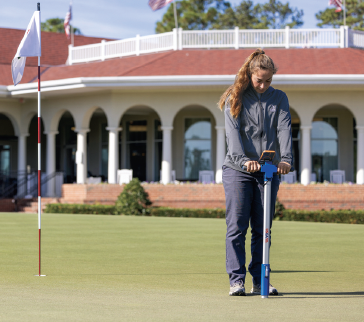
The USGA Green Section is dedicated to the science and sustainability of golf course maintenance through research, course consulting, education and data. Many courses are using technology developed by the USGA Green Section to monitor course conditions, such as the GS3 ball for measuring green speed, smoothness and firmness, and the USGA Moisture Meter for helping manage water usage, turf health and golf course playability.
To Pringle, the fact that these tools help golf facilities improve their environmental impact is a positive side effect of their true goal.
“Not to sound dismissive, but when we talk about ‘the environment’ that’s not really on the top 10 list of concerns for most golf maintenance teams,” Pringle says. “For everyone on the golf operations side, including PGA Professionals, the No. 1 job is to create a great golf experience. Full stop. Because if you don’t have that, and you don’t have a sustainable golf course, you have a bad business.
“It’s a bar that gets higher and higher every year. You look at the cover of a golf magazine from the 1950s and the courses look terrible compared to today’s courses. So, we help courses meet that challenge by focusing on supporting research on the most effective use of water and nutrients and pesticides and labor and energy, and use them to deliver that playing experience. It’s how to create better turf for better golf at a lower cost.”
The USGA Green Section’s tools are able to help golf courses improve their environmental impact today, and Pringle also hopes to help PGA of America Golf Professionals and course owners/operators plan for climate-related environmental changes in the future. Regardless of debates over its cause, Pringle has no doubt that the climate is changing in ways that will greatly impact golf courses across the country.
“There are absolutely a lot of things in terms of the gross shift of climate that are happening all the time now,” Pringle says. “The calendar of growth activity is changing. I mean, a superintendent isn’t just whipping out the calendar they had in 1985 and saying, ‘We’re just going to do the same thing.’ Strategies have to evolve.
“I’m in Pinehurst, North Carolina, which is in the transition zone today, but what’s the transition when that zone moves north?”
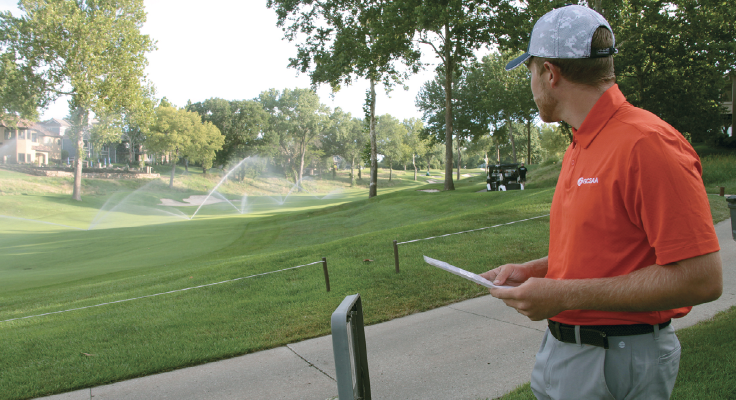
Pringle says now, when many courses around the country are planning updates or renovations, is the time to think about environmental factors. Northern facilities should be considering warm weather grasses like Bermuda and Zoysia, while coastal courses should be preparing for higher water levels and a potential loss of coastline. Western golf courses in the Colorado River Basin need to seek long-term solutions to water usage with access to water dwindling due to climate and urbanization depleting water sources like aquifers.
“There are risks now that golf courses have to plan for that we’ve never had to plan for, and there are absolutely chronic and acute climate-related issues,” Pringle says. “And yet each and every day, we find a way to open our golf courses and deliver that golf experience that millions of people love. It’s remarkably challenging, but I think we’re going to find ways to win.”
To ensure that golf keeps winning, Pringle advises PGA of America Professionals to continue working hand in hand with superintendents to preserve the value of golf courses and ready them for generations to come.
“The PGA of America Golf Professional and the course superintendent are partners in delivering a great golf experience,” he says. “It’s like the front of the house and the back of the house working together, and everyone wants the golfer to walk off the course saying, ‘That was awesome!’”