For 17 years, researchers from the Sea Turtle Conservancy, the oldest sea turtle conservation group in the world, have hosted the Tour de Turtles, an annual event that measures sea turtles’ magical migration. Across the southeastern United States, organizations, including Disney Cruise Line and the Disney Conservation Fund, participate in this summertime race in an effort to promote the protection of sea turtles and raise awareness about the threats to their survival. Among the long-standing participants is Disney’s Vero Beach Resort, celebrating its 30th anniversary this October. Situated along Florida’s Treasure Coast, this idyllic beach hideaway is home to the largest nesting area of loggerhead sea turtles and is recognized as one of the species' last strongholds for nesting in the world. As this magazine mails, the resort’s nearby seaside will officially enter nesting season, and Disney’s Conservation team will work to ensure that all sea turtle species have a safe and welcoming place to nest.
Disney Files Magazine caught up with Disney's Animals, Sciences & Environment Conservation Programs Manager Emily Hardin to “talk turtle,” from the year-round efforts to protect these creatures to the additional work that takes place during nesting season to what’s in store at this year’s Tour de Turtles event.
Tracking and Protecting
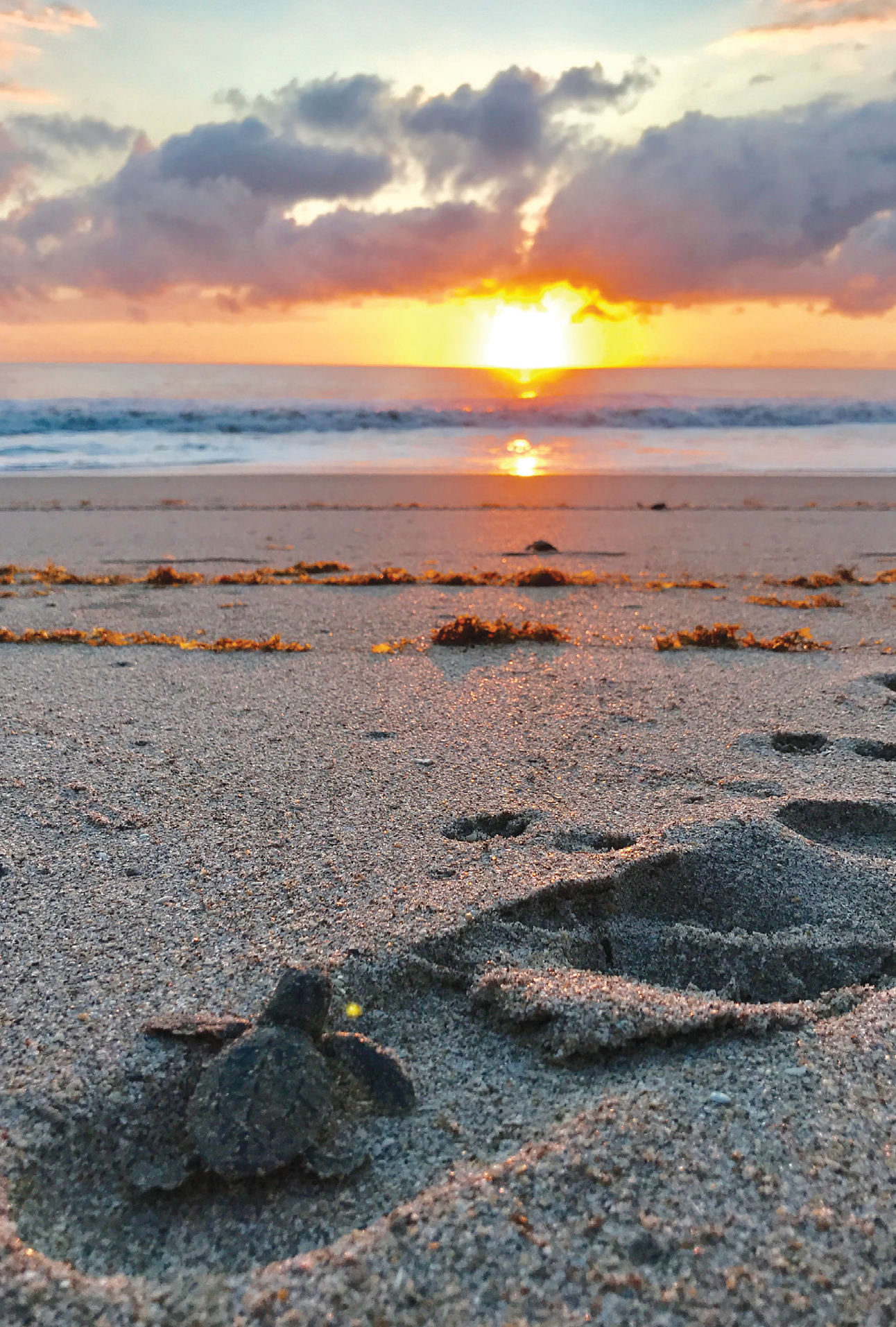
During nesting season, from about mid-April through October, Disney’s Conservation Cast wakes up early each morning to search for signs of overnight turtle tracks and nests, studying the former to unlock clues and protecting the latter from inadvertent damage by beachgoers.
“It’s fascinating the stories these turtles tell from the tracks they leave in the sand,” said Emily (hear more from Emily in the “Membership Magic Makers” profile on the pages ahead). “From their characteristic crawl patterns, we can identify the species (loggerhead, green or leatherback) and determine whether she successfully nested or if there's evidence of an abandoned nesting attempt, which we call a ‘false crawl.’”
After protecting identified nests with stakes and flagging tape, Emily and team monitor nests throughout their incubation and through hatching to collect information that may aid in a broader conservation effort that takes place along this 3-mile stretch of beach, which, in a good year, can be home to more than 1,000 sea turtle nests.
“Every little detail is worth noting – from measuring the success of an egg chamber to addressing the challenges posed by predators of nests,” Emily explained.
As for those “false crawls?” While sometimes it seems that a turtle may just be scoping out the area for a later nesting attempt, these crawls can be caused by disturbances on the beach and are preventable. From keeping turtles’ pathways clear of debris to employing turtle friendly lighting, the resort is dedicated to maintaining the best possible environment for nesting.
“The resort’s turtle-friendly lighting plan is specifically designed to minimize lighting impacts to sea turtles,” Emily said, noting that, because turtles’ instincts tell them that light means the ocean, improper light can disorient nesting turtles and send emerging hatchlings away from the ocean. “For example, the resort installed amber-colored lights along its boardwalk, with a red spectrum that’s less visible to turtles at night. The cottage windows have protective window tints that allow safe illumination that won’t reach the beaches (though Members and guests are encouraged to close their curtains for added protection). Even the large seagrape shrubs, which mainly stabilize the shoreline, create a massive covering that filters light coming from the resort's rooms and villas.”
Turtles on ‘Tour’
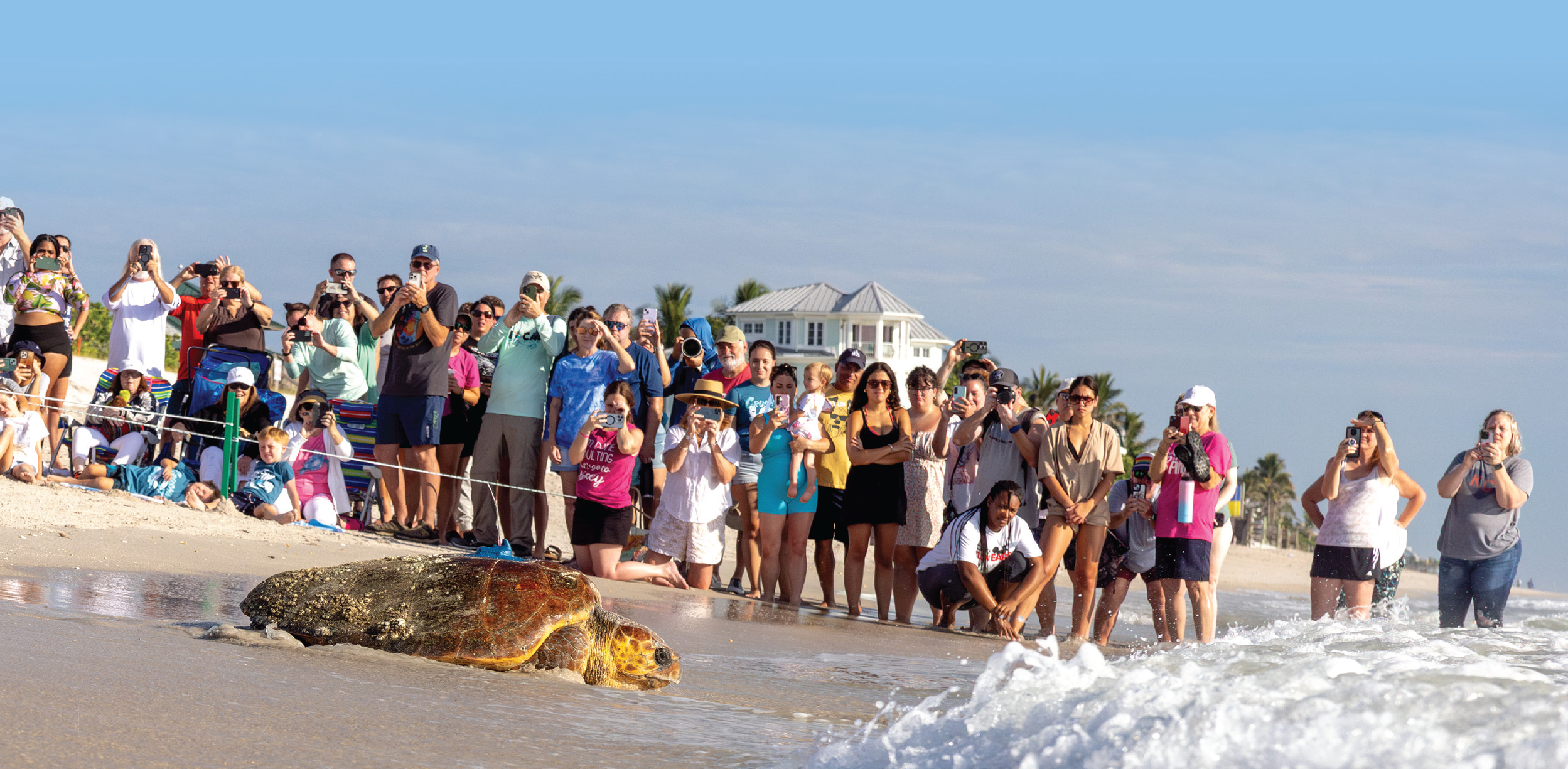
The last Saturday of each July (so July 26 this year), the resort participates in a conservation-driven event known as the “Tour de Turtles,” releasing sea turtles outfitted with satellite transmitters that will track the creatures’ migration across the “big, blue world,” revealing behaviors, migration routes and habitat preferences. The turtle that travels the greatest distance during the monitoring period is deemed the winner of the “race.” (Participating turtles undergo medical examinations – including ultrasound scans – before their release, helping researchers gain a baseline knowledge of the turtles’ health.)
“Ironically, sometimes the more data you get, the more questions you have,” Emily said. “We’ve tracked almost 30 turtles since Tour de Turtles started in 2008, and we’ve recently seen two turtles swim in entirely different directions than their usual journey south toward The Bahamas, Cuba and the Caribbean.”
The 2024 Tour de Turtles grand prize winner was Ebb, the first Disney-sponsored turtle to win the race. Ebb swam an impressive 1,100 miles up the coast, finishing near New Jersey.
While eager to see who will take home the prize this year, Emily is equally excited to engage Members and guests at the event, giving “race fans” an up-close look at the two competing turtles, sharing insights into the ongoing conservation efforts, testing fan’s knowledge with educational trivia and more.
How far they’ll go
As sea turtles are a vital part of the ecosystem, research by Disney’s Conservation team and the Sea Turtle Conservancy is centrally focused on increasing biodiversity and inspiring others to take action in making a happier, healthier planet.
“I find it so cool how everything in the ocean is so interconnected,” Emily concluded. “The minute that one species is impacted, it’s going to have a whole cascading effect on the entire ecosystem, and it’s our responsibility to create a safe space for sea turtles to thrive and have a habitat available to nest and forage – year after year.”