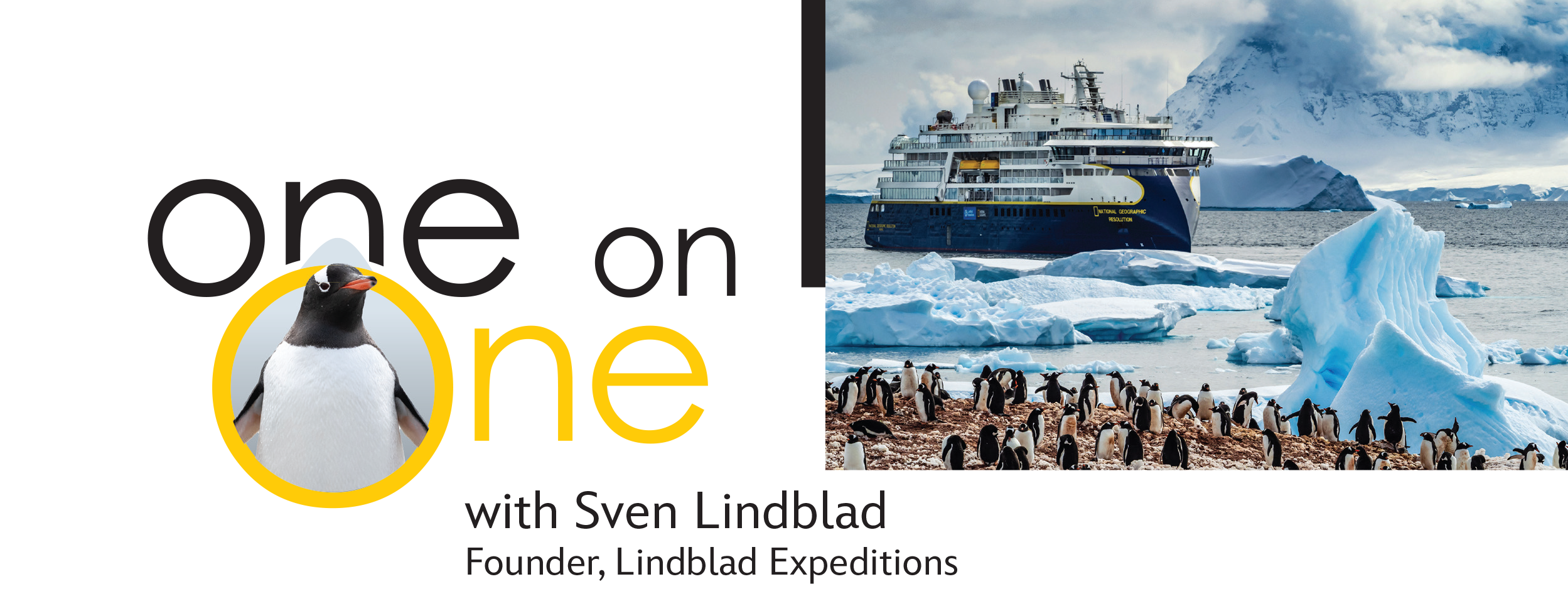
For more than 50 years, Lindblad Expeditions has invited adventurous travelers to explore some of the world’s most captivating places in pursuit of connection and discovery. Since 2004, those expedition cruises have sailed in collaboration with National Geographic – combining the strengths of two iconic exploration brands to create the most experienced team in expedition travel.
With eligible* Disney Vacation Club Members soon able to book National Geographic-Lindblad Expeditions cruises using vacation points, Disney Files Magazine Editor Ryan March (who, in the winter 2024 edition of Disney Files Magazine, shared insights from his National Geographic-Lindblad Expeditions cruise through the Galápagos Islands) sits down for an visit with Lindblad Expeditions Founder Sven Lindblad.
The Switzerland-born son of the late adventure-travel pioneer Lars-Eric Lindblad, whose global travels included leading some of the first non-scientific groups of civilian explorers to Antarctica (1966) and the Galápagos (1967), Sven spent the early years of his career photographing wildlife and assisting documentary filmmakers in Kenya, deepening a lifelong love of nature. Moving from East Africa’s “sea of grass,” as he calls it, to the actual sea, Sven built on his family’s legacy as the pioneers of modern expedition cruising and founded what would become Lindblad Expeditions, an innovative travel company offering marine-focused expeditions aboard small ships.
While Lindblad Expeditions has grown its once single-ship operation into a global commercial enterprise, it’s done so with an unwavering commitment to community and conservation.
Sven and Ryan chatted about the decision to follow a father’s footsteps, Lindblad Expeditions’ relationship with National Geographic and the ultimate measure of success for expedition travel.
Ryan: You’ve spent much of your career building on the legacy of your late father, who’s regarded by many as “the father of ecotourism.” At what point in your life do you remember being inspired to follow in his footsteps?
Sven: It really started when I was in Kenya. I went for a summer when I was 19 years old and ended up staying for seven years. I had absolutely zero interest in getting into the travel business. I wanted to be a naturalist. I wanted to be a filmmaker. I was very keen on photography. One day, my father came to my camp and asked if I’d come back and work for him [and his travel business]. He was a heroic figure for me, but I hardly ever saw him, because he was traveling all the time. I always admired, not only his achievements, but also his deep belief that travel was an opportunity to build understanding. So, when he asked me to join him, I couldn’t say no.
Ryan: You eventually led a new division of the family business called “Special Expeditions,” which expanded and evolved to become Lindblad Expeditions – operator of the National Geographic-Lindblad Expeditions cruises that our Members can soon experience. As you considered potential collaborators for your business, what do you remember drawing you to National Geographic?
Sven: Through my entire life, National Geographic was the resource I’d turn to whenever I wanted to learn about geography, culture and history. It was my connection point to the world. The National Geographic tagline back when we first began partnering was “the world and all that’s in it.” I remember walking in to meet with the CEO of National Geographic and saying, “You represent the world and all that’s in it, and we are the people that take you there. We are natural partners.” He agreed, and it’s been an extraordinary relationship for more than 20 years now.
Ryan: National Geographic-Lindblad Expeditions cruises are quite different from those you’d experience on a traditional ocean voyage cruise ship. I recently sailed on one with fewer than 40 guests, and it was incredible. Why is it so important to limit these experiences to such small groups?
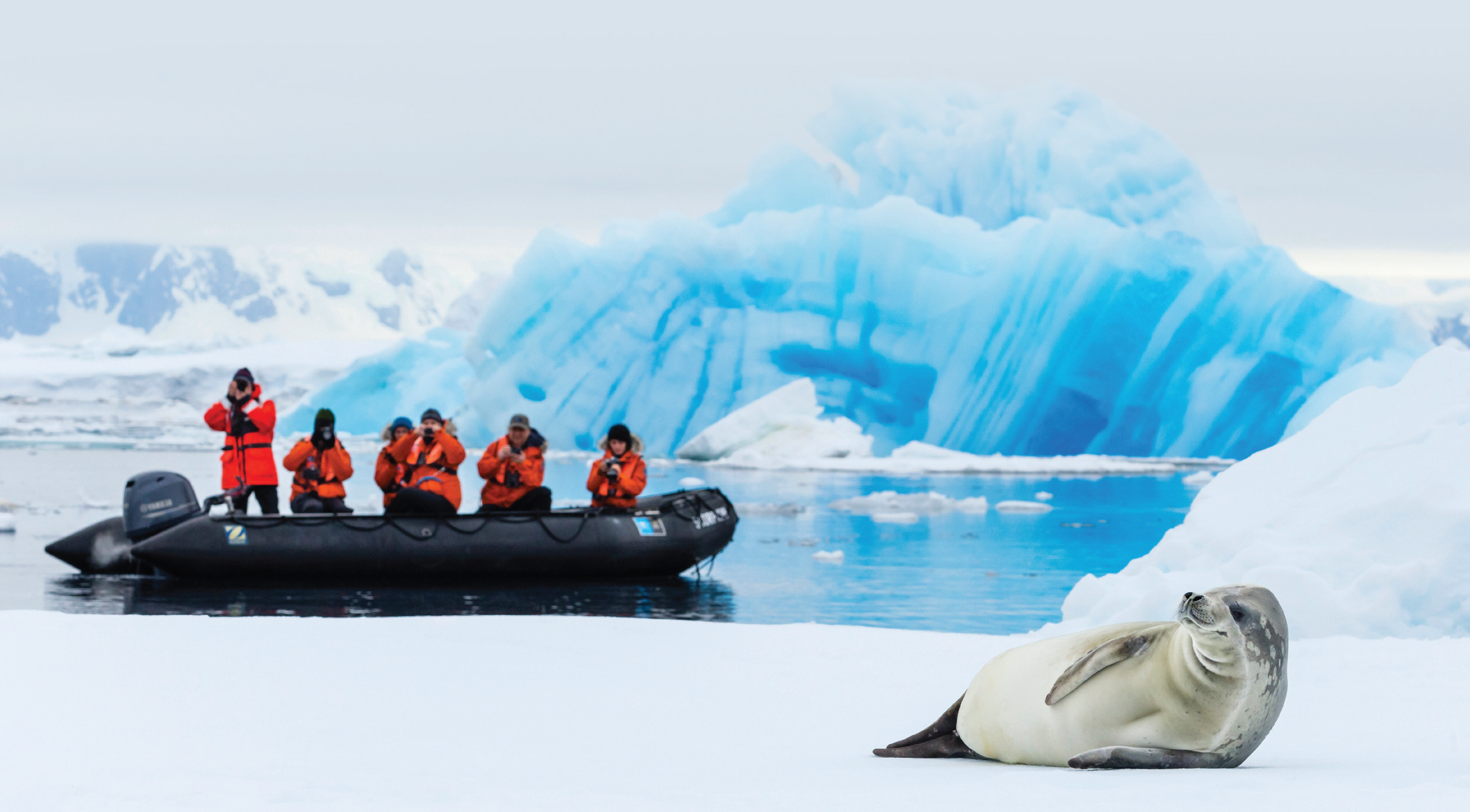
Sven: You simply can’t embark on a true expedition as an enormously large group. That’s not to say large or small cruise ships are better or worse – they’re just different, and expeditions are, by their very nature, intimate experiences. Whereas the ship itself plays a leading role in a more traditional cruise line, expedition ships, while delivering an outstanding onboard experience, are mission-built to connect you to the world beyond the ship. I remember back in Africa, we had mobile tent camps. That’s really how I see expedition ships – platforms from which you engage with the world outside. And in order to engage with those pristine, natural places in a responsible fashion, you must do so in small groups. That creates a communal experience – one that fosters the kinds of conversations among travelers that inspire them to support the mission.
Ryan: As you look to the future of expedition travel, what, from your perspective, is the ultimate measure of success?
Sven: While business metrics matter, the ultimate measure, for me personally, is the answer to the question, “What effect will we have had on humans’ relationship to the planet?”