D
ealership service lanes face constant pressure to serve high volumes of customers quickly and reliably. Today’s customers expect a frictionless check-in that lets them hand over their keys and get on with their day. Rising expectations for transparency and quality compound the pressure, especially as staff levels remain tight. In this environment, even small inefficiencies can undermine satisfaction and retention. A streamlined, transparent inspection process is essential.
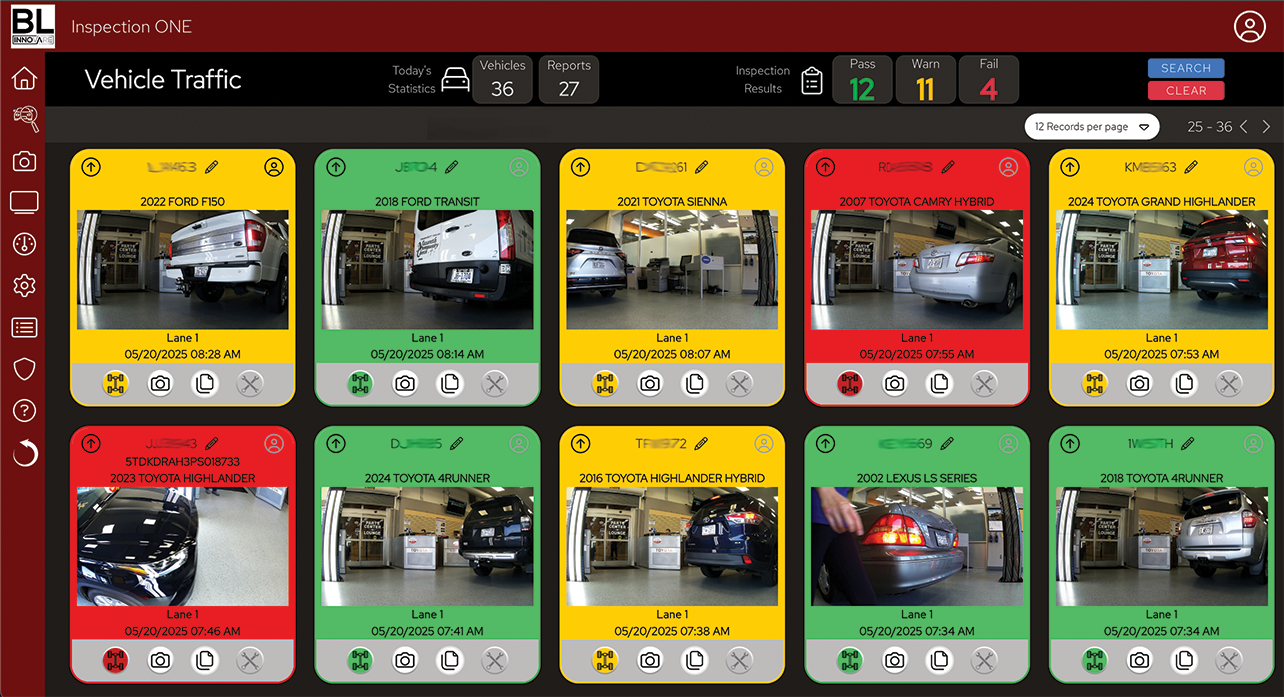
Many dealerships are implementing automated inspection-lane technology. With advanced sensors, imaging powered by AI, and connected hardware, these systems detect tire wear, body damage, and alignment issues in seconds. They streamline inspections while enhancing credibility through data-backed reports.
Still, no system succeeds without the right people. From advisors presenting results to technicians verifying them, dealership staff are the bridge between high-tech tools and positive customer experiences. This article explores how inspection solutions are reshaping service lanes. They are highlighting success factors like integration, training, and ROI while outlining critical questions for evaluating these investments.
Inspection-lane technology includes automated or semi-automated systems that rapidly assess a vehicle’s condition. Using camera arrays, optical sensors, and undercarriage scanners, these systems flag tire wear, body damage, and alignment or suspension problems in seconds. AI-driven software interprets the data and flags issues needing attention.
In dealership service lanes, these tools replace manual checks, minimizing human error and accelerating data collection. This boosts accuracy for warranty work and repair recommendations, freeing staff to focus on tasks of higher value. Still, the technology’s value depends on people — advisors interpreting data and technicians confirming findings ensure real-world results and customer peace of mind.
The market for inspection‑lane technology spans multiple vendors and offerings. Established technology providers may offer end‑to‑end solutions integrating with dealership systems, while AI‑focused startups often specialize in advanced imaging or diagnostic software. Regardless of source, the goal is clear: faster, more reliable inspections that improve transparency and profitability. To succeed, solutions must be easy to use, with ongoing training so staff fully adopt the tools.
Automated inspections streamline operations while elevating the customer’s experience. These systems capture critical data in real time and complement traditional multi-point inspections. By shortening routine check times, they reduce wait times and allow staff to focus on personalized service — vital in today’s high-demand settings.
Modern solutions detect small issues — uneven wear or subtle misalignments — with precision beyond manual checks. This accuracy creates upselling opportunities. Whether alerting a driver to a needed brake replacement or suggesting an alignment, timely insights increase revenue while reinforcing a reputation for expert care.
Digital reports also build trust. Clear visuals and data support recommendations, helping customers understand issues and building loyalty in a competitive market.
Inspection-lane technology can transform service operations — but only with full buy-in across the fixed ops team. Greeters, advisors, and managers must all embrace the tools for lasting impact. Key considerations include:
• Clarify Your Goals - Start with a clear vision — whether boosting revenue, improving throughput, or both. Set measurable targets and communicate them to the team so everyone understands their role in achieving success.
• Evaluate Capacity and Seasonality - Assess bay usage and whether your team can manage added repairs. Factor in seasonal spikes like winter tire changes that may strain resources. Quality service during peaks is standard business practice for a well-coordinated team.
• Consistency Across Locations - For operations with multiple stores, consider standardizing tools and processes. This supports staff mobility, streamlines training, and fosters best-practice sharing across teams.
• Prioritize Training and Onboarding - Plan for ongoing training beyond the initial rollout. Advisors, technicians, and managers must know how to use the tools and interpret the data. Account for staff turnover by building a strong onboarding program. Adoption depends on people. When they feel confident, they’ll embrace the system.
• Track Performance and Reinforce Accountability - Define KPIs such as inspections performed or upsells generated. Monitor results, provide feedback, and celebrate wins to reinforce progress. Accountability supports sustained improvement.
A successful rollout requires clear goals, strong training, and team alignment. But above all, it depends on people. When employees understand the value, master the tools, and communicate effectively, technology delivers—and customer loyalty grows.
To choose the right solution, assess how it aligns with your goals, culture, and infrastructure. Use these questions as a guide:
Objectives & Requirements
• Are we trying to reduce inspection time, improve accuracy, or both?
• How will the team manage an increase in recommended services?
• What’s our daily vehicle throughput, and can we scale?
Team Readiness & Culture
• Are our team members open to new tools?
• Do they understand how it helps customers and the business?
• What’s our plan for onboarding and ongoing training?
Technical Fit
• Does this integrate with our existing tools, and workflow?
• Where will we install it, and how might it affect lane layout?
Vendor Credibility & Support
• Does the vendor have relevant experience and references?
• Will the vendor support updates, training, and troubleshooting?
Total Cost of Ownership & ROI
• Beyond hardware, what are the ongoing costs?
• What ROI do we expect — revenue, throughput, satisfaction — and how will we measure it?
The automotive industry is evolving, and tools like automated inspection lanes help dealerships meet rising expectations for speed and service. But true transformation comes from people. Advisors, technicians, and managers bring the technology to life.
By investing in training, setting clear goals, and communicating purpose, dealerships can turn inspection tech into a high-impact asset. It’s not just about efficiency — it’s about empowerment. When teams understand that tech enhances rather than replaces their judgment and skills, they’ll use it to strengthen customer relationships and drive growth.
Carol Kilner is the CEO of BL Innovare, where she has spent the past six years leading the company’s growth with a strong focus on customer engagement and new product innovation. With over 20 years of experience in the vehicle inspection technology space—spanning both technical and strategic roles—she brings a customer-first mindset and a drive to deliver solutions that solve real-world problems. Under her leadership, BL Innovare is committed to setting the standard in vehicle inspections with inventive technology and bold thinking. Outside of work, Carol is an avid endurance athlete who enjoys running, biking, and swimming, and regularly competes in Ironman events.