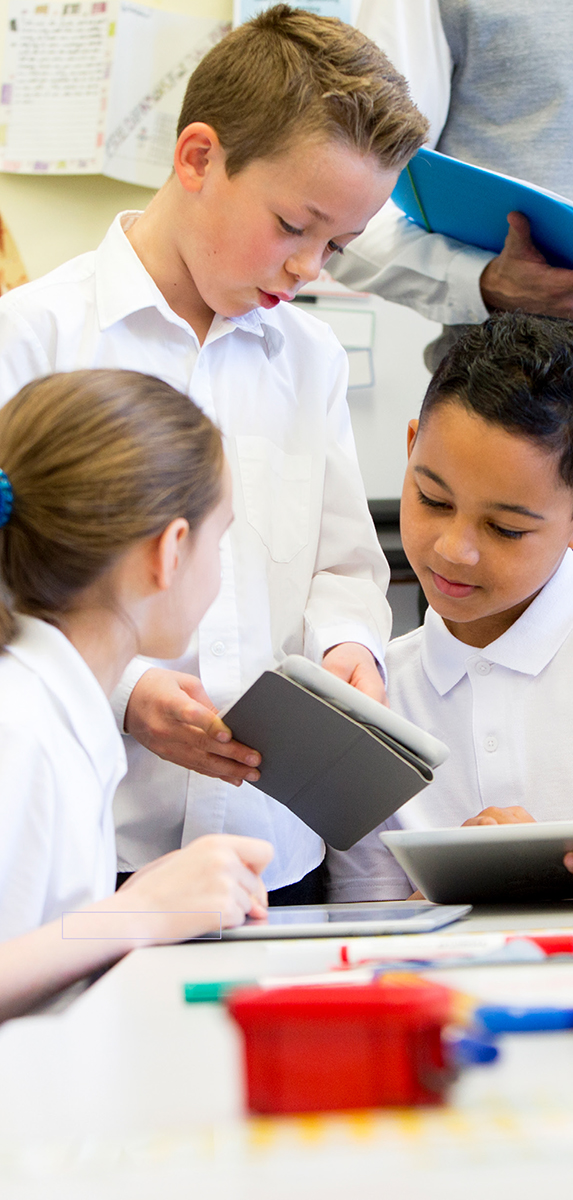
As a former elementary school principal, my responsibilities included teacher observations and evaluation. I would use a rubric for consistency and focus, however, there was a second grade classroom where my focus on evaluation would become challenging. This was due to the outstanding classroom environment the teacher had created. I would find myself becoming a student as the teacher fostered an environment filled with support, engagement and high expectations. It was masterful.
Teaching about the classroom environment through coaching and presentations is now part of the work I do with the Andrew M. Greeley Center for Catholic Education at Loyola University Chicago. A positive classroom environment is a priority because it is foundational for learning and aligns with Catholic schools’ commitment to supporting the whole child (NSBECS, 2023; Mucci, 2015). The integration of social, emotional and academic development is critical for an effective learning environment. It is important for students regardless of their geographical setting or socio-demographic background (Jones & Kahn, 2017). Maintaining a positive classroom environment establishes respect, allows for academic risk-taking and builds comfort (Novak, 2022). When students receive emotional support, they are better able to regulate their emotions, succeed academically, engage more socially and improve motivation (Pekrun, 2014; Jones & Kahn, 2017).
This article focuses on simple methods to improve your classroom environment. It does not cover all methods but highlights a few key levers. Newer teachers may utilize this article to build foundational skills, while more experienced teachers may read from the lenses of self-assessment to ensure these skills remain in place.
Although our hope may be that students arrive at school ready to work hard, focus and persevere, that is not always the case. Educators must build a classroom environment where learning is clear, important and celebrated (Novak, 2022; NSBECS, 2023). Students and parents benefit from learning objectives being communicated in various ways. It can build the momentum and excitement around the learning in the classroom.
A classroom environment focused on learning can also be established by building students’ pride in their work and celebrating success. When students know their teacher believes in them, they are more willing to take academic risks, persevere to meet high expectations and take on challenges (Novak, 2022). Here is an outline of a few methods to build a classroom environment that prioritizes learning:
Returning to the objective with enthusiasm builds momentum for an environment that values learning. While posting the objective may be a requirement from your school, referencing the objective to your students allows them to connect their work to a purpose. When they are on the carpet, clearly articulate the purpose of what they are learning. Once the students are working at their table spots or sharing out, connect their work to the objective.
Why wait until the end of a project to celebrate academic achievement? Students respond to positive reinforcement, feedback and recognition of their hard work every step of the way. This includes highlighting critical skills such as effort, perseverance and motivation. Celebration can look like an extra compliment to a specific student when you are circulating, sharing good news with a parent at pick-up or allowing a student to visit the next-door teacher to show their work.
In addition to building an environment focused on learning, the classroom must also maintain routines and procedures that allow students to be emotionally supported.
Emotions substantially impact learning, and the emotional state of your students varies every day (Pekrun, 2014). Because of this, it is critical for classrooms to create environments where students feel emotionally safe and supported. Establishing trust and respect with and among students is foundational for them to feel emotionally safe, valued and ready to engage in learning (Danielson, 2007). By validating and supporting students’ emotions, you help them to feel respected in their classroom.
Students are all unique individuals with real and true needs, concerns and interests, which need to be respected. Universal Design for Learning (UDL) embraces the individuality of students by prioritizing firm goals and flexible means (Novak, 2022). This includes clear and structured academic and behavior expectations, with variability in instructional approaches and responses behavior and emotional needs (Mucci, 2015). The following example demonstrates how to utilize flexibility:
When classroom procedures are flexible, it allows for students’ individual needs to be respected and supported. For example, all students may be expected to fully engage in the morning meeting, but students can sit where they engage most fully, such as on the carpet or chair. A flexible classroom respects that student’s need by adjusting a procedure to increase engagement.
Reconciliation, or forgiveness, is a method to maintain respect and support students’ emotions (NSBECS, 2023). A classroom environment that includes reconciliation can allow students to feel valued, cared for and safe as they learn through their experiences. Students need to know if they make a mistake, teachers will continue to forgive and support them and start fresh each day. This includes treating students with dignity and being sensitive to their individual needs (Mucci, 2015; Novak, 2022; NSBECS, 2023). Reconciliation can be a challenge as behaviors persist and patience grows thin, but our students must be able to rely on a positive classroom environment. Below are strategies to foster reconciliation within a classroom:
Students, parents and teachers must know that forgiveness and rebuilding trust is a priority in your classroom. To communicate the importance of reconciliation, proactively share plans for healing within a classroom newsletter or syllabus. Potential methods for reconciliation, when a conflict or incident occurs, can include small group student meetings, individualized reflection sheets, listening to students about what they need, supported group work and regular parent communication.
A positive classroom environment allows students to be supported socially, emotionally and academically. The methods discussed in this article are foundational to creating a classroom where students feel supported, safe and ready to learn.
Do you have an upcoming staff or team meeting? Consider using these guiding questions as a springboard for conversation:
In what ways do I highlight the learning objective in my classroom?
How can I continue to celebrate student learning?
Are there opportunities to include more flexibility in my classroom procedures?
Kaitlin Reichart
is Greeley Endowed Chair, Clinical Assistant Professor, Loyola University Chicago.
kreichart@luc.edu