Estimated read time: 9 mins
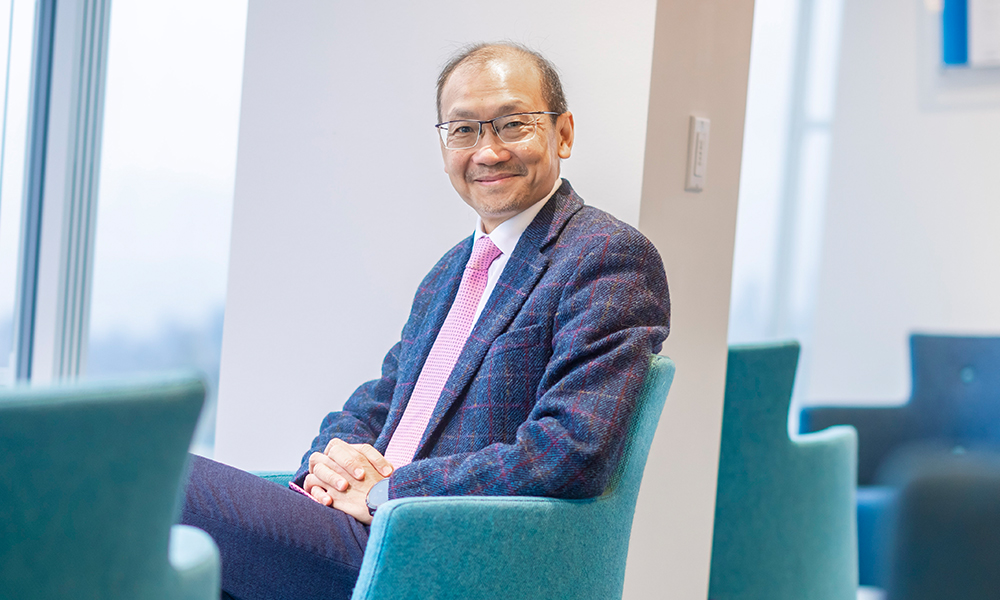
Dr Anthony Fung joined the MPS Council as a non-executive director in May 2022 and was elected by the membership at the Annual General Meeting in June 2022. He is a consulting private surgeon in Hong Kong. Dr Fung graduated from the University of Cambridge and subsequently trained in the UK and US before obtaining specialist status and returning to Hong Kong.
Dr Fung has worked in several public and private hospitals, as well as for the University of Hong Kong while also co-founding several multi-speciality clinics. He served as clinical director and remains as a company director in one of these clinics.
Outside of his clinical and management roles, Dr Fung lectures in healthcare management for master programmes at the Jockey Club School of Public Health and Primary Care, The Chinese University of Hong Kong. He has also been a training consultant in leadership programmes for the Hospital Authority.
Going back to the beginning, it’s a very simple answer – I went into clinical medicine to help people. I have always liked challenges and medicine is a challenging job that I enjoy. I have balanced multiple roles in my career, and teach in education, so the challenge of healthcare has always been a key motivator for me.
I also think my curiosity helped me to go into things beyond just medicine. I originally went into medicine and specialised in surgery in the UK. Then I worked a fellowship in the US, and came back to practise in Hong Kong. At first, I worked in the public system in Hong Kong for five years, before moving into private practice. I started my private practice career in a hospital and then went to set up my own clinics, starting with one, then two. My background in medicine and setting up my own clinics also led me into management and education. I was curious about elements that go beyond clinical medicine.
I have noticed throughout my career that to make people healthy takes more than just medicine. It also involves management and health policies, which is why I wanted to go into the management side of my career. Medicine is also not just about helping patients but also helping doctors and other healthcare professionals through education and training. This in turn led me to my interest in leadership training and eventually my role in supporting Medical Protection.
I saw different healthcare systems in the UK, US, and Hong Kong and there are obviously cultural differences as to how to manage clinical practice. I think it is so good that Medical Protection has a local director in Hong Kong who can take care of local interest and culture.
Hong Kong is unique in the sense that it has a large share of both public and private practice. In the UK you have the public sector with the NHS and relatively small amounts of private practice, whereas the US is almost completely private practice. Hong Kong stands out in the world as having almost an equal split of public and private healthcare, although general practice is more in the private practice while secondary and tertiary care is taken up more by the public sector.
Artificial Intelligence is both an opportunity as well as a challenge in all healthcare. We already use AI but theoretically AI could be used more widely, for example to help doctors transcribe consultation documents. In this example, with doctors being pushed for time, in theory, AI could help but the records themselves could end up being vague or inaccurate, which in turn leads to exposures and risks for the doctor.
Another opportunity for AI is generative AI use and the potential for it to formulate healthcare delivery models. Everywhere in the world there is a lack of budget and increasing demands without a sufficient supply. So rather than trying to squeeze more productivity from healthcare professionals, maybe we can work on a system using AI to suggest ways to improve efficiency and productivity.
There is also the opportunity for AI to be used to benefit diagnostic accuracy and efficiency, reading pathology results, and so on. However, just like human efforts, AI is not perfect and will get things wrong. The trouble is that when AI gets it wrong doctors are ultimately responsible and they may be liable, so it really is both an opportunity and a challenge.
In the context of Hong Kong, we have increasing cooperation with mainland China where AI is developing very well and rapidly. Healthcare professionals have the potential to work with AI scientists not just in terms of making use of AI products but possibly in the development of those AI algorithms too. I think healthcare professionals can engage and possibly work in designing the new AI systems which hopefully will increase AI accuracy within the healthcare sector and therefore reduce the risk.
I’ve been doing ultra running for about seven years. I started off running an obstacle course with my daughter, one thing led to another, and I got into running and then trail running. I started off with 20 kilometres, 30 kilometres, and then I moved onto 100 kilometres, sometimes more. The longest single non-stop run I’ve done is 160 kilometres.
One would expect it to be tedious and boring to run such a long distance but in fact it’s a bit more like working in medicine. Even when things are going well, I am constantly monitoring my body, thinking about every step, and even several steps in front of me. Running gives me a lot of management insights because I look forward, not just what is immediately in front of me. You want to make sure that you are heading in the right direction because sometimes it can be dark and if you’re just looking at your feet you may miss markers and signs to tell you to turn. Running is also an opportunity to have some time for myself and to clear my head. Sometimes I think just about the running, other times I think about an issue I have, and I can find the solution.
When I moved to the private sector from the public sector in Hong Kong I worked in a private hospital. The management style is quite different from how it was in the public sector which got me thinking – how does management impact healthcare? Coincidentally at the same time, the Chinese University of Hong Kong had the first programme of MBA in healthcare, so my curiosity led me to sign up. After completing this MBA I saw a gap in the teaching and, having set up my own clinics in this time and having studied management, I put myself forward for the opportunity to teach. I was successful and have taught there for 19 years now. In my lectures I focus on the practical aspects of healthcare management, so not just lecturing and teaching theories but also how to use the theories and apply them at work.
I like to have more of a workshop style where I work with my students to apply different frameworks and theories to real life issues. After working with students, I was invited to teach part of a special summer school on leadership in healthcare, supporting the top level of leadership. I focus on the individual and how to lead a whole system rather than just leading a department or an organisation. I like to focus on the leader themselves and the personal aspect of things.
To me, management is a 360-degree thing. You must manage upwards, downwards, sideways, but most importantly, managing right at the centre, yourself. This led me to also go into coaching and to go back to supporting the individual.
There is so much that we can learn by reflecting. There are self-coaching resources you can use to help reflect, but sometimes it does take someone else. Even as a coach I am trained in asking questions, reflecting, and thinking, and coaches do a lot of self-coaching themselves, but sometimes you do need to verbalise and talk to someone to facilitate that self-reflection.
I was involved with Medical Protection way before joining the MPS Council. When I started teaching, I saw the importance of not just education but also training. Then 14 years ago, I saw Medical Protection asking for doctors in Hong Kong to be trained as workshop facilitators. I got curious again and I know first-hand the risks that doctors and healthcare professionals face, so I thought it would be a good thing to support.
Training to be a facilitator was quite a stressful process, even more stressful than taking my medical exams, because the standard was so high. I had to learn presentation skills and all the protocols, so it was challenging. Fortunately, I was selected to be trained to facilitate the Medical Protection workshops and delivered these in Hong Kong for many years.
Then I saw the Council role come up and it felt like a great moment for me to contribute to Medical Protection. My vision and mission in life is to use all my available resources to make a positive impact to society. So, wherever I see applicability of my knowledge and skills that could create a positive impact I get motivated, and I saw this potential in the role on the MPS Council.
First, I get to know and understand how Medical Protection works as an organisation. As a member myself I didn’t know much about how Medical Protection did its business and what the organisation’s philosophy was. Being in the MPS Council meant I could fully understand the workings of Medical Protection. I can now explain to members in Hong Kong what Medical Protection is about, it’s not just like buying an insurance cover and having nothing to do with them until the day something goes wrong. Medical Protection is really there for its members.
At the same time, I can relay the issues raised by members directly back to Council to change and improve things, even at a local level for members in Hong Kong. It’s incredibly rewarding for me. I am involved even in the wider corporate level where I engage with executives and other Council members to come up with a strategic direction that will improve the running of Medical Protection for all members.
Medical Protection is there to protect healthcare professionals in their career, as well as financial security and providing psychological security. It is so important that healthcare professionals feel at ease with handling their role. Treating a patient is risky and apart from helping and making people better, doctors are taking on risk all the time. Medical Protection has an important role in helping members to the utmost, which insurance companies do partially but Medical Protection does so much more and takes a holistic approach. We’re not like insurance companies trying to enforce a set contract, discretion is about helping members in whatever way is possible. The position at Medical Protection is to see how a member seeking assistance can be helped, not whether their claim fits the policy they signed up to. It is this unique approach that means Medical Protection can be flexible in determining the assistance that they can provide when new issues arise in healthcare, which may not have been known when, say, an insurance policy is taken out.
I want members to know that I am there for them in Hong Kong too and I am one of the channels that members can go through if they have issues.