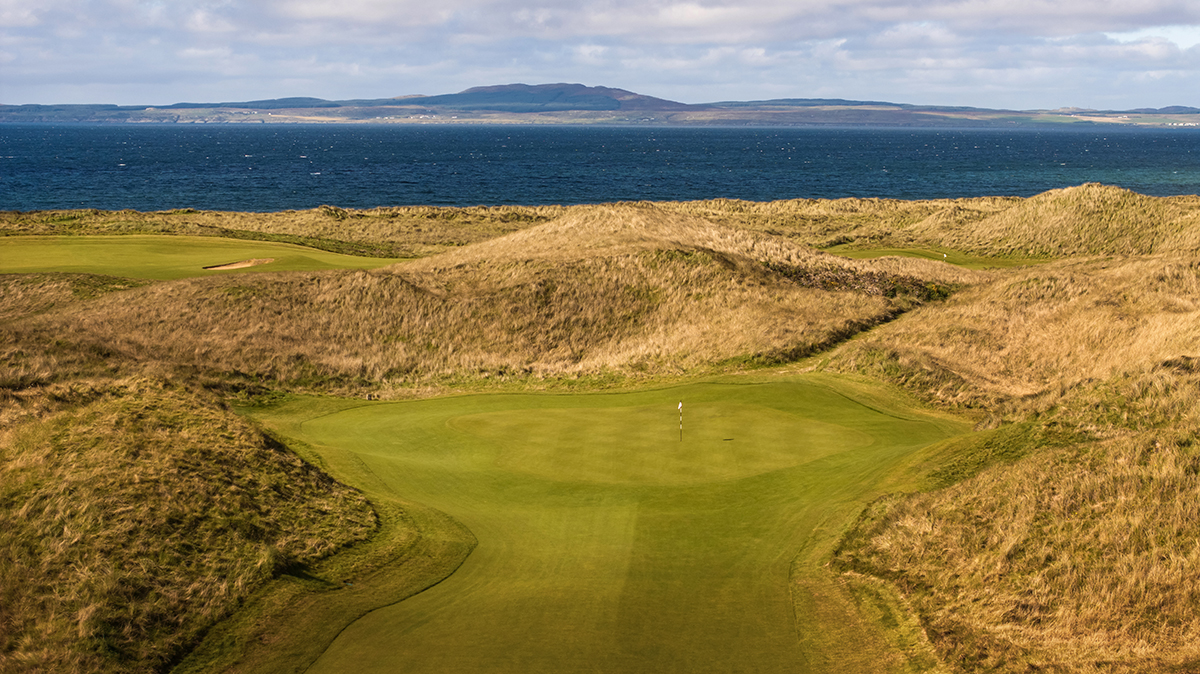
No. 5 at The Machrie
© Phil INGLIS
ISLE OF ISLAY, SCOTLAND | Ignoring the conflicting advice of the traditional folk song, which argues the merits of taking either the high road or the low road, my journey north from the English-Welsh border was very much the slow road.
It was, however, a very conscious decision, one borne of a love of the journey as much as the destination, and also a desire to match the unhurried pace of life in the Highlands and islands.
I was thinking, too, of Robert MacIntyre, the Scotsman who jets around the world competing at the highest level of the game, being treated like a star every step along the way. Yet true fulfilment comes from the decompressing two-hour drive north and west from Glasgow to his home in Oban, where the locals simply call him “Bob.”
I thought of him again as the road twisted between lochs and mountains, past the shinty pitches he might have played on in his youth (and still does, occasionally, between tournaments). I thought of him most when I stood among the ruins of Bruce’s Castle, on the Kintyre peninsula, where, in 1098, a treaty was signed by the Norwegian King Magnus Barefoot and the Scots King Edgar. It made me smile to think that MacIntyre and Viktor Hovland had re-enacted the union at the 2025 Ryder Cup.
If the locals love a wee dram, they also adore their golf. Ten percent of the population of around 3,200 play the game which means they play The Machrie because it is the only course.
Later I made the final part of my journey to Islay on the CalMac ferry from Kennacraig to Port Askaig, casting my eye towards the glowering presence of Jura, an island where, in the 1940s, George Orwell sought solitude in order to complete his manuscript of “1984.”
I was after a bit of solitude of my own but it was more about escaping modern dystopia than imagining it.
The ultimate destination was Another Place, The Machrie, home to a stretch of linksland, and a hotel tucked within its dunes, that promised to provide just what I was after.
Islay, sometimes referred to as the Queen of the Hebrides, is best known for its distinctively peaty, smoky and medicinally flavoured whiskies that were first made by Irish monks 700 years ago.
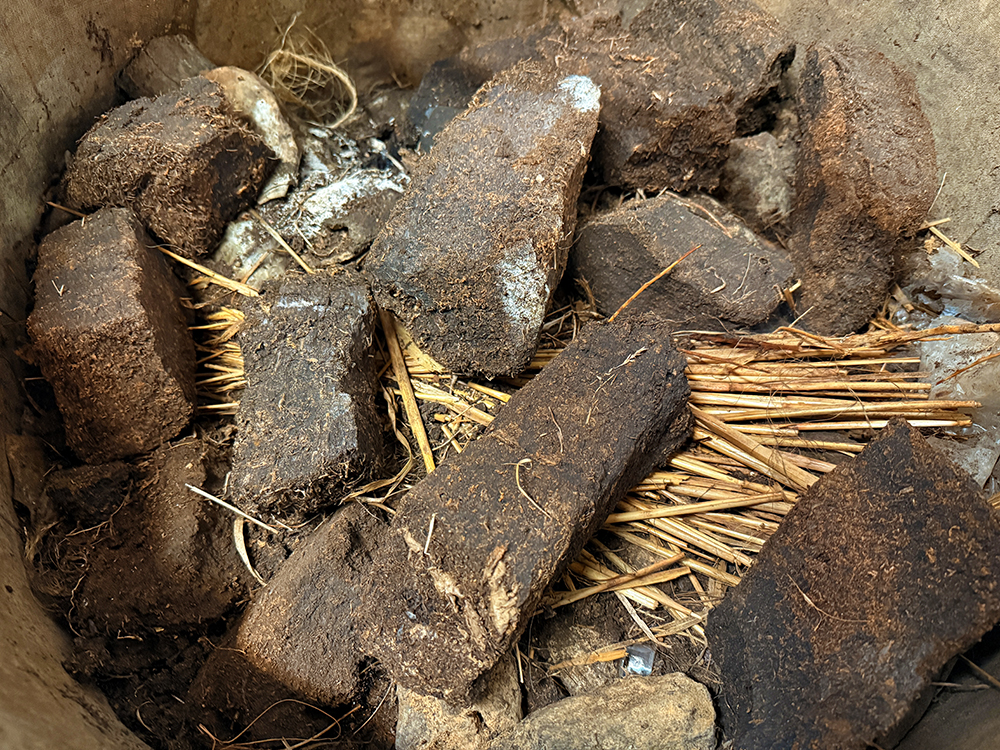
Lumps of peat are used to create unique and popular whiskies on Islay.
KKKvintage, iStock/Getty Images
Whisky tourism is on the rise and that includes trips combining golf and Scotland’s favourite tipple, a natural partnership given that they share certain qualities.
Like each whisky, links courses are unique. Investigating their differences and exploring their character is the pleasure (we also, of course, want to taste lots of them).
Another modern travel trend is that so many international golf visitors are now on their fourth, fifth or sixth trip to Scotland. They have ticked off the Open rota courses, the famous names and the hidden gems. They’ve returned to their favourites and will do so again and again.
They are now seeking to add value to a trip while retaining the essential Celtic flavour. A short flight from Glasgow with a one- or two-night stay for golf at The Machrie and whisky tasting is therefore increasingly attractive. Islay has 10 distilleries and most are geared up with guided tours, tasting sessions and gift shops.
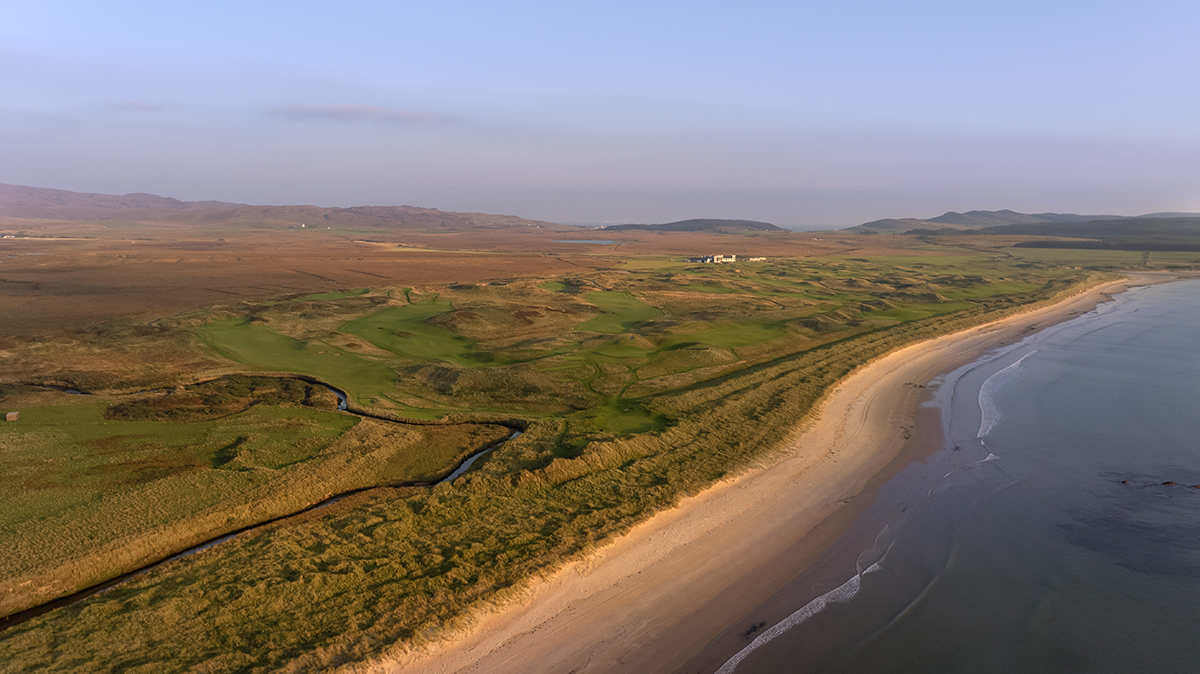
The linksland that is home to The Machrie
kevin d. murray photography
Golf was first played on the original Willie Campbell design in 1891. It had a reputation for many blind shots which European Tour winner DJ Russell was charged with reshaping and redesigning ahead of a 2018 re-opening.
He has preserved Campbell’s essence and retained a few of the blind shots, but in a manner that is much fairer. He has also introduced a personal touch that is both playful and smart.
Good shots rather than long ones are rewarded. Creativity thrives, not power. Plotting the ball’s path between the dunes is what matters, not thumping it over them.
My trip coincided with a site visit from Russell, and when I gushed at the fun I’d had from the tee he smiled. “I wanted lots of value on a good tee shot but, if you hit a poor one, the approach shot will become very demanding,” he said.
Nowhere is this more apparent than on Nos. 15 and 17 where, on your first circuit, local knowledge helps to indicate the line because if picked, and then executed correctly, the ball will scuttle along the fairway like a downhill skier catching every slope.
If, on the other hand, you err, the approach shot will (to extend the metaphor a little too far) leave you distinctly off-piste.
My two rounds proved as much. The drive at 15 in the first round flared to the right, leaving a blind approach to the green. Twenty-four hours later my effort was ideal, bounding, hurdling and careening towards the ideal spot to attack the pin.
At 17 it was the other way around. As my first drive left the club, golf manager Alan Martin cooed at the line and every step down the fairway revealed another hump, bump and hollow the ball had taken to not only scoot greenward, but also curve around the dogleg.
The second, weaker, effort left me a blind biff over a mound and yet, even as I peered into the distance for a target, my mouth was curving into a smile of recognition at Russell’s cunning routing.
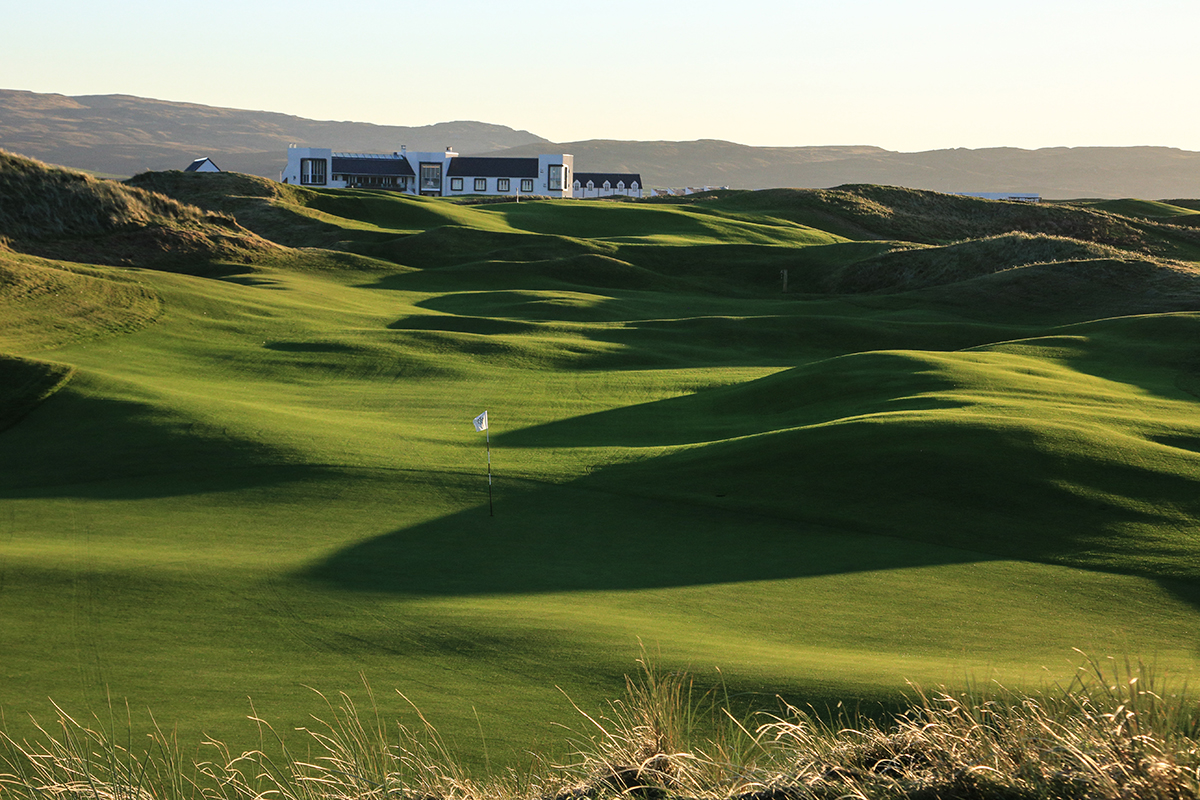
No. 17 at The Machrie
Put simply, if every round of golf included The Machrie’s 15th and 17th I would be one very happy golfer. It was the most fun I’ve had on a golf course in a long time and the same can be said for the rest of the course.
The layout notably features very few bunkers. Instead, the greens are typically defended by shrewd shaping and bumps at the front of the putting surfaces which protect them in a manner every bit as devilish as any pot bunker.
Russell’s attention to detail is also demonstrated in the design of the first hole. At first glance the tee box feels a little adrift from the rest of the course.
Russell planned it that way, however. As you walk towards your ball (hopefully resting in the middle of the fairway) it is not just the green but the course, Laggan Bay and the Atlantic Ocean which opens up in front and beneath you.
As with my slow road to Islay so it was from that first tee, a quality the modern world has forgotten: the beguiling charm of delayed gratification.