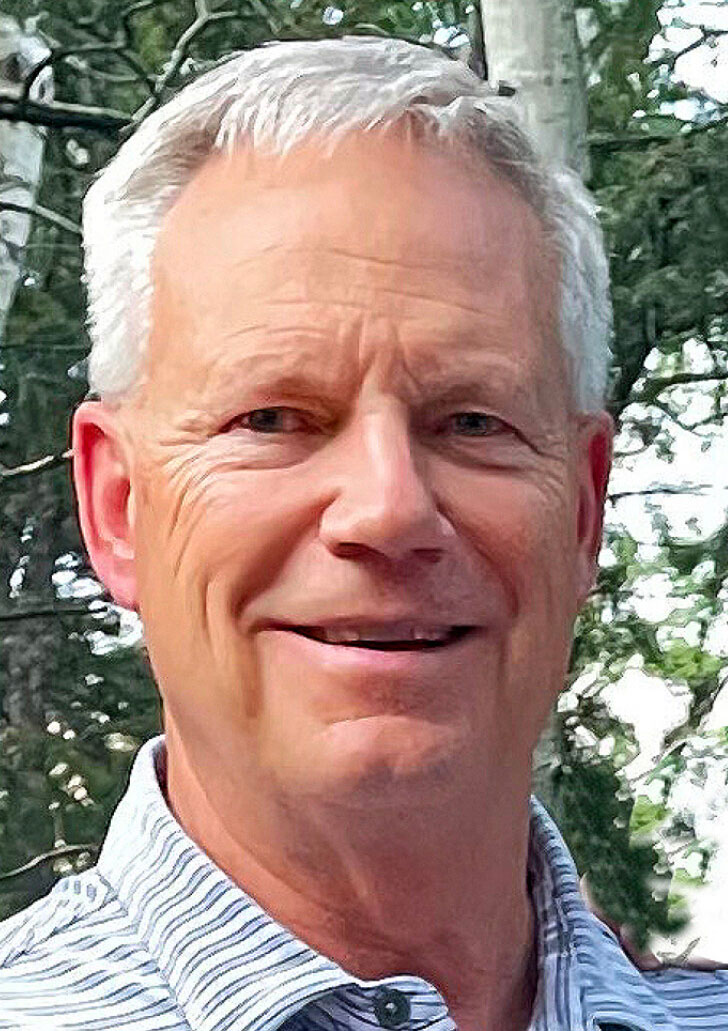
Lance Johnson has dedicated more than three decades to the City of Westminster, where he currently serves as Parks, Golf, and Open Space Manager. A Certified Golf Course Superintendent, Lance oversees the city’s two premier facilities—Walnut Creek Golf Preserve and Legacy Ridge Golf Course—along with 63 parks, 3,800 acres of open space, and multiple community amenities. His responsibilities stretch far beyond golf, managing an annual operating budget of about $15 million, $25 million in capital projects, and a staff of more than 80 full-time and 300 seasonal employees.
Originally from Fairfield, Iowa, Lance studied Business Management at Arizona State University. Before beginning his career in golf course management, he spent three years as a professional baseball umpire in the minor leagues. A member of the Golf Course Superintendents Association of America (GCSAA), the Rocky Mountain GCSA (RMGCSA), and the National Recreation and Parks Association (NRPA), he is also a past president of both the Rocky Mountain GCSA and its nonprofit arm, the Rocky Mountain Environmental Golf Institute. In 2019, he chaired the statewide committee that developed the Colorado Golf Industry Best Management Practices Guide.
Through his career, Lance has been involved in the construction and growth of both Walnut Creek and Legacy Ridge, and he continues to play a pivotal role in shaping Westminster’s recreational landscape.
KK: Can you walk me through what you do in your role with Westminster?
LJ: A lot of meetings and emails! I oversee an operating budget of about $15 million and another $25 million in capital projects. My division covers 63 parks, 3,800 acres of open space, and two golf courses, and maintains roughly 30% of the city’s land mass. I manage 87 full-time staff and up to 300 seasonal employees during peak season.
My job is to make sure everything runs smoothly—from parks to golf courses to open spaces. I work closely with my department head, city manager, and city council to keep operations on track. Day-to-day, I’m focused on communication and problem-solving, finding ways to support staff so they can do their jobs effectively.
KK: Where did you grow up, and how did you get here?
LJ: I grew up in a small farming town in southeast Iowa. After high school I moved to Arizona, attended Arizona State, and lived there for 13 years. My wife is from Colorado, and after our first son turned three, she transferred her job, and we moved to Colorado. In 1993, I was working at Fox Hollow when I met Scott Tuggle, who was just starting as the construction superintendent at Legacy Ridge. He offered me a job, and I’ve been with Westminster ever since. In 1996, when Scott left, I became superintendent at Legacy Ridge.
KK: You mentioned kids and grandkids.
LJ: Yes—I have three grown kids: Greg in Roxborough, Kyle in Arvada, and our daughter Brett in Chandler, Arizona. Greg and Kyle are both married, and we have one granddaughter, Ava, who’s two, plus a grandson on the way this November.
KK: How did you get into golf?
LJ: Honestly, by accident. At Arizona State I joined a fraternity and became close with my good friend Mark Bakeman, a great golfer who has been a PGA head professional and director of golf in the Phoenix area for over forty years. Through him I started my career working on the clubhouse side of golf—cleaning carts and picking the driving range first at Papago Golf Course, then at Camelback Golf Club, where I also worked for the John Jacobs Golf School. Eventually I moved into my first job in golf course maintenance working as an irrigator at Camelback. Growing up around family and friends’ farms, turf maintenance clicked quickly. I never studied turf formally—my degree is in business—but the combination of on-the-job learning and farming roots worked in my favor.
KK: And umpiring? That’s a fun twist.
LJ: Yes, I umpired minor league baseball for three years in the ’80s. It was a great experience, but not the best lifestyle for raising a family. That’s when I pivoted myself to golf full time.
KK: When did you first connect with the CGA?
LJ: Through Joe McCleary. In the early 2000s, after we implemented reclaimed water at both courses, Joe encouraged me to get more involved in our local golf associations. I served with the Rocky Mountain Golf Superintendents Association from 2005–2010.After Hurricane Katrina our association raised funds to help support superintendents in Louisiana. Out of that was borne the Rocky Mountain Environmental Golf Institute where Joe and I both served on the board. In 2015, Joe asked if I’d serve on the CGA Board. They needed a superintendent’s perspective, and I’ve been with the board since.
KK: What has your role on the board looked like?
LJ: I’ve been on the CommonGround/CCGO/CCRE committee from the start. With my agronomy and golf operations background, I can support both Superintendent Mitch Savage and Director of Golf Ben Pennymon, answer questions, and advocate for course operations. Everyone on the board brings different expertise, and mine happens to be growing grass and managing golf facilities. It’s rewarding to contribute that knowledge and to see how much CommonGround has grown over the last decade.
KK: Any projects you’re especially proud of?
LJ: The recent CommonGround clubhouse remodel is a highlight. Ty Holt led that project, but it was a team effort, especially with the varied backgrounds of our committee members. For me, it’s less about one specific project and more about supporting the CommonGround staff. Looking at what CommonGround was in 2015 compared to now makes me proud of the collective progress.
KK: Do you have a favorite golf memory?
LJ: My family trip to Scotland this summer. Ten of us went—my kids, my wife, my friend Mark from Arizona, his wife, and a few others. We played five incredible courses. The wind blew every day but only had one day of rain. It was a dream come true to play true links golf and a trip of a lifetime.
On the professional side, building Walnut Creek and Legacy Ridge was incredibly rewarding. Spending years in the dirt, growing grass, and finally opening the doors—it’s hard work but worth it.
KK: Outside of work, I know you and your wife started a non-profit.
LJ: Yes, my wife Lynn founded All in Empowering Futures about four years ago. I help where I can and sometimes it’s a second full-time job. We support young adults who have aged out of the foster care system—20,000 young adults age out every year nationally—with no family or safety net. We started by hosting 22 young adults at our home, and it’s grown into hosting retreats and activities that provide connections, mentorship, life skills, and more importantly chosen families for those who have no family when they age out of the foster care system.
We’ve worked with about 170 young adults so far. Our retreats cover everything from financial planning and job prep to basics like changing a tire or tying a tie—things many of us take for granted but are things these young adults don’t experience while in the foster care system. Just as important, our retreats provide a sense of belonging. Some of the strongest outcomes are the organic relationships that form with mentors, giving these young adults the support they never had.
KK: That’s amazing. To wrap up, what advice would you give your younger self—or the next generation?
LJ: Early in my career, after we built Legacy Ridge, I felt a sense of ownership over the course. I worked long hours and thought I knew best. One day in a meeting with my director he reminded me: “This isn’t your golf course. It belongs to the residents.”
That stuck with me. Whether at a municipal or private club, someone else is footing the bill, and your decisions must be in their best interest, not just your own. It’s easy to want control, to believe you know everything, but leadership requires letting go of ego and focusing on what benefits the broader community. That mindset shift has guided me ever since.