In the Chicago area, more than a dozen par-3 courses – usually run by park districts – are open to the public. Greenshire Golf Course in Beach Park offers a sterner test than most, with holes as long as 210 yards. Abounding with hills, Nickol Knoll Golf Club in Arlington Heights features a hole named after Chicago Bears Hall of Famer Walter Payton, who used to have grueling running workouts in the area. For night owls, Golf Center Des Plaines features the only lighted layout.
One is even credited with helping to birth a pro golfer. As a boy, Nick Hardy, who joined the PGA Tour in 2021, rode his bike (somewhat weighed down by clubs) to the par-three Anetsberger Golf Course in Northbrook. That’s where he learned how to play the sport – and to play it quite well: he notched 12 holes in one.
One par-3 course that is no longer with us is Illinois Center Golf. Launched as the first course ever situated in a major downtown in the 1990s and designed by Pete Dye’s son Perry, it featured an island green and amazing views of the Willis Tower and Hancock Building. Alas, the run for the Loop nine-holer – which sold memberships for $1,000 and where even Michael Jordan took swings – was as short as the course itself; it closed in 2001.
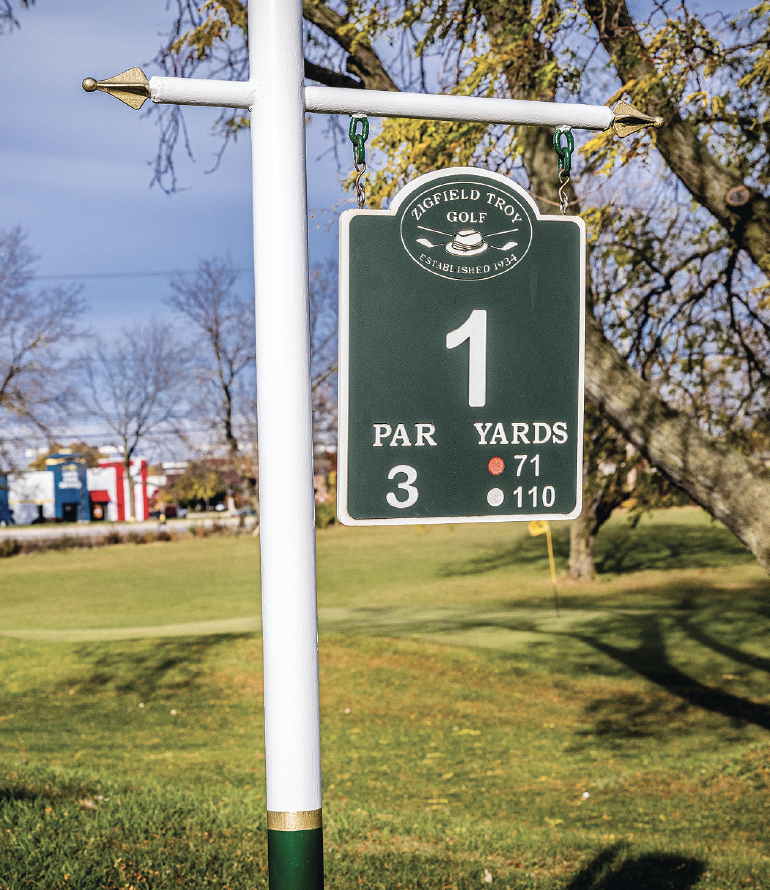
To that point, there is a reason par-3s are mainly government-owned; turning a profit is not easy. Zigfield Troy, the Illinois Golf Hall of Fame member who ran driving ranges and miniature golf courses for decades, opened an eponymous par-3 course in Woodridge in 1980. Tim Troy, Zigfield’s son who manages the course today with his brother Dennis, has sold the property to a developer, and the course is likely to be razed sometime in 2026.
Why is running a par-3 course so hard? As Tim Troy noted, tee boxes are riven with divots since most players forgo a tee and don’t play enough to hit wedges smoothly. Par-3s pay for the same maintenance equipment as 18-hole courses but charge lower greens fees and count fewer rounds than their larger counterparts.
But the benefits of the par-3 courses for players are clear. Even pros look back fondly on their introduction to the sport they love.
“Occasionally I’ll run into a younger golf pro who’ll say, ‘I played my first round of golf on your par 3 at Zigfield Troy when I was 10,’” Troy said. “We had a young pro come play it again this year because it was the first course he had ever played.”
David A. F. Sweet is a member of the Chicago Golf Heritage Society and the author of Lamar Hunt, Three Seconds in Munich, Onwentsia at 125 and Elawa Farm.