Enhanced Accessibility
The new platform ensured compliance with web accessibility standards, making publications readable by screen readers and other assistive tools.
Improved User Engagement with Programs
The interactive design of PageRaft made navigating the library’s resources easier and more enjoyable for users, increasing readers’ ability to find and register for events.
Increased Sustainability and Decreased Costs
DPL has successfully reduced the number of issues printed and distributed within libraries, significantly lowering paper consumption and achieving cost savings in printing and shipping.
Broader Reach
By accommodating diverse audiences, including those with visual challenges, DPL significantly expanded its outreach and strengthened its community impact. PageRaft publications - shareable with a hyperlink - also made it easier for library partners to share the content to their own audiences.
The transition to PageRaft allowed DPL to make significant strides in accessibility and engagement. The new platform ensured compliance with web accessibility standards, making the publications easier to navigate for individuals using assistive technologies.
In addition to improved accessibility, PageRaft enhanced the reader experience across all devices. The seamless browser-based interface made it simple for users to engage with the content regardless of their technical skills or physical abilities. Brooks noted that adding hyperlinks within the publication directly to library events increased patron engagement with events and increased confirmed registrations for events. “That’s probably the biggest value-add,” Brooks reported, “because it makes much more streamlined of an experience than looking at a physical copy, looking at the name, then going to the website, searching for that name, just to register or click to learn more.”
DPL is able to expand their distribution with the introduction of PageRaft publications, while decreasing print and shipping costs. Historically, DPL printed 2500 copies of their publication each month to distribute across at least 27 locations, which Brooks reported, “it is becoming cost-prohibitive because people want it more. They want more copies. They want it more frequently.” DPL faced increased demands on the publication, while also maintaining their budget and meeting commitments to sustainability, such as decreased paper use. Brooks looked to digital to help meet this need. Instead of publishing full print editions, Brooks offered postcards with a QR code directing to the PageRaft publication. “People appreciated our attempts to make the information available despite limited budget,” Brooks relayed. DPL was able to reach more patrons while decreasing costs for print.
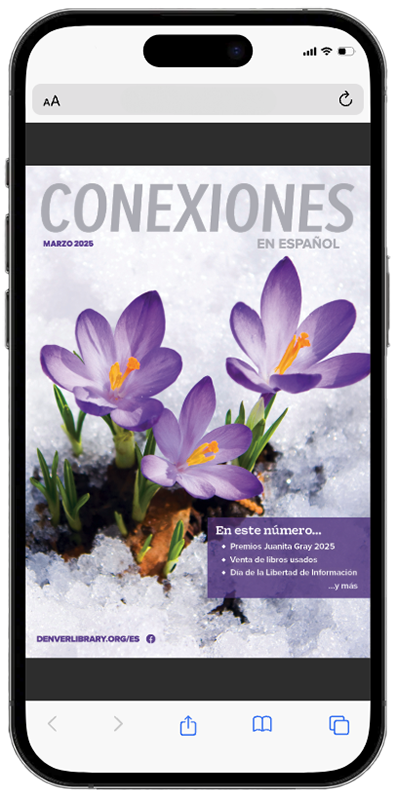
With the assurance that their content will be accessible across all devices, DPL plans to expand the distribution of its Spanish publication, “Conexiones” in digital format, reaching a broader audience than is possible with print. In Denver, Spanish is the second most popular spoken language (behind English), and DPL features services and events conducted in Spanish to serve this demographic. “Conexiones” is carefully curated for this audience, and it is a highly valuable resource for partner organizations to share with their members. Brooks relates that with a digital edition, they can increase their distribution by sharing the publication “to other community partners and other media publications and outlets simply by sharing a link, as opposed to us trying to figure out how to distribute these hard copies.”