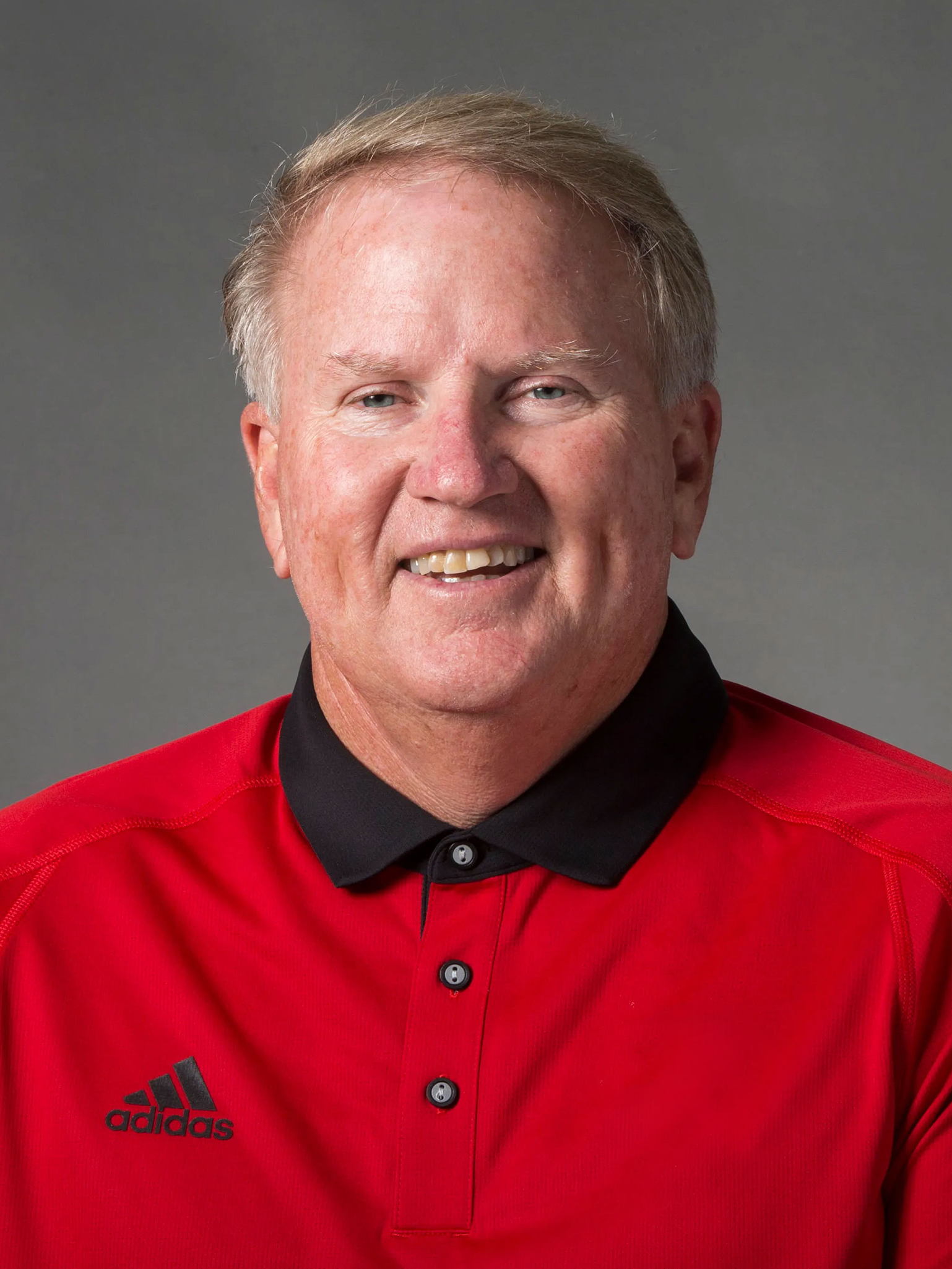
Mark Crabtree, a 2006 Colorado Golf Hall of Fame inductee, has built a remarkable legacy both on and off the course. A Fort Collins native and former Evans Scholar, he starred on the University of Colorado golf team before racking up titles as a player—including four CGA Match Play wins, a CGA Public Links title, and numerous top finishes statewide.
As a coach and mentor, Crabtree led Colorado State University to the NCAA Championship Finals and was named 1998 NCAA District Coach of the Year before a successful two-decade run at the University of Louisville. He also served as president of the Golf Coaches Association of America and was inducted into its Hall of Fame in 2022.
Now giving back to the game through the Colorado Golf Association, Crabtree serves as the captain for Team Colorado—a junior state development team and pilot program for the U.S. National Development Program—as well as the CGA’s Jr. America’s Cup and Pacific Coast Amateur teams.
KK: Who introduced you to the game?
MC: My dad. He was a solid player and played in the men’s club on Wednesdays and weekends. I’d often go with him on weekends—watch him play, hit a few putts while he was in the clubhouse. That’s how it all started.
KK: When did you really get into the game yourself?
MC: Probably around junior high. That’s when I really started to enjoy it and put in more effort. By high school, I was playing a lot and fortunate enough to earn a scholarship to the University of Colorado.
KK: Were you recruited to CU, or did you have to earn your spot?
MC: I wasn’t formally recruited. Les Fowler, the coach—and a former CGA champion—knew I was coming and welcomed me onto the team. I earned my spot that first semester by winning the team’s qualifying tournament as a freshman. Les wasn’t big on recruiting, but he let performance speak for itself.
KK: Tell me how you started coaching golf.
MC: After college, I gave professional golf a shot but didn’t find enough success to continue. I worked a few assistant pro jobs before returning to Fort Collins, where I got my teaching certificate and became a math teacher and golf/basketball coach at Fort Collins High School. I did that for nine years.
Then one day, Colorado State University called. Their golf team was transitioning from a club to an NCAA program, and they asked if I’d take over. I coached part-time while still teaching, but after one year, I had to choose. I took a sabbatical from teaching, and by the end of it, I decided to go all-in with CSU in 1990.
At the time, CSU had no scholarships or budget—everything had to be raised from the community. I used my marketing background and local connections to fund the program, and eventually recruited my first class: three Colorado standouts—Scott Mendelsohn, Tom Richardson, and Cam Osler—all CGA champions.
Over the next decade, we built momentum. A new athletic director who loved golf helped us secure more support, and in 1999, we qualified for our first NCAA Championship.
Right after that season, I got a call from my former AD who was now at the University of Louisville. He asked me to do the same thing there—build a program from the ground up. I moved to Kentucky in the summer of ’99 and led Louisville’s team until 2020. Like at CSU, I focused on vision, fundraising, and recruiting—and we grew it into a nationally competitive program.
KK: How did you get involved with the CGA?
MC: I’d been involved with the CGA for years as a player, so when I moved back to Colorado, reconnecting felt natural—I wanted to give back. One of the first calls I got was from Gary Potter, asking me to join the Hall of Fame Committee. I eventually became chair and still serve in that role. Not long after, Kent Moore invited me to join the CGA Board, which I did in 2023. Around the same time, Ed Mate and Ashley Harrell reached out about launching Team Colorado, and I’ve been helping with that ever since. It’s all aligned really well with my background in coaching and development.
KK: Beyond Team Colorado, are there other roles you’ve taken on with junior players?
MC: Yes—I serve as captain for both the Pacific Coast Amateur team and the Junior America’s Cup team. I help lead the selection process and travel with the teams to represent Colorado in those events. It’s been a great way to stay involved in player development at both the amateur and junior levels.
KK: Do you have a favorite golf memory—either as a player or a coach?
MC: As a player, winning the 1975 CGA State Match Play stands out. I was playing my college roommate, Tom Woodard, in the finals at my home course, Collindale in Fort Collins. We were tied heading into the final hole, and I made a 10-footer to win. It was my first CGA title, on my home turf, against a close friend—it doesn’t get more memorable than that.
As a coach, there are so many highlights, but a few stand out. In 1999, I led Colorado State to its first-ever NCAA Championship appearance, which was incredibly rewarding. That same year, we also beat the No. 1-ranked team in the country—Georgia Tech—by a single stroke at the Stanford Invitational. To this day, that’s the only time a CSU program has beaten a No. 1 team in any sport.
At Louisville, we had many strong teams and players, but 2020 may have been our best. We were a legit top-eight team and had already won multiple tournaments when COVID hit. The season was canceled, and we never got the chance to see what that team could accomplish at Nationals.
KK: You’ve coached a lot of talented players—who are some standouts people might recognize?
MC: At Louisville, I coached PGA Tour players like Adam Hadwin, Derek Fathauer, and Matti Schmidt, as well as John Murphy, a Walker Cup player now on the European Tour. The 2020 team—with Schmidt, Murphy, Trevor Johnson, and Ziri Zuska—all went on to play professionally. Over 20 years, we won more than 40 college tournaments. I was fortunate to coach some incredible young men.
KK: If you could give one piece of advice to your younger self—or to younger generations—what would it be?
MC: Don’t forget the people who helped you along the way. Whether they opened a door, mentored you, or supported your journey—always recognize and appreciate them. That’s something I’d remind my younger self, and it’s something I tell the next generation as well.
KK: Is there anything else you'd like to share about your journey or the CGA?
MC: I’ve been incredibly impressed with the leadership at the CGA. Coming back to Colorado after 20 years, it was clear that Ed Mate and the entire team have built something strong and lasting. The consistency and quality of work across the state—by staff, volunteers, and partners—is exceptional. It’s a special organization.
KK: Mark, thank you so much for taking the time to share your story. Your impact on Colorado golf—as a player, coach, and mentor—has clearly spanned generations. We’re lucky to have you back in the CGA family, continuing to inspire the next wave of talent.