< Back to Table of Contents
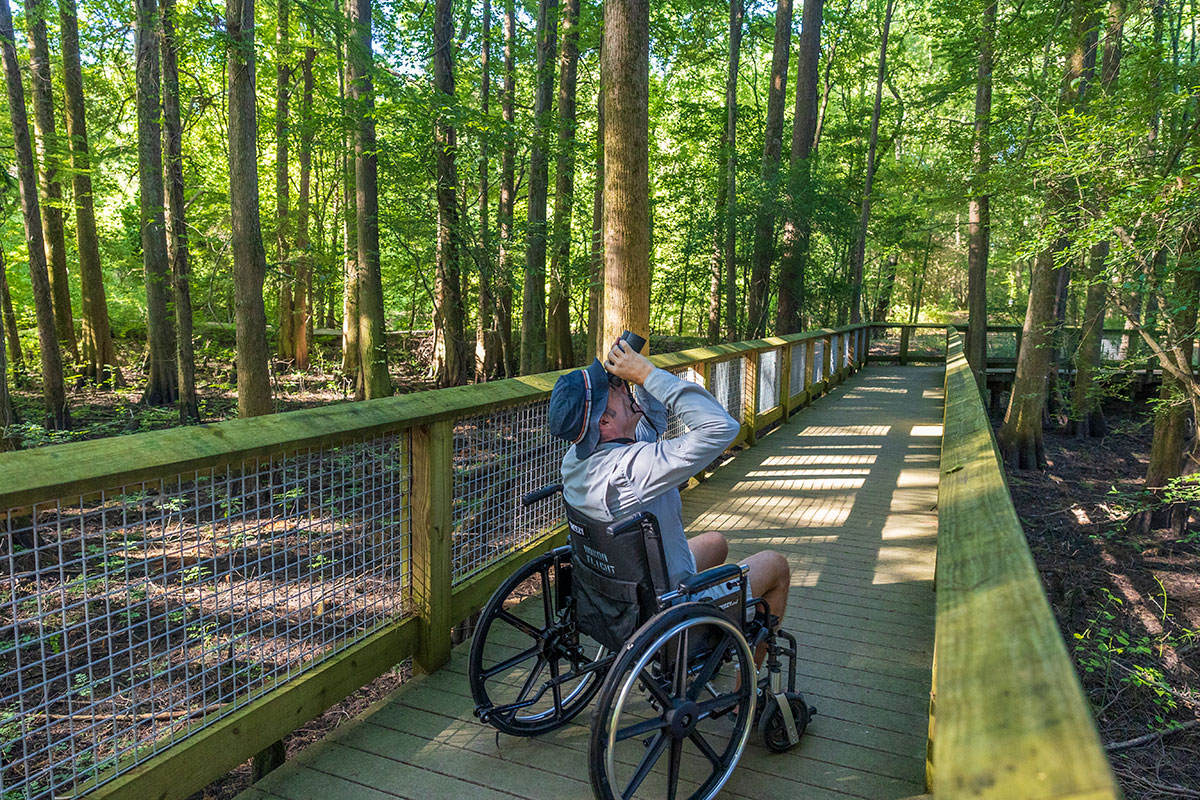
Atkeson Cypress Trail, Decatur, Alabama
Alabama Tourism Department/Chris Granger
Wheeling in the Outdoors
Travelers with accessibility challenges are finding increased inroads into nature.
By Amity Moore Joyce
Let’s face it: fresh air, scenic views and a good dose of sunshine are good for the soul. But for travelers with mobility challenges, those simple joys often can feel out of reach—literally. Thankfully, that’s changing.
Across the country, tourism departments and park systems are rethinking what it means to truly welcome all visitors, and they’re putting effort into planning and realizing changes that make destinations more mobility friendly, beyond what the Americans With Disabilities Act requires. The result? A growing wave of accessible travel that helps wheelchair-bound travelers get out and experience the refreshment of the great outdoors.
Nature for Every Body
Cory Lee, the globe-wheeling founder of the blog Curb Free With Cory Lee, recalls growing up in Georgia and feeling left out of outdoor experiences, like hiking to a waterfall or going to the beach. “People often think the outdoors just aren’t made for wheelchair users,” he says. And to be fair, they often aren’t or haven’t been, but things are changing. In the past several years, Lee says, “I’ve been to beaches, caves and mountaintop overlooks.”
The modifications that state and local tourism agencies are implementing benefit travelers like Lee, as well as anyone who might have difficulty getting around, such as people using a knee scooter, crutches, a mobility scooter, a walker, or even pushing a stroller. If a route is good for a wheelchair, it’s likely good for those other modes as well. In short, the changes are making it easier for everyone—really, every body—to escape to nature and enjoy the benefits that come with such a getaway: improved mood, lower stress, a refreshed mind and improved physical health.
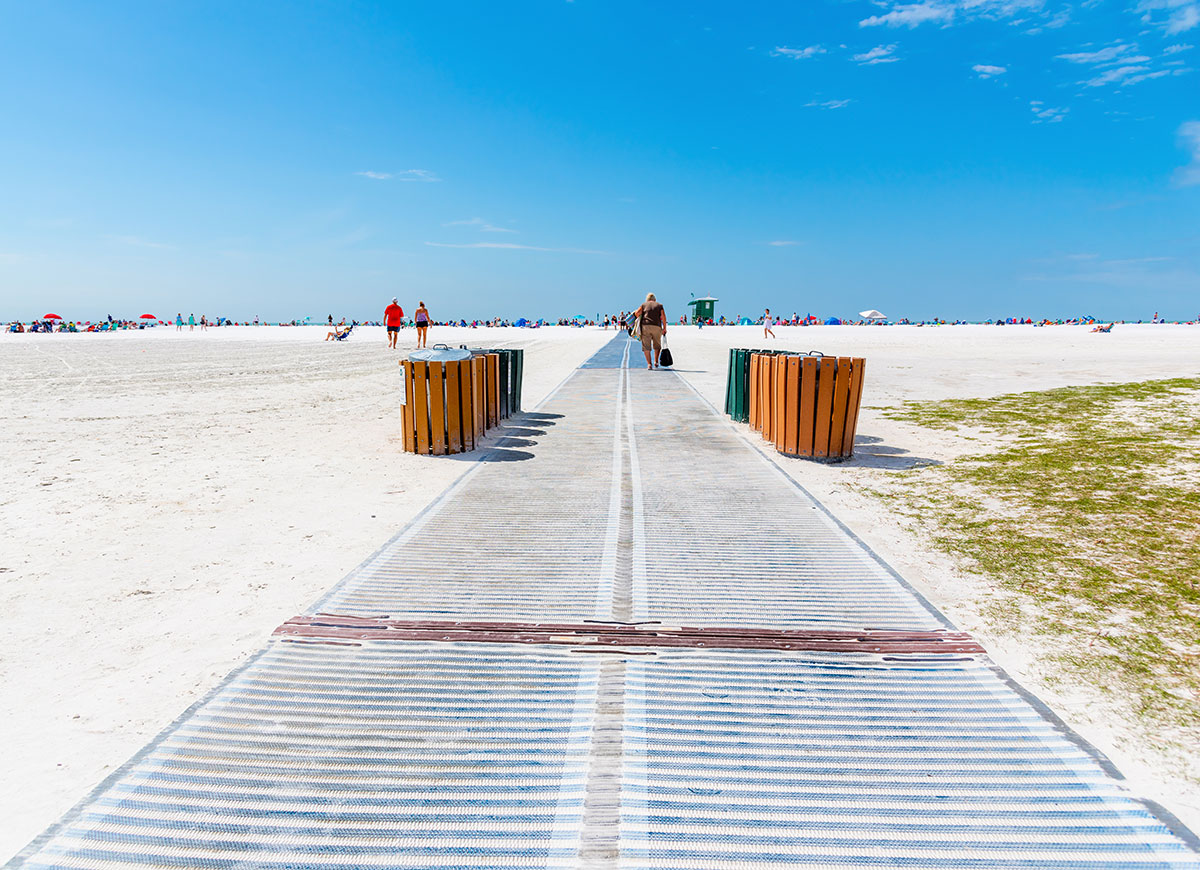
Path for walking, strollers and wheelchairs, Siesta Beach, Florida
ADOBE STOCK
Beach Bound
While many state agencies recognize the importance of accessibility, some have been quicker to implement changes and launch campaigns to raise awareness. California, for example, was one of the first to offer motorized beach wheelchairs for free at beaches from San Diego to Crescent City. That’s a big deal for visitors, who may show up impromptu and would like to access the beach but cannot navigate the sand in a traditional wheelchair. On the United States’ opposite coast, North Carolina’s Carolina Beach rents beach wheelchairs and Georgia’s Tybee Island offers amphibious beach wheelchairs that can roll into the ocean.
In addition to mobility-friendly chairs, Alabama, Florida and Illinois have rolled out wide beach mats that make getting from parking areas to the waves easier. In Gulf Shores, Alabama, those beach mats paired with beach wheelchairs—some rentable, some free—enable visitors of all abilities to dip their toes in the surf. A decade ago, says Lee, that kind of beach access wasn’t an option. “Now I can independently roll out on the beach,” he shares. “That kind of freedom is huge.”
Truth be told, these mats, found also in Orange Beach, Alabama; at Fort Myers Beach, Siesta Key Beach and close to 30 other beaches in Florida; and at several of downtown Chicago’s Lake Michigan beaches, including Montrose and North Avenue, are engaging people beyond those in wheelchairs: Cooler-toting families with young children in tow and senior citizens who have trouble walking on soft sand are as likely to use the mats as travelers with accessibility challenges.
“When you design for accessibility,” Lee points out, “you make the experience better for everyone. Whether you’ve got a permanent disability, a temporary injury, or you’re pushing a stroller, accessibility helps you thrive.”
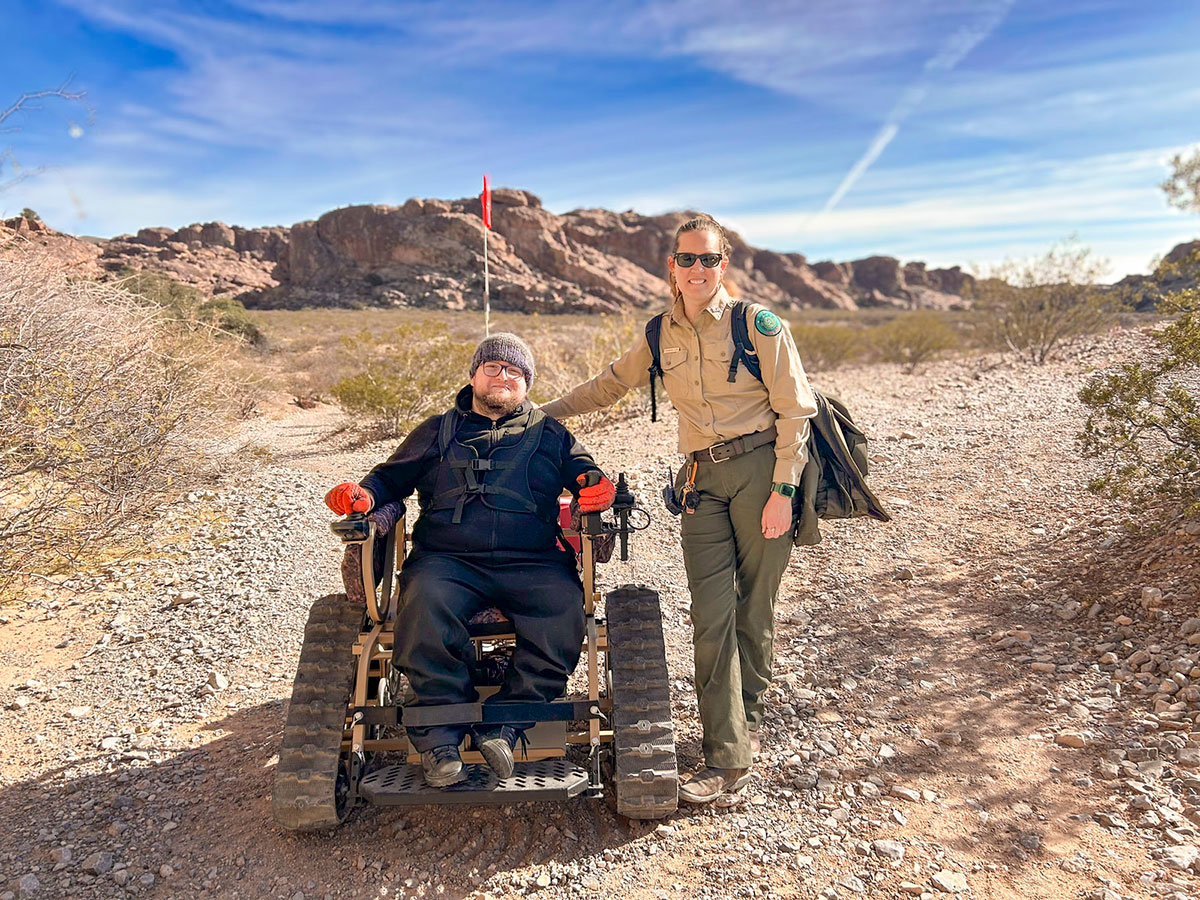
Action Trackchairs are available at some Texas state parks.
TEXAS PARKS AND WILDLIFE
Interior Initiatives
Other public landscapes are becoming more accessibility friendly as well. Georgia, Texas and Michigan have each started implementing changes and launching campaigns with inclusivity in mind. Texas Parks now offers free use of all-terrain tracked wheelchairs at 10 state parks, including some of the most visited: Brazos Bend, Cedar Hill, Dinosaur Valley and McKinney Falls. In addition to the track chairs, new sherpa-style, wheeled, adaptive hiking devices are available at those same Texas state parks.
All Terrain Georgia Action Trackchairs
Georgia’s recently adopted “All Terrain Georgia” initiative also features tracked wheelchairs—but takes the program a step further by offering free training to help visitors use them independently. Find the chairs at popular Red Top State Park, Cloudland Canyon State Park, Etowah Indian Mounds, Fort Yargo State Park and other locations.
Tennessee also recently outfitted 11 of its state parks with free, all-terrain wheelchairs. These complement the wheelchair-friendly access at a favorite attraction, Anakeesta, an award-winning adventure park that takes full advantage of its location among the trees. Wheelchair users are able to ride the scenic Chondola or Ridge Rambler from downtown Gatlinburg to the summit of Anakeesta Mountain, where viewing platforms showing off the incredible Smoky Mountains also are accessible.
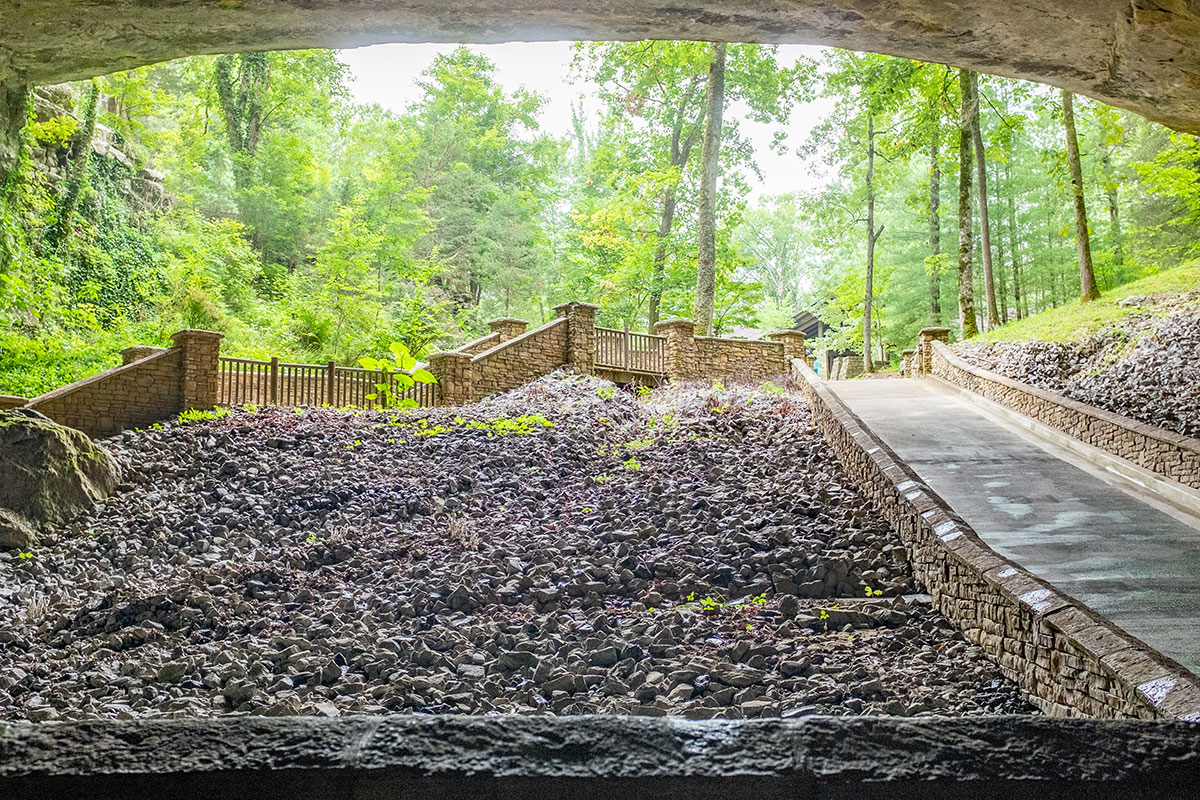
Cathedral Caverns State Park, Alabama
For a scenic subterranean journey, Lee suggests Alabama’s Cathedral Caverns State Park. Outfitted with a paved trail winding through the cave and past underground marvels, it is fully accessible and one of the rare opportunities for wheelchair users to descend into a cave.
Michigan, too, is making great strides in its efforts to make its outdoor offerings accessible. Lee, for one, has noticed. He praises the Upper Peninsula, Detroit and Ann Arbor for their efforts, calling out Marquette for its paved path through the woods to Thomas Rock Scenic Overlook and the nearby Iron Ore Heritage Trail’s 35 miles of wheelchair-friendly terrain. He also notes adaptive kayak launches available here, which means “people like me can get out on the water safely.”
WHEELCHAIR ACCESSIBLE Adventures in Grand Rapids, Michigan
At the state’s recent tourism conference, Kelly Wolgamott, Vice President of Pure Michigan, highlighted the importance of accessible tourism and raised awareness of the Michigan Department of Natural Resources’ investment in free track chairs available at 29 state parks and recreation areas. Additionally, Grand Rapids was recently named a Destination Verified city for accessible travel by Wheel the World. Here, visitors in wheelchairs can make their rounds through Millennium Park via hand cycling or paddle the Grand River, thanks to adaptive kayaking.
Accessible Travel = Better Travel
“Accessible travel changed my life,” Lee says. “And now it’s changing the world.”
So whether you’re rolling, strolling, paddling or just soaking in the view, today’s accessible destinations are making it possible for more people to feel well, be well, and travel well.
Here Are More Great Stories for You to Read!
How to Visit the Fort Worth Stockyards
Road Trip: Midwest Drive From Chicago
Best Ice Cream Shops & Factory Tours
AAA News & Events