< Back to Table of Contents
What is your favorite pizza style?
ADOBE STOCK
Pizza vs Pizza
Fire up your tastebuds with a culinary journey through the United States’ regional pizza styles, from New York to California.
By Amity Moore Joyce
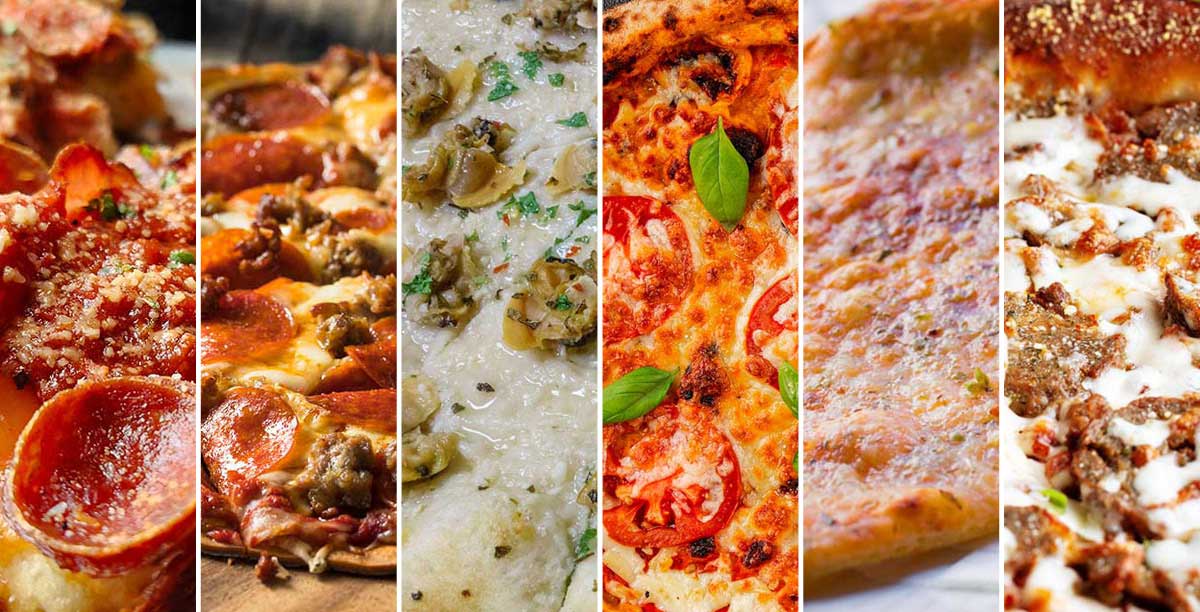
Many a debate has been had about pizza. New Yorkers claim their version—the American original—is the best. Chicagoans collectively counter, “Nah, New York, Italian immigrants may have imported pizza to you first, but we’ve perfected it.” Pizza lovers in New Haven, Connecticut, and Detroiters just smile knowing that their respective versions rank No. 1. Meanwhile in St. Louis, locals think their crust and cheese pushes their version to the top. And in California, local pizza makers believe they’ve raised the bar to the highest level. Is there a BEST pizza style? Well, it depends on who you ask and where in the country you are.
New York-Style pizza
adobe stock
New York City
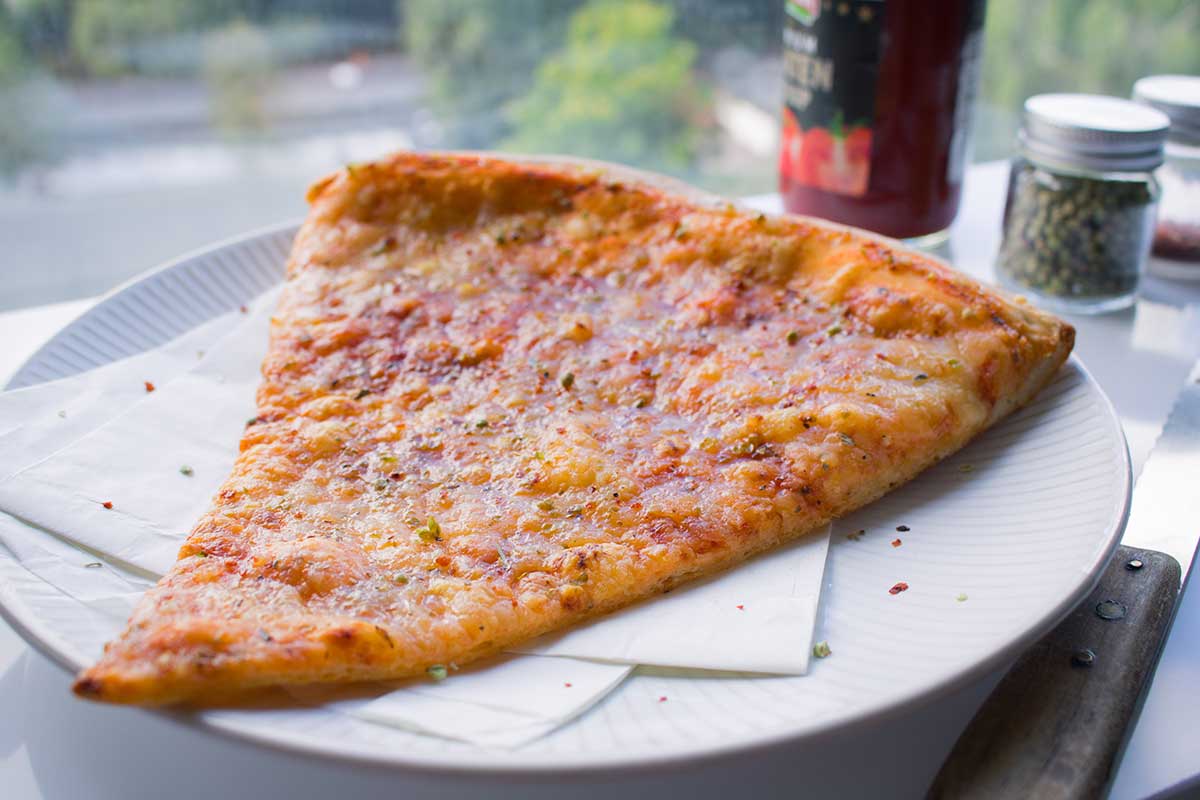
No one disputes that American pizza originated in New York. Italian immigrants imported their Neapolitan-style but baked them in coal-fired ovens instead of the traditional wood-fired versions because coal was cheaper than wood. Pizza was a hearty, easy staple of American-Italian communities that spread beyond ethnic culinary boundaries when Gennaro Lombardi secured the city’s first pizzeria license and opened Lombardi’s in New York City’s Little Italy neighborhood on Spring Street in 1905. In recent years, however, researchers and food historians have questioned the verity of Lombardi being the first. True or not, Lombardi’s remains the oldest pizzeria in New York City and the United States.
New York’s pizza evolved from Neapolitan style and is known for having a bit of char on the crust, which is thick at the edges, thinner in the middle and overall thin enough to fold. The dough is hand-tossed to achieve the optimal thickness, and the total pie is large—so large that a single piece is often bigger than a typical paper plate (thus the need to fold and eat by hand). The middle remains soft enough that the pointy end of each triangular slice droops. Low-moisture mozzarella tops slightly seasoned tomato sauce to form the flavor-profile foundation. You can add toppings, but plain is the true NYC classic.
New Haven-style pizza
New Haven
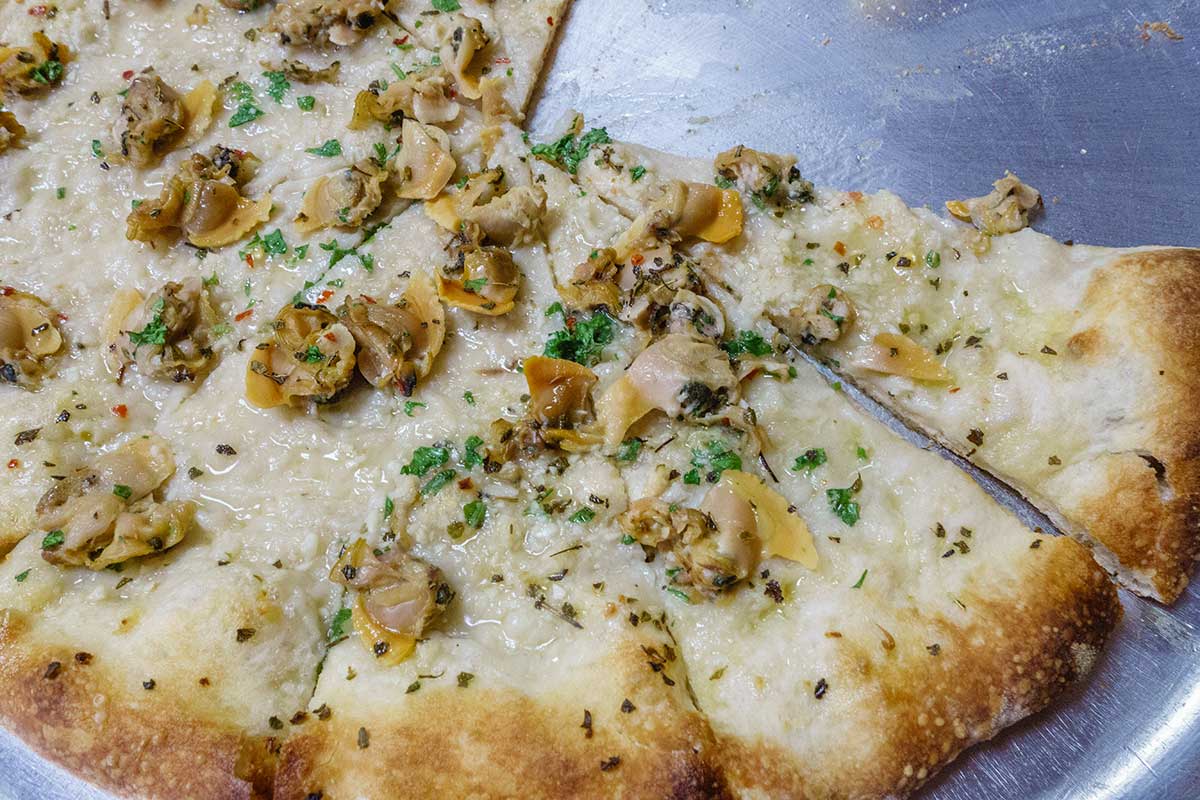
New Haven-style pizza looks a lot like a New York pie in its size and charred edges, but instead of a circle, it’s more oval and presents a heavier char overall. Also, locals refer to their pie as “apizza,” a pronunciation holdover from the Italians who immigrated here. Frank Pepe was one of them. He arrived from the Amalfi Coast in 1909 and opened his first pizzeria 16 years later on Wooster Street. Pepe’s Pizzeria Napoletana has become an institution, with additional locations along the East Coast and Florida.
So why the oblong crust? The dough is allowed to ferment longer, which loosens it. When stretched, it’s no longer perfectly round. Slide it into a coal- or more contemporary oil-fired oven, and it cooks into an oblong shape. Apizza crust is thin, charred and sooty, with the edges often obscured because the cheese extends to the very edge. That cheese is called “mootz,” and it must be ordered as a topping; it’s not automatic. Without it, you’ve just landed yourself a tomato pie. This choice is pizza at its simplest—just tangy tomato sauce and crust. Pepe’s invented a second signature New Haven pizza combination that took advantage of regionally available seafood. The white clam pie pulls together clams, aged cheese and garlic. There’s no red sauce on this one, so it’s sometimes also called a “white pizza.” Variations integrate shrimp and sometimes bacon.
Chicago-style pizza
Chicago
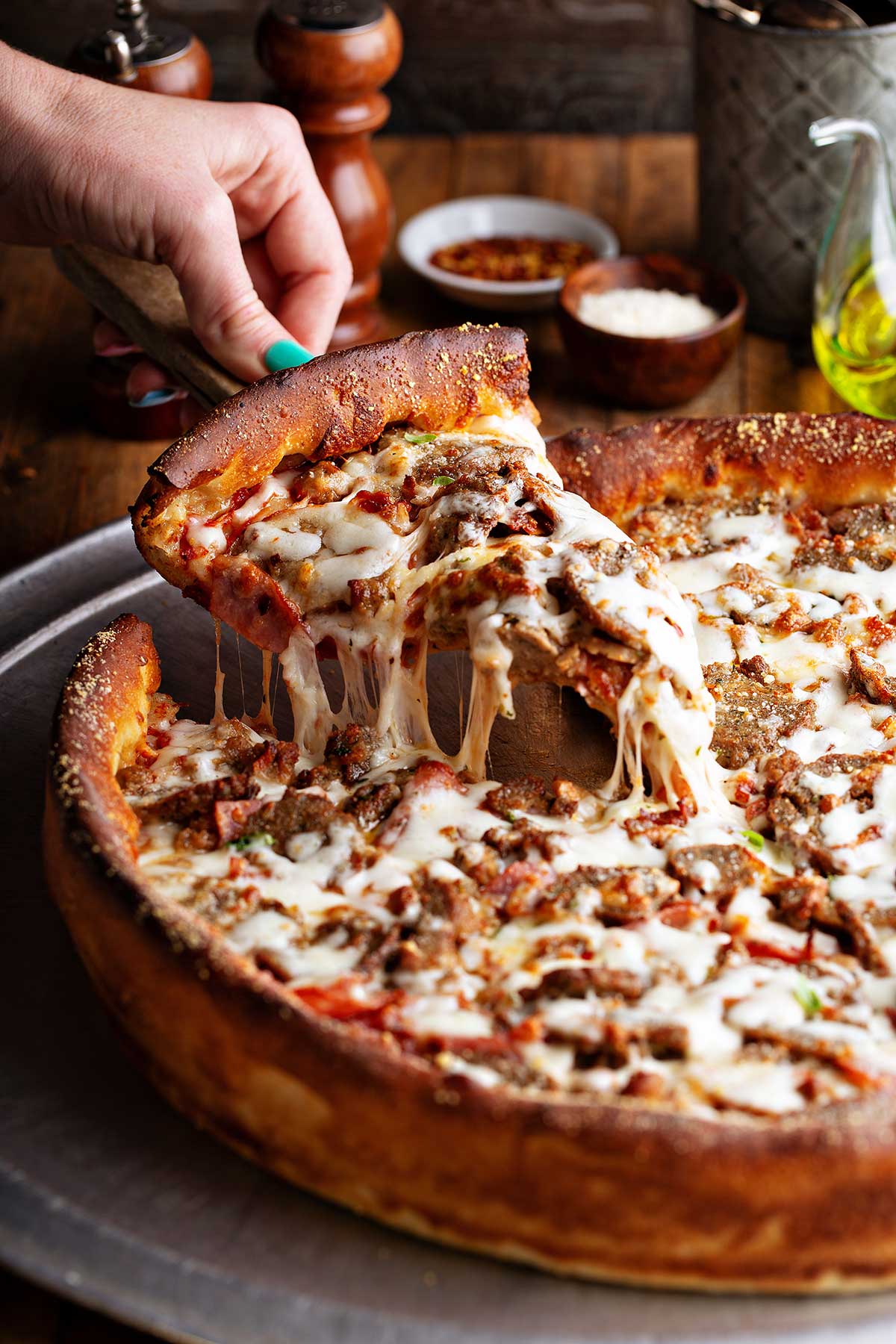
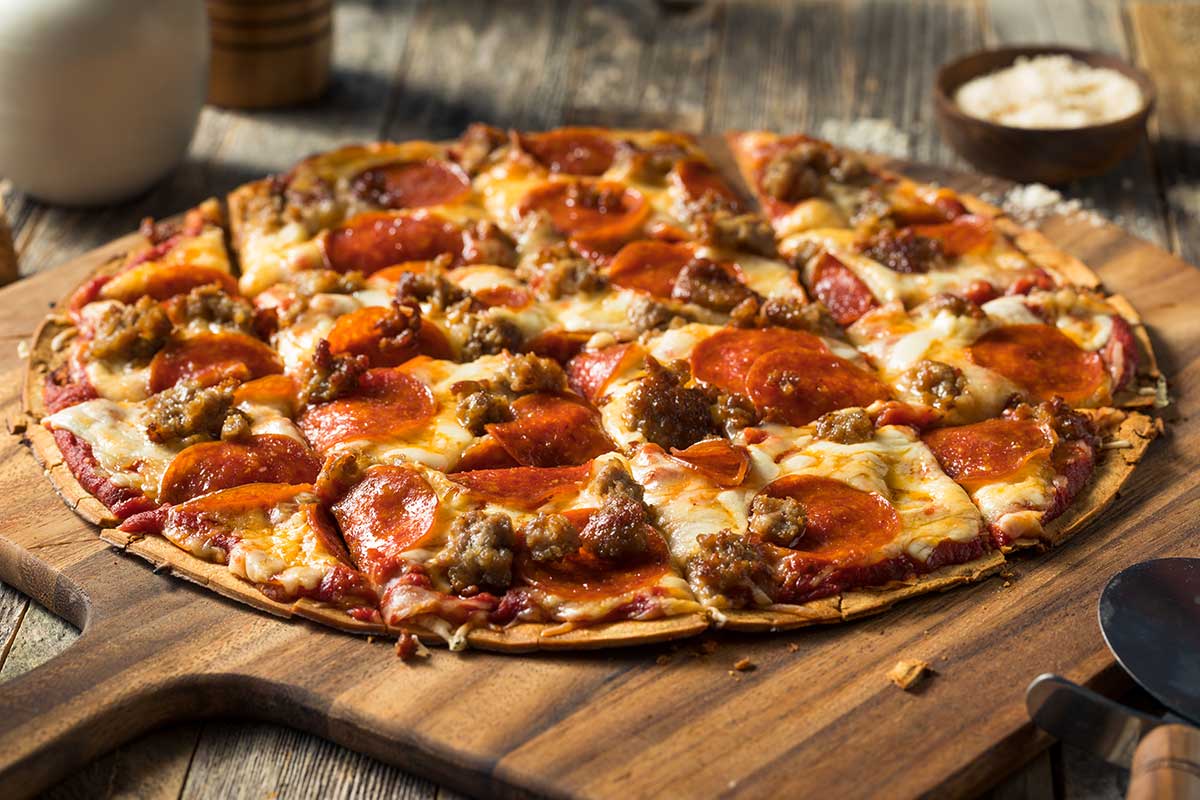
If New York’s pizza is all about portability, Chicago’s is about indulgence. The Windy City flipped the thin-crust tradition on its head in the 1940s when Ike Sewell and Ric Riccardo opened Pizzeria Uno and created the city’s signature deep-dish style. The invention gave pizza a new form: a buttery, flaky crust baked in a high-sided pan, creating room for layers of cheese, chunky tomato sauce, and toppings. Slices are best eaten with a fork and knife. The thick crust crisps along the edges while staying soft beneath its weighty layers, and the bright, herby, chunky tomato sauce goes on top of the cheese. Over the decades, this pie has become synonymous with Chicago’s culinary identity, and visitors seeking a true taste of the city line up at places like Giordano’s or Lou Malnati’s. Chicago also has a thin crust variety that does not carry the char of New Haven or NYC but does retain a chewiness to the crust. For these thinner crust pizzas, pizza makers put the cheese on top. The biggest difference in these versus those on the East Coast is the cut: slices are palm-sized squares instead of triangles.
Detroit-style pizza
Detroit
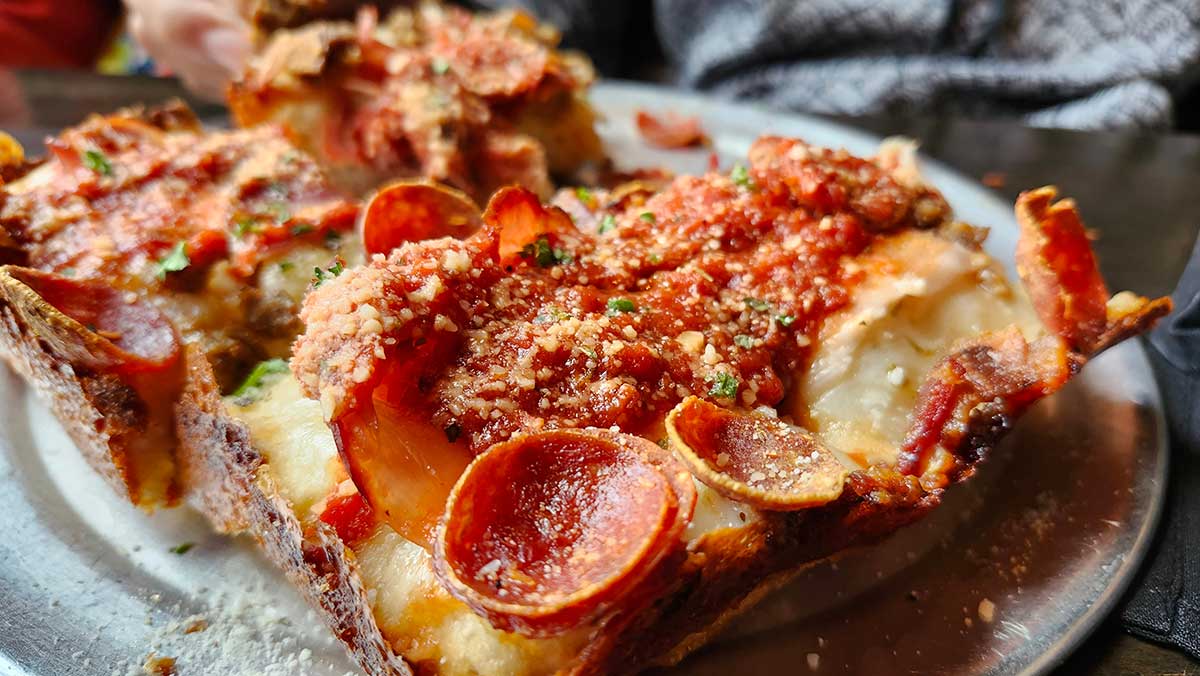
Detroit-style pizza, born in Michigan’s Motor City in the mid-20th century, owes its existence to auto-industry ingenuity and Sicily. Gus Guerra, owner of the bar Buddy’s Rendezvous, borrowed a dough recipe from his Sicilian mother-in-law and adapted steel pans he got from a friend who worked in a factory into pizza pans. The result was a rectangular pie with a crispy edge, caramelized with Wisconsin cheese. Loyalists swear by the corners of these square pies. Like Chicago deep dish, the red sauce is spooned on top. Bring a hearty appetite to savor more than one piece. It’s thick, bready and filled with toppings. Buddy’s still dishes them up, as does Cloverleaf Bar & Restaurant, which also serves Buddy’s original recipe.
St. Louis-style pizza
AODBE STOCK
St. Louis, Missouri
In St. Louis, tradition means a thin—almost cracker-like—crust cut into squares and topped with a distinctive cheese. Provel—a processed blend of provolone, cheddar and Swiss—melts low and smooth, creating a creamy layer that plays well with all kinds of toppings and gives this city’s pizza a unique flavor. Imo’s Pizza, started by Ed and Margie Imo, used the locally invented cheese in place of traditional mozzarella and founded the “Original St. Louis Style Pizza.” Now, when people mention St. Louis-style pizza, Imo’s is the next word out of their mouths.
California-style pizza
California
California-style pizza arrived later to the scene but redefined what pizza could be. Instead of ubiquitous pepperoni, sausage, mushroom, onion and extra cheese, California chefs brought seasonality to their pies. Chefs Ed LaDou, Wolfgang Puck and Alice Waters responded to Californians’ desire for healthy cuisine by adding ingredients like fresh avocados, herbs and tomato slices to thin crusts dusted with cornmeal. They also experimented with flavor combinations and ethnic influences, resulting in beloved barbecue chicken pizza, Thai chicken, smoked salmon and others. Spago, California Pizza Kitchen and Chez Panisse set the standard that many other California pizza makers follow today.
In the end, there’s no definitively “best” pizza; it’s simply the one in front of you.
Taste your way through the best pizza spots—start planning your trip at AAA.com/TripCanvas.
Check Out These Other Stories!
News and Events
10 Best Christmas Markets in the U.S.
Celebrate a Victorian Christmas on Amelia Island
Road Trip: Snowbird Drive South for the Winter