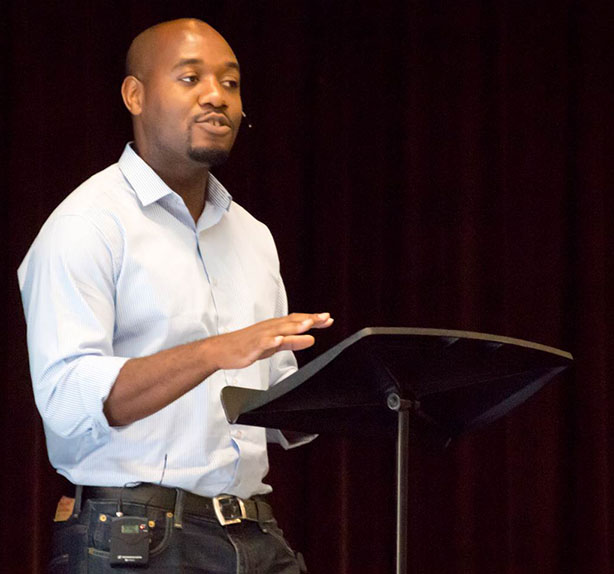
The Rev. Meshach Kanyion
COURTESY PHOTO
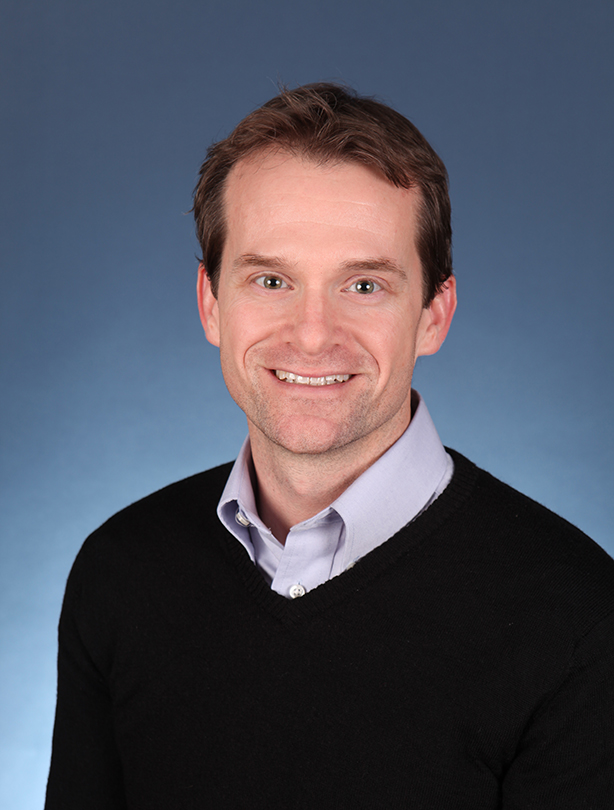
The Rev. Trip Lowery
COURTESY GBHEM
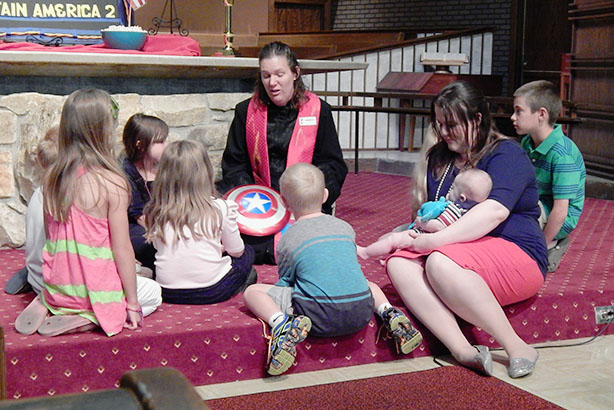
Transition into Ministry associate the Rev. Andrea Beyer leads children’s time at West Heights United Methodist Church in Wichita, Kan.
CLAUDIA VICKERY
Transition into Ministry associate the Rev. Andrea Beyer leads children’s time at West Heights United Methodist Church in Wichita, Kan.
CLAUDIA VICKERY
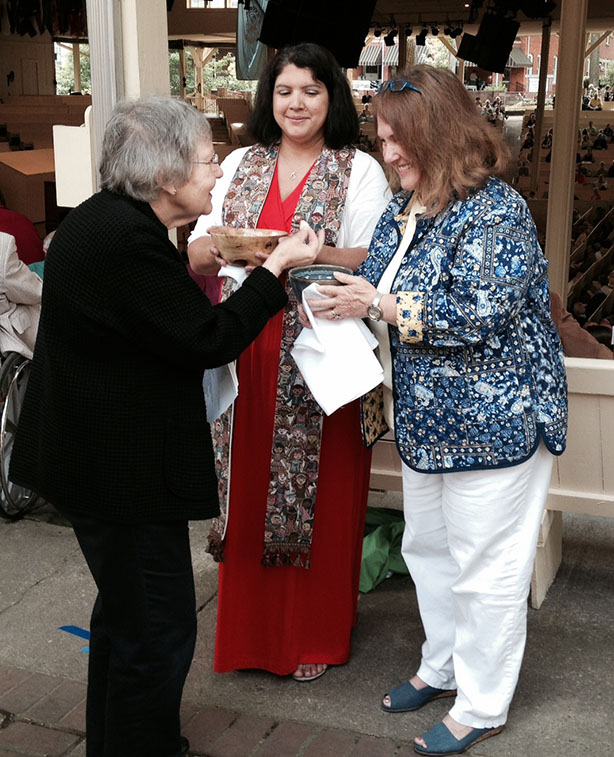
The Rev. Carmen Perry (center) and Karen Douds serve Holy Communion as part of Sunday morning worship at the Chautauqua Institution.
ROBERT DOUDS
The Revs. Meshach Kanyion, Leann Crandall and Carmen Perry represent younger United Methodists who are leading churches.
The United Methodist Church, like most mainline denominations, has an aging clergy. In 2013, the average age of its ordained clergy was 53. In 15 or 20 years, many churches and other ministries will have a dire need for qualified and educated leaders.
The question is: What is the church doing today to prepare more young adults for leadership as clergy?
The multifaceted answer includes the 2008 General Conference adopting “developing principled Christian leaders for the church and the world” as an area of focus. In 2012, General Conference created a $7 million Young Clergy Initiative Fund to increase the number of young clergy in the United States. The General Board of Higher Education and Ministry directs the work.
The Rev. Trip Lowery, director of young adult ministry discernment and enlistment for the agency, says the money supporting the initiative is distributed as grants to schools, conferences and other organizations (large and small) to support projects to recruit, encourage and educate young people who are discerning a call to ministry.
Support from home vital
While discernment events and programs provide settings for exploring one’s call, Kanyion, Crandall and Perry echo each other on the importance of another factor: having people in their lives who know and love them support their call to ministry.
Kanyion, 31, grew up as the son of a pastor.
Working in the finance industry after graduating from Ohio State University, he “shared my sense of call with people in my church. Several of them said they already had felt that I was being called. My dad was supportive as well.”
Enrolling at United Theological Seminary in Dayton, Ohio, he first considered prison chaplaincy. “As my professors helped me walk through discerning my call, I realized it was really to the pastorate.”
Kanyion serves Epiphany United Methodist Church in Loveland, Ohio, where, in addition to pastoral duties, his responsibilities include managing the facilities and overseeing the finances and a renovation project.
Crandall, 34, serves the Pisgah and Pleasant Hill United Methodist churches near Tazewell, Va.
Growing up in St. Luke United Methodist Church near Kingsport, Tenn., she says, “I took the offering, served as an acolyte and even mowed the yard. I was heavily involved in camp. All these helped affirm my call to ministry. My pastor, (the Rev.) Richard Richter, and the rest of my church family were incredibly supportive then and are still some of my best encouragers.”
Crandall graduated from Asbury Theological Seminary, where she met her husband, the Rev. Jason Crandall, who serves the Belfast and Midway United Methodist churches.
Perry, 41, is part of a clergy couple as she serves Hurlbut Memorial United Methodist Church – the only church located on the grounds of the Chautauqua Institution in New York. She teaches Bible courses there in the summer.
Perry and her husband, the Rev. Nicholas Perry, 33, are expecting their second child in December. A 2010 graduate of Perkins School of Theology, Carmen Perry received support from her pastors, family and friends as her call to full-time ministry became clearer. Now the support the clergy couple gives each other and their intentional effort to keep their marriage strong allows them to care well for their congregations.
“I have great empathy for the situation of young clergy,” she says, “We are being pulled by so many responsibilities.”
In the Oklahoma Indian Missionary Conference, encouragement of young clergy comes naturally.
“Community is one of the foundations for Native American people. Young persons find support from all over our conference, especially if they are Native, because we understand the importance of supporting and encouraging young persons for ministry and certainly for involvement in the church,” the Rev. David Wilson, superintendent of the Oklahoma Indian Missionary Conference (OIMC), says. “We see it happening everywhere, at annual conference, local church and everywhere else.”
Projects support discerning, responding
When the Young Clergy Initiative Fund was created, some thought the money might be distributed among seminaries for scholarships.
“We aren’t distributing for debt reductions.” Lowery says, explaining that scholarships would have benefited only about 14 percent of United Methodist seminarians in the ordination process. Instead, he says, it made much more financial sense to distribute it to groups that were doing great work or had new ideas for recruiting and supporting young people discerning and following calls.
“The projects are all over the place, from middle school to seminary,” Lowery said. “Some are creating internships; some new projects are engaging primarily ethnic populations; some are developing staff member training; some are offering conferences and camps for high school students, and some are offering grants to people working with youth and discernment.” Find a list of all recipients at www.explorecalling.org.
OIMC received one of the first Young Clergy Initiative grants. It will use the money to begin exploring with Native young adults their concerns and issues related to the church and ministry. The conference has offered discernment events in the past.
Mentoring and scholarships are available for young people who believe they are called into the ministry. “Our Native American seminarians have access to the Native American Ministry Fund for scholarships, and these are good scholarships,” he says. The challenge, Wilson adds, comes when a young person is ready to be appointed to a church.
“Our base salary for OIMC clergy with a (Master of Divinity) is $28,726,” Wilson explains. “It is at the poverty range. If a young person has a family, it is even more challenging.” When someone leaves ministry in OIMC, he says, it “is almost always related to finances.”
‘A culture of call’
The Great Plains Conference in 2013 had the largest number of young clergy. Lowery points to it as one of several conferences encouraging students in their call and offering opportunities to explore what a career in ordained ministry could be.
The Rev. Nicole Conard, director of young adult leadership development, says, “Great Plains is just embarking on how we build a culture of call. The Board of Ordained Ministry has created a call team and Bishop Scott Jones has appointed the first director of clergy recruitment and development.”
Adapting the candidacy summit and group mentoring model used in West Ohio (see Mentoring offers bread for the journey), Conard says, “we have found peer mentoring as well as learning from the experienced mentors can help create an environment for the Holy Spirit to be at work in articulating one’s call to serve Christ.”
As they do in other conferences, newly commissioned clergy participate in resident peer-mentoring groups with a clergy mentor.
Great Plains also has a Transition into Ministry (TiM) program for selected young clergy who, according to the conference website, “have shown outstanding potential for clergy leadership.” A grant from the Lilly Endowment provides partial funding.
“For the first two years, the candidates learn and serve from a mentoring pastor and teaching congregation; then serve three years as a solo pastor,” Conard explains. “The TiM residents meet monthly with other TiM associates for collegiality and to find joy in ministry.” Each associate also meets monthly with a lay committee from the church for encouragement, feedback and support.
As a newly created conference, Conard says, Great Plains is looking at best practices and how it encourages young clergy.
“We encourage pastors to talk about (ordained ministry) in worship, extend invitations at confirmation and to young leaders in the church. We have found that the best way to encourage young clergy is to ‘call out’ their gifts and help empower people to speak up. We say to them, ‘You have a gift of leadership and a love of God. Have you thought of being a pastor?’ It is through relationships – camps, campus ministers, young clergy, pastors.”
Polly House is a freelance writer based in Nashville, Tenn.