
The Rev. Sara Thomas
DISCIPLESHIP MINISTRIES
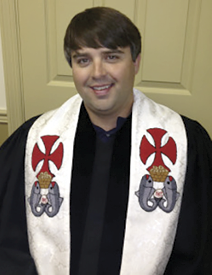
The Rev. Ross Chellis
COURTESY PHOTO
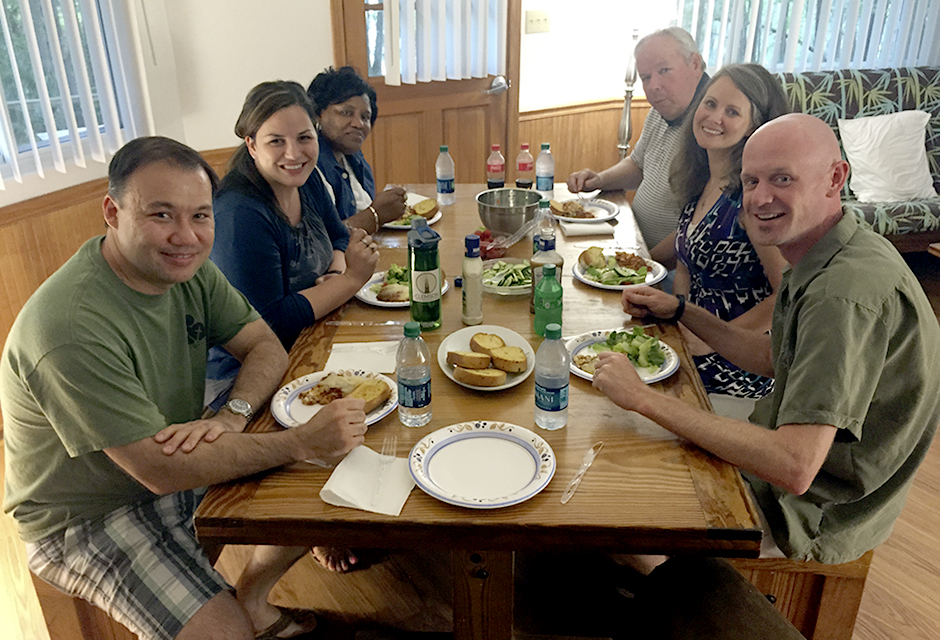
Pastors from across South Carolina share ideas for sermons on discipleship.
COURTESY ROSS CHELLIS
Pastors from across South Carolina share ideas for sermons on discipleship.
COURTESY ROSS CHELLIS

The Rev. Byron Thomas leads a Disciple Bible study class at Ben Hill United Methodist Church.
DWAYNE SULLIVAN PHOTOGRAPHY
The Rev. Byron Thomas leads a Disciple Bible study class at Ben Hill United Methodist Church.
DWAYNE SULLIVAN PHOTOGRAPHY
With Christ, there is hope.
As individuals become disciples of Jesus and live the attributes of his life, people experience Christ walking among them and discover something to believe in and something for which to strive.
Creating a culture of discipleship in a congregation “gives us the opportunity to create a welcoming place and invite others to know and experience the love of God,” said the Rev. Sara Thomas. “It overflows from the life of one who follows Jesus and acts on his behalf.
“Discipleship happens both externally and internally,” continued Thomas, chief strategist for vital congregations and deputy general secretary at United Methodist Discipleship Ministries. “It’s who we are in Jesus and how we live our lives differently because of Jesus. We’re formed inwardly by a relationship with Jesus so we can live outwardly through our relationship with Jesus.”
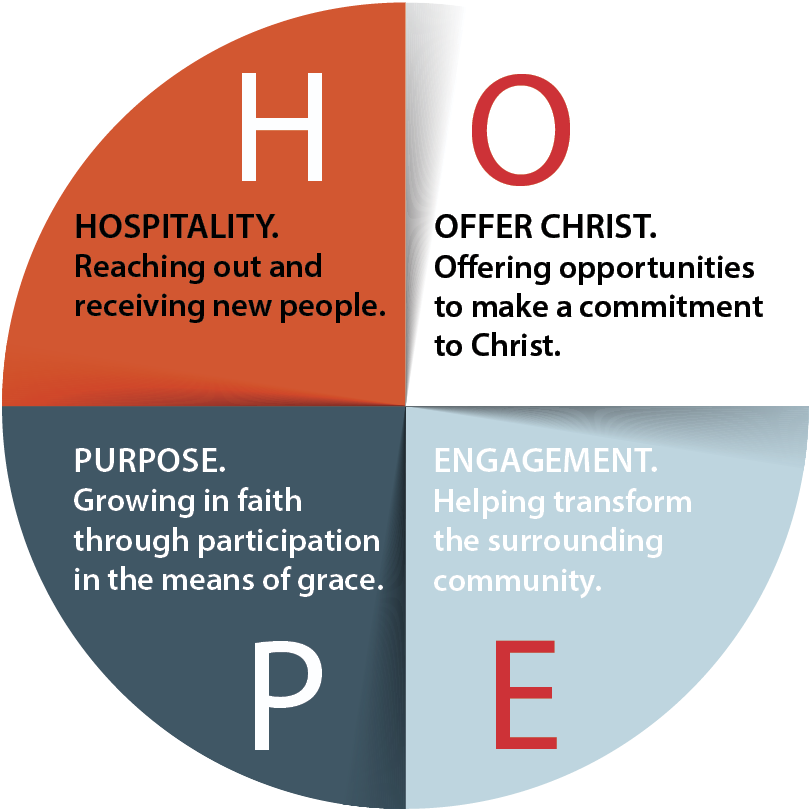
H.O.P.E.
Discipleship Ministries uses the acronym H.O.P.E. to describe the process of carrying out The United Methodist Church’s mission of making disciples of Jesus Christ for the transformation of the world.
Based on paragraph 122 of The Book of Discipline 2012, the model can help local churches establish a process of disciple making.
“Leaders always need to ask: What does discipleship look like in our local context? How are we helping people follow Jesus every day?” she said. “H.O.P.E. is one way to remember these essentials.”
Thomas explained how H.O.P.E. illustrates the process:
- H – Hospitality: Reaching out and receiving new people.
- O – Offer Christ: Offering opportunities to make a commitment to Christ.
- P – Purpose: Growing in the faith through participation in the means of grace (works of piety and works of mercy).
- E – Engagement: Engaging in acts of service helping to transform our surrounding community.
Doing good
While many people do good deeds and benefit society by their actions, the motivation of a disciple is to model the actions of Jesus, not self-gratification or glory.
As an example, Thomas discussed volunteering in a local elementary school.
“If I am reading with children in their school, what will distinguish me from any other volunteer?” she said. “I am creating a safe place for this child to experience the love of Jesus, maybe not with words, but certainly with my actions. Maybe that child isn’t growing closer to Jesus, but I am. I engage with the child through living out my faith.”
A church’s ministry in its community can provide a picture of Jesus’ love and compassion. As the church grows in discipleship, the love of Christ spills out beyond the congregation.
This begs the question for many churches: How do we get to the point that our people know what it means to be a disciple and step out of the inward focus to engage with culture?
Training disciples
Churches who train their members well to be disciples of Christ see them go out with confidence.
“I believe the senior pastor and the church leadership have to be sold out to discipleship as the model of the church,” said the Rev. Byron Thomas, pastor of Ben Hill United Methodist Church in Atlanta.
“You have to believe that discipleship is a mission, not just a program,” he added. “It’s who we are. The church does not exist if we aren’t making disciples of Jesus Christ.” When many things are competing for the church’s attention, he said, “Holding on to the discipleship model is crucial.”
Leaders at Ben Hill have identified six marks of discipleship, adapted from Power Surge (Fortress Press) by Michael Foss. They are:
- Daily Bible study
- Weekly worship
- Spiritual friendships
- Giving
- Service
- Daily prayer
“We want our people – all age levels – to embody these traits in the life of the church,” Byron Thomas said. “When they do that, people see it.
“I want to see our people demonstrate a stronger reliance on their faith and trust in God. Instead of going to some kind of self-help book, I want our people to go to the Bible for advice on how to live their lives.”
Transformation by Scripture reading and study brings a discernable difference in people’s attitude and actions, he continued.
“When people who have known you a long time, (people who) know you’re a hothead, know how you used to operate, see a change in you, they know you are different because of God,” he said. “There are changes in your behavior when you become a disciple.”
Ben Hill offers four levels of discipleship classes. The senior pastor teaches level one.
“I want the congregation to know how seriously I take discipleship,” he said. “Equipping means training, and I want them to be trained to go out and live lives of faith. In level one, members come to understand what the church’s mission is and what it means to be equipped.”
By level four, church members are serving as mentors to the level one people, modeling and teaching what living as a disciple of Christ means.
These trained disciples are the ones who will be the leaders of the church, Byron Thomas said.
He believes training in discipleship and disciple making provides an opportunity to change the decline in church membership.
“People go home and disciple their own families and bring up the next generation as church members,” he said. “It can’t stop with this generation.”
Walking the walk
For the Rev. Ross Chellis, developing a culture of discipleship begins not with walking the walk, but with talking the talk.
“We were doing a good job getting people to come to our church, but we weren’t doing a very good job getting them to grow closer to Christ once they were inside,” said Chellis, pastor of Hampton and Varnville United Methodist churches in South Carolina.
“We had lots of baptisms, lots of babies, all very quantitative,” he said. “I could tell you how many people were attending any given service or event. Everything was beautifully programmed. But eventually, our numbers began to plateau.”
Chellis wondered why the church couldn’t get its people to stop being “comfortable and satisfied” with how things were. Their programs were “fun and cool,” but really weren’t leading anywhere.
He realized that an emphasis on discipleship seemed to be the most basic need for the church.
“Programming is good, so long as there is a system to it,” he said. “You want to have programs lined up that meet people where they are, but – and this is the big but – these programs must lead them to the next step in their personal discipleship.”
Chellis sees “discipleship as the relationship we share with Jesus. That’s it in its purest form – how we follow Jesus. For me it’s a process of growing closer to Christ and in Christ.”
As Chellis talked with his churches, the congregations began to see discipleship as both internal and external, with internal coming first. As Christ opened and changed individual hearts, people were able to begin sharing the love of Christ with others. As they connected with Christ on a personal heart level, they were able to go into the community to be the hands and feet of Christ.
One church had a group of retired men who regularly met for breakfast at a local café but were not specifically involved in any kind of ministry. As the discipleship conversation progressed, the men began to see ministry opportunities around them. Now the “Handyman on Demand” group members volunteer for people around town who need help. Using a hammer or screwdriver becomes a ministry when the user’s reason for doing it is to show the love of Christ.
“You grow closer to Christ in the same way you grow closer to anyone – you take on more responsibility for that person,” Chellis said. “As you are being equipped and empowered to take responsibility for your own spiritual growth instead of just having someone else pour into you, you begin to take on more responsibility for others.”
Engaging culture
Byron Thomas said it is vitally important that churches know the cultural temperature of their communities.
“For a long time, churches have looked at the culture around them and tried to adjust to it, but you can’t be a church based on that,” he said. “Churches have to find a way to engage with people in this postmodern culture, which is generally anti-institution. I think that mostly means they just want to know what we do and why we do it.
“By equipping people as disciples, we supply our people with the answers to these postmodern questions. Suddenly, we are not reactionary; we are communicating.
“Watching a church service on a computer is no substitute for attending a church in person,” he said. “When you are there, in person, you engage with living, breathing people. You know and are known by others. Your stories become known. People who know how to be disciples know this and engage like Jesus did.”
“The process for carrying out our mission is a means of offering, sharing, being H.O.P.E. at all levels and in all aspects of the church,” Sara Thomas said. Discipleship “is an ongoing process of embodying the love of Jesus Christ in all we say and do.”
Polly House is a freelance writer and editor based in Nashville, Tennessee.
Developing a Process of Disciple Making
These resources can help churches seeking to develop a culture of discipleship and emphasize disciple making.
The Class Meeting: Reclaiming a Forgotten (and Essential) Small Group Experience, Kevin Watson (Seedbed): Readers will grow in both their understanding and experience of the class meeting. The book is helpful for exploring and living all aspects of H.O.P.E.
Shift: Helping Congregations Back into the Game of Effective Ministry, the Rev. Phil Maynard (Excellence in Ministry Coaching): Congregational leaders will find a fresh look at ministry, discipleship and effectiveness.
Gladhearted Disciples: Equipping Your Congregation with Generous and Enduring Faith, Chris Folmsbee (Abingdon Press): Readers will encounter a theologically grounded, practical and missional approach to discipleship.
Sent: Delivering the Gift of Hope at Christmas, the Rev. Jorge Acevedo with the Rev. Jacob Armstrong, the Rev. Rachel Billups, the Rev. Justin LaRosa and Lanecia Rouse (Abingdon Press): An Advent study that embodies all aspects of H.O.P.E. while exploring what it means to be sent.