EBOLA VIRUS DISEASE
EBOLA VIRUS DISEASE
EBOLA VIRUS DISEASE
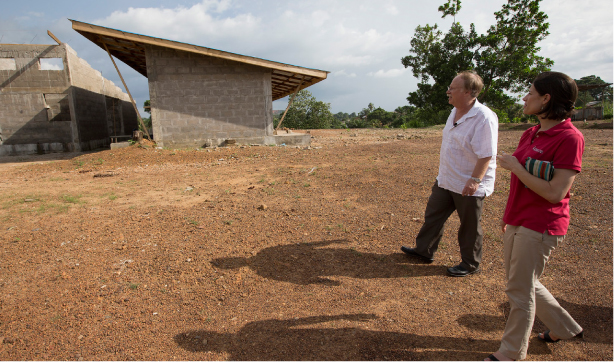
Dr. Robert Garry shows Shannon Trilli of the United Methodist Committee on Relief the new isolation ward being constructed at the government hospital in Kenema, Sierra Leone, one of the only facilities in the country equipped to track Ebola and train other health workers to help stop the disease. Garry is a professor at Tulane University School of Medicine in New Orleans.
UMNS/MIKE DUBOSE
Dr. Robert Garry shows Shannon Trilli of the United Methodist Committee on Relief the new isolation ward being constructed at the government hospital in Kenema, Sierra Leone, one of the only facilities in the country equipped to track Ebola and train other health workers to help stop the disease. Garry is a professor at Tulane University School of Medicine in New Orleans.
UMNS/MIKE DUBOSE
Ebola virus disease, according to the World Health Organization, is a severe, often fatal illness, with a case fatality rate of up to 90 percent. It is one of the world’s most virulent diseases. Direct contact with the blood, body fluids and tissues of infected animals or people transmits the infection. Severely ill patients require intensive supportive care. During an outbreak, those at higher risk of infection are health workers, family members and others in close contact with sick people and deceased patients. Ebola outbreaks can devastate families and communities, but the use of recommended protective measures in clinics and hospitals, at community gatherings, or at home can control the infection.