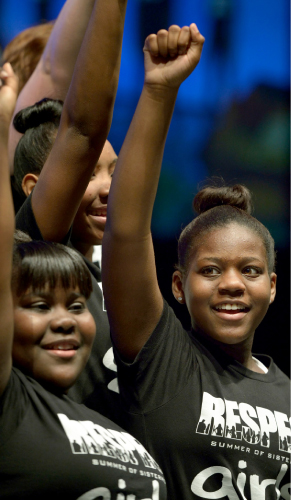
Summer of Sisterhood, a musical group from the Westside Community House in Cleveland, Ohio, performs during the 2014 United Methodist Women Assembly.
UMW FILE PHOTO/PAUL JEFFREY
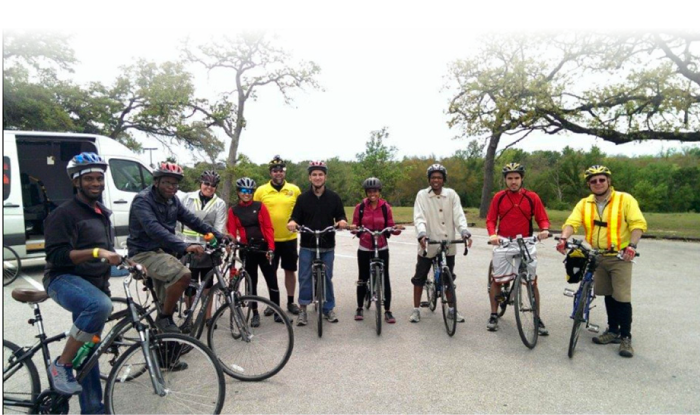
Talia Melanie McCray (third from right) developed a safety-training program for cyclists in Austin, Texas.
Talia Melanie McCray (third from right) developed a safety-training program for cyclists in Austin, Texas.
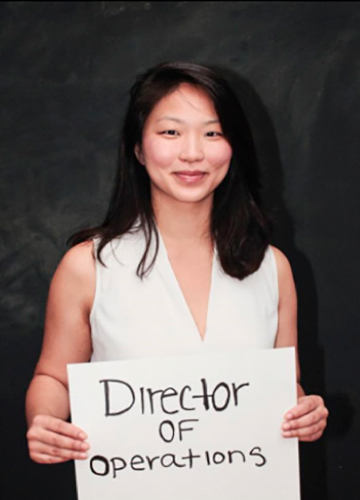
Courtney Harvey
COURTESY PHOTO
Founded by eight women in 1869 and evolving through the mergers of 13 home and foreign missionary groups for women – all rooted in the Methodist and Evangelical United Brethren traditions – today’s United Methodist Women (UMW) is a mission-focused community of more than 800,000 women. One of its initiatives, equipping women and girls to be leaders, has a profound impact on UMW members and the communities in which they live. Meet three women who honed the leadership skills they now use in their business and personal lives through UMW.
Jennifer Lim
Jennifer Lim, an attorney in Los Angeles, serves as social action coordinator for the Los Angeles District UMW and president of the UMW unit at Culver Palms United Methodist Church in California. A part of the Culver Palms unit since 2004, Lim says she was first a member “and then took on more responsibilities, serving as one of its four vice presidents and organizing our annual Flower Festival tradition.”
In 2009, Lim became the young women’s coordinator for the Los Angeles District. “It was a fun way to meet women from other churches, many of whom already held a leadership role in their home unit,” Lim says. “Serving on the board also gave me broader ties in the community and provided me with a stronger foundation and more connections for ministry work. I then rotated to the nominations committee and finally to my current position as social action coordinator.”
Participating in UMW has rounded Lim spiritually, personally and socially, she says. “One unique aspect of leadership development in our faith tradition is leadership through service and humility. The picture of Jesus washing the feet of his disciples is such a contrast to an ego-driven model of leadership or the ‘survival of the fittest’ mentality prevalent in the secular world.
“This is a valuable gift to me, as I practice my profession as a lawyer and realize that winning is not the only thing that counts in a competitive world.”
Talia Melanie McCray
Talia Melanie McCray, Ph.D., is transportation planner and director of the Ethnic College Counseling Center in Denver. She was a 2012-13 Fulbright U.S. Scholar and a 2002 Ford Foundation Post-Doctoral Fellow.
As a young teen, McCray served with the United Methodist National Youth Ministries Organization. When Elizabeth Howard, then a director of the Women’s Division of the General Board of Global Ministries (immediate predecessor to United Methodist Women), visited McCray’s mother, Howard asked Talia, then 15, if she was interested in continuing her service with the church on a national level. Eventually, McCray became a Women’s Division director.
During the eight years McCray served, she was also a full-time student. National and international travels “were always sandwiched between studying and homework” for her master’s in electrical engineering, McCray says. When she pursued a doctorate in transportation planning, the Women’s Division funded her dissertation fieldwork in South Africa through the Theressa Hoover Community Service and Global Citizen Award. Her research analyzed “how transportation, infrastructure and daily activities impact access to prenatal care for rural South African women,” she explains.
As a Ford fellow, McCray studied the role of public transit in Quebec City, Canada, in fostering social exclusion for low-income women wanting access to discount shopping destinations. In Austin, Texas, she developed a safety-training program encouraging more African Americans to embrace cycling for recreation and short trips.
When her mother died suddenly in 2014, McCray became the director of the Ethnic College Counseling Center. Founded by her parents, the center has sent more than 3,000 students to college. “My desire is to continue the work that my parents dedicated their lives to,” she says, “as well as document the effects of transportation/infrastructure projects on the lives of ethnic minorities and disadvantaged communities. Social justice is the key to my scholarship and life as a Christian woman.”
Courtney Harvey
Courtney Harvey directs operations for Women Moving Millions (WMM). The nonprofit moves gifts of at least $1 million from women to organizations serving women and girls. Since 2007, almost 200 members from nine countries have donated more than $260 million. Harvey oversees the organization’s finances, day-to-day operations, events and development strategies.
Before joining WMM, Harvey was associate director of strategic partnerships at the Thomson Reuters Foundation’s hub in New York. She worked on development, women’s rights polling and, in partnership with the International Herald Tribune, the launch of an international conference on women’s rights called Trust Women. Harvey also worked for seven years at a nonprofit focused on youth and young adults in Lancaster, Pennsylvania, where she co-directed programs on global justice and faith.
Harvey credits her skills as a public speaker, writer and group facilitator to her family roots in United Methodist Women and her involvement with UMW as a district social action coordinator and a director for eight years. “UMW is directly connected to my professional path,” says Harvey. “It’s where I became passionate about women’s and girls’ issues, honed my skills as an activist and leader, and expanded my idea of what was possible for me professionally.”
Cindy Solomon is a marketing consultant and content writer living in Franklin, Tennessee.