Crowd-Funded Startups Persevere in Niche Markets
Entrepreneurship and a new capital source combine to fuel tiny brands.
BY CAYSEY WELTON
Crowd-Funded Startups Persevere in Niche Markets
Entrepreneurship and a new capital source combine to fuel tiny brands.
BY CAYSEY WELTON
Crowd-Funded Startups Persevere in Niche Markets
Entrepreneurship and a new capital source combine to fuel tiny brands.
BY CAYSEY WELTON
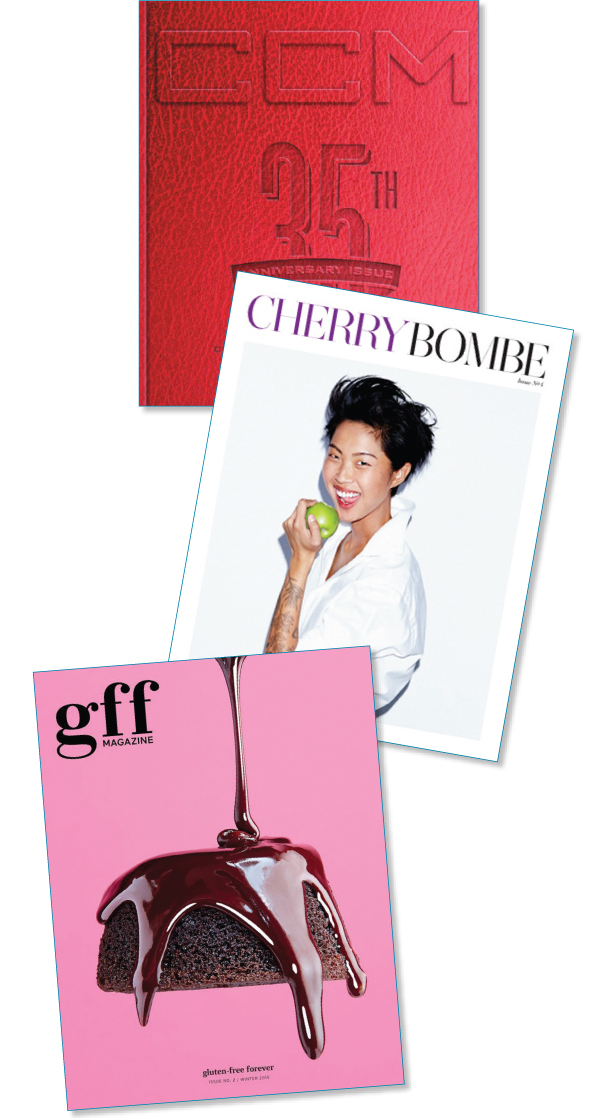
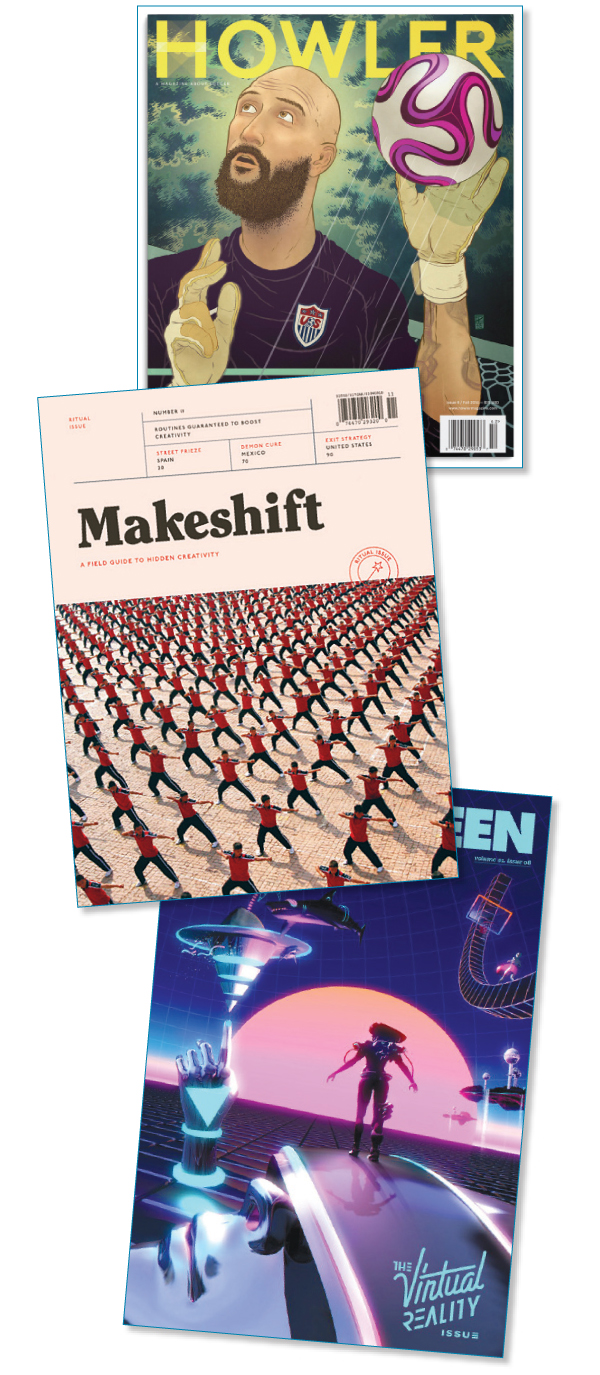
Since its beginning in 2009, crowd-funding site Kickstarter has launched thousands of opportunities for entrepreneurs and established brands. Periodical and journalism projects have been especially successful on Kickstarter, and several magazines have moved past their campaigns and developed successful business models.
Strong Success Rates
According to Kickstarter, over 900 periodical and journalism projects made it through the campaign cycle by either reaching or surpassing their goals. Nearly $5 million has been raised within those verticals with a 42 percent success rate—2 percent higher than the cumulative Kickstarter average. And unlike some other crowd-funding options, Kickstarter only releases funds if a project reaches its goal.
But what happens after the campaign is over? Does the buzz carry over? Can the new brands develop and sustain a business model that can stand up to the ever-changing challenges magazine publishers face?
FOLIO: reached out to six notable launches to see how they’ve progressed so far. While all the brands are in different stages, they all have momentum and are building viable businesses with lean resources. They also all have one thing in common—they know exactly who their audience is and what it wants.
Kill Screen
Kill Screen was one of the earliest examples of a magazine launched through Kickstarter. Its founder, Jamin Warren, had roots in publishing, as a former arts and culture editor for the Wall Street Journal. But in 2009 he decided he wanted to go out on his own and saw an opportunity to cover the world of gaming in a new way.''
“I wanted to cover it in an intersectional way, how it connects with art, music and design,” Warren says. “ I felt like there was a lot of space to think about games in a new way.”
In hindsight, Warren’s project seems pretty modest. His goal was a mere $3,500, which he easily surpassed. His total take was $5,949 through 160 backers pledging anywhere from $3 to $500.
Now, Kill Screen’s business is less humble, landing major partnerships with companies like Intel and eBay. Not only does it produce a high-quality quarterly magazine, but it’s also gotten into live content and is expanding its one-day event into a three-day show. Warren also says that traffic and revenue are up every year. In 2014, killscreendaily.com welcomed 400 percent more visitors over 2013. Likewise, it increased year-over-year revenues by 15 percent.
Sales and subscriptions account for some of Kill Screen’s income, but the bulk comes in through custom sponsored content published away from its own properties. The rest comes in through sponsorships and its burgeoning events.
Howler
Kill Screen was also the inspiration for Howler. Its founder, George Quraishi, says he saw what his friend had done and figured he could do the same with his passion for soccer.
Quraishi also has roots in publishing, so the transition was by no means foreign, but he is very candid in admitting that he still has a lot to think about in developing Howler’s business strategy. In essence, the brand is moving faster than he and co-founder Mark Kirby had expected.
Howler’s campaign goal was much a more ambitious $50,000. But its approach for reaching American soccer fans looking for in-depth journalism struck the right note, as it overachieved and reached $69,001 in funding.
Since, the company has expanded its roster of paid contributors and cross-brand synergies. Howler was an authoritative voice on the World Cup last year and developed content partnerships with other brands like Deadspin and Slate. In addition to growing the subscriber base for its quarterly, it’s also getting bullish on digital. Quraishi says the brand will continue to leverage its successful podcasts, and will look to social media for more audience engagement.
Cherry Bombe
Cherry Bombe is another endeavor by publishing pros. Claudia Wu and Kerry Diamond initially took on the project in order to create an annual magazine for Diamond’s new restaurant venture, but they shifted their strategy when they realized it could be more than an annual one-off.
Wu was formerly with Harper’s Bazaar and had kept an affinity for print. “I think there will always be a market for a new magazine,” she says. “We are huge fans of print so we didn’t have to think about doing it in print instead of digital.”
Otherwise, she confesses that their plan wasn’t developed too far beyond content and platform. But that is changing.
While the team is still small, with just Wu, Diamond and an assistant, the brand has grown quickly since its campaign, which raised $42,675 on a goal of $30,000.
The magazine has maintained a small, but stable circulation and the brand ventured into events last year. Wu expects that piece to grow more in 2015 and she says that the website, which is now mostly a subscription portal, will soon be an online hub for free content. But for the time being, she says the brand is “taking it slow.”
Gluten Free Forever
Gluten Free Forever is still very much in its youth, after successfully completing its campaign in April 2014. But there was clear momentum from the start, as GFF exceeded its goal of $90,000 by $4,587.
Founding editor-in-chief and publisher, Erika Lenkert, says the brand has more than doubled its circulation since launch—from 5,000 to 12,000, which is impressive for a new quarterly with a $15 cover price. But like others of her ilk, Lenkert says she wants GFF’s growth to be careful and deliberate.
“We’re trying to pace ourselves,” she says. For now, revenue is beholden to the consumer, but Lenkert indicates that ad selling is underway.
Makeshift
Makeshift’s story is unique. Not only did the brand raise nearly three-times its goal, bringing in $42,718 versus a $15,000 goal, but it has carved out a global foothold for creative innovators with limited resources.
It started out as an idea shared between founders Steve Daniels and Myles Estey. Both were journalists that spent time in underdeveloped nations and discovered a wealth of resourceful innovations. So the concept was to bring those ideas to life in a magazine.
Circulation has reached 25,000 globally and has entered a distribution agreement with Barnes & Noble. The content is developed through a network of over 500 global contributors, which are led by a staff that grew from two to about 20. It has a live content division. And it’s making most of its revenue through major sponsors like GE and Openbox. It’s all produced remotely, without an office.
“The model has changed throughout time as any small business does,” Estey says. “You have to be agile and mobile and willing to adapt to change. We run a unique business and we have people all over the world, which has allowed us to grow immensely.”
CCM [Christ Community Music]
For CCM, Kickstarter was an opportunity to revive a print magazine it had given up on. Like many other brands, CCM folded its print magazine and replaced it with a digital edition. But as the brand approached its 35th anniversary, consultant Smitty Wheeler saw an opportunity to revive CCM in print, at least for one issue.
Wheeler admits the brand’s leadership wasn’t keen on revisiting print, but he was determined anyway and launched the campaign. The project raised $10,700 above its goal of $40,000, proving its audience hadn’t given up on print.
Since then, the brand has produced several more one-offs. Wheeler says the conditions vary based on a feature artist or event, but when CCM goes to print, it runs off anywhere from 150,000 to 500,000 copies, which proves Kickstarter holds value for more than just startups.
While all of these brands might have their own unique stories to tell, they all share a common vision to deliver a product their stakeholders invested in. Whether you’re a startup or an established legacy brand, these titles prove the inherent value of giving your audience what they want. 