Cloud Computing, Mobile Web and Apps
Why associations can’t afford to sit on the sidelines.

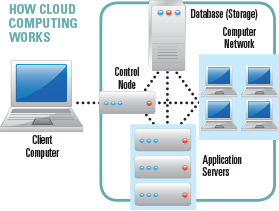

Everywhere I turn these days I keep hearing the term “the cloud”—my data will be stored “in the cloud,” my applications will be accessed “from the cloud,” and my music will be streamed “from the cloud.” It all sounds very cutting edge, and in a way, it is.
Cloud computing is currently a $74 billion industry that accounts for 3 percent of global IT spending according to the National Inflation Association (NIA). By 2013, NIA projects that cloud computing will become a $150 billion market and earlier this year, tech research firm IDC said that spending on public and private IT cloud services will generate nearly 14 million jobs worldwide from 2011 to 2015.
That’s a pretty big industry, even if you can’t really see it.
So what really is cloud computing and why should associations take notice?
In short, cloud computing is a clever way for the end user (that’s you) to access any program or any piece of data, anywhere in the world. Yes, you still have to pay for it, but you only pay for what you use. This model allows you potentially to have access to much more sophisticated programs and infrastructure than you could afford if you had to buy, install and support it all yourself.
However, the concept is far from new, as so-called “thin clients” have been around for decades in the corporate environment. Remember that data terminal with the green screen that accessed a mainframe computer? The key difference between the old approach and cloud computing is that instead of those thin clients accessing a dedicated computer in your (or your company’s) office, the server(s) is now shared by many groups, all unrelated, over the Internet.
Another more direct and well-known example of cloud computing is Web-based email services such as Gmail and Hotmail. With these services, you access a fully functional email system through the Web, with no technical support or heavy-lifting on your end.
Advantages of cloud computing
For associations, cloud computing offers a terrific opportunity to reduce overhead while maintaining cutting-edge technology systems. There are already some big, trusted players in the market such as Amazon, Google and Oracle, to name a few. To get started, it helps to know a little about your current usage (storage, bandwidth, etc.), but most have inexpensive plans that allow you to test them for very little money. You can then expand it as you feel more comfortable. Data encryption and security have improved dramatically and a good service agreement will address the prickly issue of who owns your data if you don’t pay your bill.
In the end, cloud computing is, without a doubt, the wave of the future for both personal and business technology, and can very well be a major cost saver for your association in the future.
Mobile web versus native applications
One of the more divisive technical debates right now is centered on how best to deliver content and information to mobile users. Apple has made a name for itself with its huge store of cool, useful and fun iPhone applications. Android, with its open-source architecture, is catching up fast, and Blackberry has a robust store as well. However, developing and maintaining separate applications for each of these platforms can be very time-consuming and expensive. Enter the mobile Web.