Plastic Packaging and the
"War on Food Waste"
By American Chemistry Council
“ Researchers are working on inexpensive plastic sensors that could monitor a food’s freshness...”

Go to the Plastics Make it Possible® web site (www.plasticsmakeitpossible.com) to check out how celebrity chef Robert Irvine is spreading the word about plastics and sustainability at the New York City Wine & Food Festival in October.
How much of the food produced around the world is thrown out each year? It’s probably more than you think.
Experts typically differentiate between food “loss” that happens in the supply chain and food “waste” that happens at the retail and consumer levels. In the USA, these experts today estimate that combined food loss and waste—from farm to fork—is approximately 42%.
That’s right—more than four out of every ten pounds of the food produced in America for our consumption actually is never consumed.
Truth be told, developed nations waste an awful lot of food, often while it’s still suitable for human consumption—much more than developing countries. According to the U.N.’s Food and Agriculture Organization, “the per capita food waste by consumers in Europe and North America is 95-115 kg/year, while this figure in Sub-Saharan Africa and South/Southeast Asia is only 6-11 kg/year.”
That’s more 250 pounds (113 kg) of food waste per American, which equates to an average cost of $1,600 per year for a family of four. Yikes.
And according to EPA, more food becomes municipal solid waste in the USA than any other single material—more than 34 million tons of food waste was generated in 2010 alone.
And just how big is the global food loss and waste problem?
- 1.3 billion tons of food is lost or wasted every year—34%.
- One out of every four calories produced globally is lost or wasted.
- Water used to produce lost or wasted food equals 24% of all water used each year for agriculture and could fill 70 million Olympic-sized swimming pools.
Just imagine all the time, energy, and resources involved in growing, protecting, delivering, preparing, and serving that food, as well as the accompanying impact on the environment. And then imagine simply throwing it all away.
And here’s a scary look at the future: The world will need 60% more food calories in 2050 compared to 2006, if global demand continues on its present trajectory.
OK, that’s the problem. So what’s the solution? (If you think plastics are somehow involved in the solution, you’re right.)
Multiple international, national, and local organizations have declared a “War on Food Waste,” from the United Nations to elementary student groups. Experts generally agree that reducing food loss and waste requires a multipronged approach that attacks the major causes specific to each country—for example, focusing more on supply chain issues in developing countries and more on consumer behavior in developed countries.
Regardless of strategy, plastic packaging plays a significant and often major role in reducing food loss and waste in every stage of the food production process: farming, processing, distribution, storage, retail, and households.
Let’s take a look at the area where most food is wasted in America—retail and households—for some examples of how plastic packaging helps us deliver more food with less waste.
Protection: To protect and deliver food to us safely, packaging needs to provide various barriers to oxygen, light, temperatures, moisture, microbes, critters, and dirt.
- A new ultrathin plastic film blocks transmission of oxygen, increasing shelf life of fresh meats to 21 days or more.
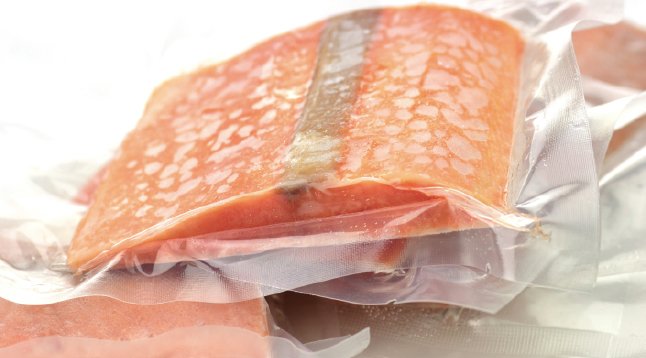
- Factory-sealed plastic containers and bags help preserve the flavor, texture, and nutrients of food by locking out air, preventing absorption of nasty odors and flavors, and averting “freezer burn,” all of which lead to food waste.
- High-tech food pouches are made with super-thin layers of plastic (and other) films that work together to protect food and keep it fresher longer.
- And can you imagine life without airtight plastic zipper bags and containers that help protect our food?
Freshness: This is the big one—we’re rightfully sticklers about making sure the food we eat is fresh… and also looks and smells fresh.
- Some plastic films now can absorb odors that mistakenly cause consumers to think that food is spoiled.
- “Active” plastic packaging helps preserve food freshness by various means, such as capturing a reduced-oxygen air mixture in the package, controlling the exchange of oxygen and carbon dioxide, and incorporating antimicrobials.
- A new plastic vacuum package prevents discoloration of meats and extends shelf life ten times longer than store-wrapped meat, resulting in 75% less food waste.
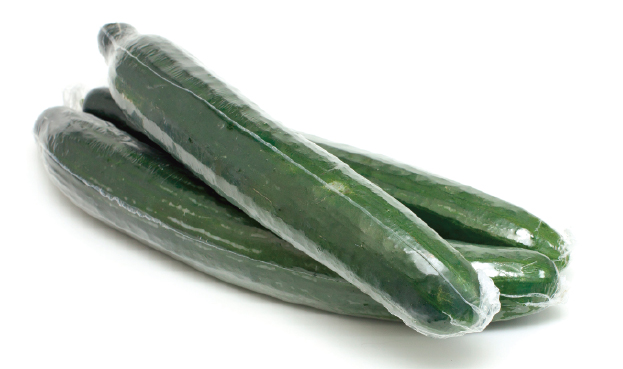
- Why wrap a cucumber or an apple in plastic film? There’s a good reason—it greatly increases shelf life to reduce food waste.
Convenience: Busy Americans frequently are looking for meal prep shortcuts—surprisingly, some of these can reduce food waste.
- Prepared packaged meals can reduce the food waste associated with meal preparation. Food processors can reuse food scraps, whereas consumers generally don’t—up to 10% or more food can be wasted when creating home meals.
- Individual side and main dishes in lightweight plastic pouches designed for the microwave also mean no food prep waste—and the pouches now vary from single-serve to family size, so we can buy only the amount we need.
- Americans often buy more food than needed, resulting in spoilage and waste. Airtight plastic bags and containers help us store and preserve extra food… or even a week’s worth of prepared meals. Instead of throwing out expensive food, consumers can simply cook and store it in the refrigerator or freezer. Chili anyone?
- Eighty percent of Americans say their families make a point of eating leftovers to save money—storing leftovers in airtight plastic bags and containers can help keep them fresher longer.
Portion control: Fifty-six percent of Americans say they are looking for products that help them practice portion control… which also can help reduce food waste.
- Pre-portioned packaging allows us to open just the amount of food or snack we need, which can be particularly handy in single-person households and in those with kids.
- For the leftover-averse, packaged meals and dishes are available in a variety of sizes, so we can heat only what we plan to eat.
- New plastic packaging for fresh and cooked meats divides contents into separate, sealed, portion-size compartments—in modified-atmosphere packaging that also extends shelf life.
- When packing lunches or snacks, the wide variety of sizes of plastic zipper bags and containers allow us to control portion size, whether we’re trying to control weight, save money, or waste less food.
What’s on the horizon? One of the biggest causes of food waste is consumer confusion over expiration dates printed on food packaging. Researchers are working on inexpensive plastic sensors that could monitor a food’s freshness: acidity levels, condition of a chicken breast, whether frozen foods were defrosted, and so on. Direct measurement of freshness could represent an enormous leap beyond misunderstood expiration dates, resulting in much less food waste.
But doesn’t all that packaging just create more waste? In fact, just the opposite is true. Studies find that increased use of packaging greatly offsets the impact of wasted food—up to ten times more resources (materials, energy, water) are used to make and distribute food than are used to make the packaging that protects it.
In other words, plastic (and other) packaging is an investment in protecting our food—and the resources we use to produce it.
Try as we might, we will always create some waste. In the end, which would we rather create—a little bit of plastic waste, or a lot of food waste?