Medical Plastics Reach New Heights in China
New materials & processes are hot topics in a region where
healthcare-related plastic technologies are expected to flourish
By Mike Verespej

Like Shanghai’s skyline, medical plastics development in China is shooting upwards (photo courtesy of property developer Sun Hung Kai Properties Ltd.).

Like Shanghai’s skyline, medical plastics development in China is shooting upwards (photo courtesy of property developer Sun Hung Kai Properties Ltd.).
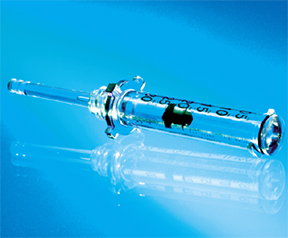
Bayer MaterialScience’s products are found in medical applications such as polycarbonate ampoules, reports the company.
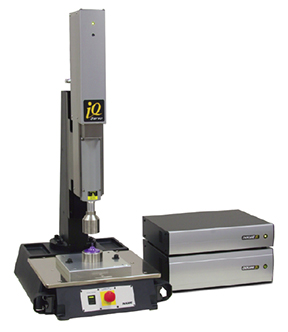
Coupled with a servo-driven ultrasonic welder, Dukane’s Melt Match technology reportedly matches welding speeds with the melt flow rate of plastic, optimizing welding.
SPE’s first medical plastics conference in China this December couldn’t be better timed. The reasons? China has become the fastest-growing and second-largest global market for medical devices. And new opportunities are rapidly emerging for manufacturers, converters, and material companies as China’s medical manufacturing continues to evolve from being a producer of commodity products to being a manufacturer of higher value-added medical parts and devices.
The image of China as “‘the factory of the world’ operating with Western know-how [is] coming to an end,” says Willem De Vos, chief executive officer of the Society of Plastics Engineers. “Soon, many product labels will say ‘Designed, Developed, Engineered, and Manufactured in China.’”
International market research firm The Freedonia Group sees the same trend.
“Spurred by rising investment, China is evolving into a leading worldwide developer and supplier of technologically advanced medical products,” said Group authors in its “World Medical Device Packaging” report published in August 2013. “China will provide the largest and broadest sales opportunities for medical device containers and related accessories due to burgeoning domestic and export markets for its medical goods.”
“The market for medical devices and packaging in China is in an exponential growth phase due to increasing healthcare in China and improved quality for exports,” adds Ali Ashter, co-chair of the upcoming event called “SPE China Plastics Conference – Medical Devices & Packaging 2013.” “Our Medical Plastics (Division) board of directors felt this would be a good opportunity to bring our technology and knowledge base to that market.”
The conference—which will focus on global advances in plastics for medical devices and packaging—will be held December 11-12 at the Shanghai Marriott City Centre in the Huangpu District of Shanghai, and it will be run concurrently with another event, “SPE China Plastics Conference – Injection Molding 2013.” The two conferences are expected to attract more than 300 attendees from as many as 25 different countries, and will include a joint networking reception and dinner, as well as an exhibit area for sponsors.
Come Together: For a Mission
The medical plastics conference will address technical processing issues, emerging technologies, and how a variety of materials—including polycarbonate, PLA, styrenics, thermoplastic polyurethanes, and bioplastics—are being used for breakthrough medical disposables, durables, diagnostics, and hardware.
“The mission of the conference is to bring U.S., European, and other plastics professionals to China to share their knowledge on products and processes and to enhance business through networking,” says Ashter, an R&D engineer for EMD Millipore Corp. (a Bedford, Massachusetts, USA, company that is a division of Germany-based Merck KGaA). “We also expect to explore new developments” that are emerging from Chinese companies.
The conference will have approximately 20 speakers, including experts on materials from Bayer MaterialScience and Lubrizol Corp. and on ultrasonic welding from Dukane Corp., plus a number of academics from both the USA and China who will discuss emerging technologies that can make manufacturers more efficient or allow them to use existing materials in new ways.
In addition, product design and development expert Len Czuba, president of Czuba Enterprises Inc. in Lombard, Illinois, USA, will discuss the risks and consequences of reusing single-use medical devices. “Reprocessing and reuse of single-use devices [SUDs] is being promoted as an effective cost-saving method and an environmentally responsible use of resources,” says Czuba. “But SUDs are made with the presumption that after a single use, the device would be abandoned. The reprocessing and reuse of SUDs directly violates the principles on which so many manufacturers of SUDs have based their products.”
PC, TPEs, and PLA
With medical device manufacturers constantly looking at new ways to improve patient safety and, at the same time, reduce costs, the conference will explore what polymers fit what medical applications—and the advantages they provide.
“The challenges to device manufacturers today are different than just five years ago,” and have allowed polycarbonate and PC/ABS blends to make increasing market inroads, says Pierre Moulinie, product steward for medical and food-contact PC products at Bayer MaterialScience.
“Polycarbonate… exhibits good creep resistance and low stress relaxation which allows it to maintain tight, leak-free connections better than other less-rigid materials,” explains Moulinie. “This is important in many medical devices such as Luer fittings, stopcocks, and needleless connectors.” Another plus for PC in medical applications: It offers dimensional stability, molding accuracy, fast cycle times, excellent moldability, and exceptional shot-to-shot consistency, he says.
Another category of plastics making medical inroads is thermoplastic polyurethane.
Biocompatibility makes thermoplastic polyurethane ”an excellent alternative to latex, silicone, flexible PVC, and many other thermoplastic elastomers for medical applications,” says Anthony Walder, global technology manager for Lubrizol Advanced Materials in Wilmington, Massachusetts. “TPUs are excellent materials for applications that involve bodily fluid contact such as catheters, balloons, stents, and other implantable devices,” says Walder, who will talk on both the use of TPUs as medical grade elastomers and how different variables affect the processing of TPUs.
“Polyurethanes also can be found in applications involving blood, urinary fluid, gastric fluid, [and] spinal fluid,” and in applications where there is contact with skin, muscle, fat, and bone, says Walder. Critically, he said, there are a number of different ways to process TPUs into end products: extrusion into tubes and profiles, injection molding into complex components, and casting thin films.
Styrenic copolymers—another type of TPE—have favorable surface and mechanical properties, giving them traction in soft tissue-related medical devices, says Goy Teck Lim, managing engineer with Exponent Science and Technology Consulting Co. Ltd. in Hangzhou, China.
Products with hydrophobic surfaces, he explains, promote the adsorption of proteins and the growth of cells, making them suitable to be used for wound patches for healing and tissue scaffolds for tissue transplant and reconstruction. At the conference, Lim will discuss the creation of hydrophobic surfaces using electrospun dendritic polyisbutylene-b-styrene copolymers, the technical issues with such co-polymers, the different processing technologies to develop functional fiber meshes, and the potential of applying composite technology to combine linear and dendritic styrenics with nanoclays and carbon black to boost physical and mechanical performance.
The use of bioplastics for the medical market will also be on the agenda.
Stephen McCarthy, co-director of the Massachusetts Medical Device Development Center and a professor in the department of plastics engineering at the University of Massachusetts (Lowell), will address the benefits of using polylactide polymers for medical implants applications because of their biocompatibility with biological tissues.
McCarthy will also discuss how the degradation behavior of PLA differs based on the processing technique, the use of silk nanofibers as a wound healing scaffold for burns, and the use of biodegradable hollow nanospheres for drug delivery because of their ability to protect insulin from stomach acids (so that diabetics can take insulin orally).
Processing Expertise
How processing can impact the use of materials will be another key focus of the conference. For example:
- Costas Gogas, research professor of engineering at the New Jersey Institute of Technology, will discuss how hot melt extrusion (HME) can produce polymer matrices that meet the complex requirements of targeted oral drug delivery products, and how to use HME to make intra-vaginal rings, implants, stents, ophthalmic and transdermal delivery systems, and active packaging for medical and health-related products.
- Dukane Corp. will discuss how its Melt Match technology, which matches welding speeds with the melt flow rate of plastic, can optimize the welding process and the weld joint when used with Dukane’s servo-driven ultrasonic welder.
- Bondable Biopolymers CEO and conference co-chair Harrison Yu will discuss the method his company has developed to process polyhydroxyalkanoates using long relaxation times during and after processing. This avoids the use of high temperatures and solution preparations and also bypasses conventional blend and compounding steps, allowing the creation of PHAs with additional performance features, he says.
- EMD’s Ashter will discuss how to manipulate viscoelastic fluid properties, viscoelastic relaxation times, processing parameters, and environmental conditions to alter the size and morphology of electrospun fibers so they can be used in cell scaffold applications.
- Wei Min Huang, associate professor at Nanyang Technological University in Singapore, will discuss the development of shape-memory plastic label prototypes for medical packaging that have built-in temperature monitoring and anti-counterfeit functions.
Huang will also discuss how recent developments in advanced shape-memory technology allow companies to reshape product design, using existing materials, and “save themselves a lot of effort, time, and money spent developing a new material.”
“Instead of introducing a new material—which is normally an obstacle in a lot of real engineering practice—now we can comfortably work on those materials that we are already very much familiar with in design and fabrication to achieve what most likely has been beyond our imagination in the past,” says Huang.
“Shape memory… provides alternative solutions to many applications in which difficulties arise for the traditional materials and mechanisms in meeting the requirements,” says Huang. “[This] is particularly useful in shaping tissue in biomedical engineering, in particular for minimally invasive surgery [for] retractable stents, self-tightening biodegradable staples, and cooling-responsive stents.”
A Unique Opportunity
The lineup of speakers and the opportunity to network in China creates a unique opportunity for attendees, says SPE’s De Vos. “Our large membership in the USA will not only benefit from the business contacts, but they will start to see the benefits from the new knowledge and innovation highways” emerging in the Chinese medical market, he adds. “The Chinese plastics converting market has become the most important in the world…, which is reflected by the investment all over China in R&D centers from many multinationals.”
More details about December’s SPE China Plastics Conference – Medical Devices & Packaging and SPE China Plastics Conference – Injection Molding can be found at www.4spe.org.