Reaching next door – with Nextdoor
Reaching next door – with Nextdoor
Reaching next door – with Nextdoor
Reaching out to the community in the digital age can present new challenges. As people become less comfortable with house calls from neighbors, pastors and friends, churches can find making the community connection more than a little difficult.
When the Rev. John Russell began dreaming of a new English-as-a-Second-Language program to serve Hispanic members of Saint John United Methodist Church in Mobile, Alabama, he found layers of complications. Key was how to get the word to a community where people are very cautious about giving contact information to an unknown individual or organization.
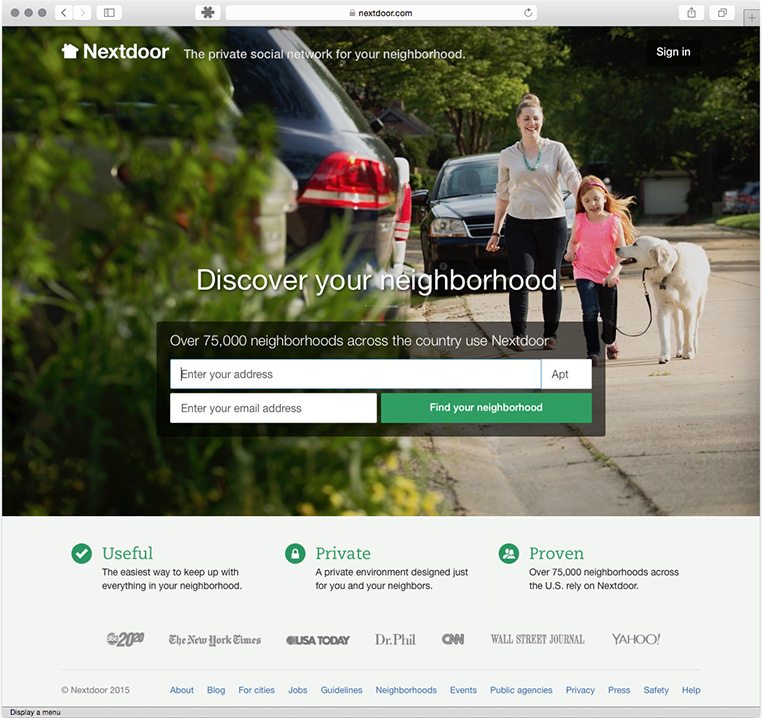
Luckily, the people at Saint John were already becoming leaders in using a new tool called Nextdoor, www.nextdoor.com. Billing itself as “the private social network for your community,” Nextdoor has become the main communication tool for residents in cities all over the United States.
Nextdoor allows people in a neighborhood to post and comment about events, lost pets, crime and anything else that interests them. The average user only sees and interacts with the people in the neighborhood; one user becomes the community lead by recruiting the most people in a given area.
Since Saint John was the first church to become part of Nextdoor in its area, it soon attained the status of community lead. That meant that the church’s posts showed up in nearby neighborhoods as well as its own. As a lead, the church can also make posts that send a popup notification to people’s phones.
Using Nextdoor to spread the word about the ESL class, Saint John could communicate with its neighbors – and protect their anonymity, as the congregation was not the one collecting the contact information.
With many receiving their information through Nextdoor, more than 100 people joined the first ESL course. Continuing to use the tool, Saint John has seen a 100-percent increase in sales at its consignment hut, hosted conversations on race and culture and, most recently, hosted the largest community meeting to date to discuss community connection and involvement.
Nextdoor offers churches a partial solution to the challenges created by a changing culture – changes in which a digital social network can be the place to begin developing relationships that will transform analog neighborhoods.
The Rev. Jeremy Steele is Next Generation minister at Christ United Methodist Church, Mobile, Alabama. He is also an author, blogger at jeremywords.com and a frequent contributor to MyCom, an e-newsletter published by United Methodist Communications.
United Methodist branding toolkit online
United Methodist Communications is offering a new toolkit to make it easy for local churches and other denominational entities to adopt more unified branding.
Edward Mikula created the official cross-and-flame logo of The United Methodist Church in 1968 when the Methodist Church and the Evangelical United Brethren Church united. However, research shows that only about 65 percent of United Methodist churches currently use the symbol. Some use different flames and different crosses, as well as miscellaneous hues, even though the logo is a trademark. Official standards for using it have been updated.
An online toolkit available at www.umcom.org/brand can help all United Methodist entities use the unified branding in their organizations, while maintaining their own identities. The free toolkit includes standardized colors and fonts, logos, social media graphics and stationery templates and provides flexibility for churches to integrate their own preferences.
“As with any strong brand, unified identity also allows churches to get the full benefit of consistency across denomination-wide communications,” said Dan Krause, chief executive of United Methodist Communications. “A brand is ultimately a promise, and in our case, this promise is the Wesleyan faith that is core to our identity as United Methodists to share the love of Jesus Christ and to serve the world around us.”
Press Center, United Methodist Communications