The Rev. Hugh Hendrickson
COURTESY PHOTO

The Rev. Erik Alsgaard
MELISSA LAUBER
The Rev. Loretta Job
LIFETOUCH
Rose and O. D. Loggins (grandparents of the Rev. Hugh Hendrickson)
COURTESY PHOTO
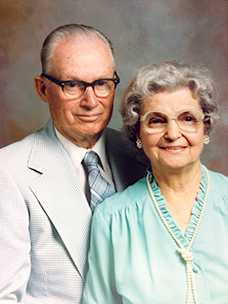
Wesley and Catherine Alsgaard on their 60th wedding anniversary
COURTESY PHOTO
In 1987, I was a newly minted pastor, serving in the Thumb of Michigan. After visiting a parishioner in Saginaw, I stopped at a Christian bookstore nearby. I had taken no more than three or four steps when a loud, booming voice cried out, “Hello there, reverend!”
It was my grandfather, Wesley. He was there with my grandmother, Catherine. She called me over to the checkout counter. She pointed to a large binder filled with church bulletins.
“Which one should I use for my funeral?”
After catching my breath, I said, “Grandma, do you know something I don’t?”
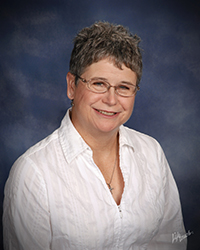
Prearranging one’s own funeral may seem macabre, but it actually saves time, money and anxiety. That is, according to the Rev. Loretta Job, director of congregational care and adult faith formation at Brighton (Mich.) First United Methodist Church. An ordained deacon, Job has seen many cases where pre-planning is a gift to family and friends.
Job said one woman called her to her hospital bed and told her to bring a notepad and pencil. “She proceeded to dictate the order of her service,” Job said. “She said she would rise up and haunt her (Job) if anyone sang ‘Amazing Grace.’” The woman died eight weeks later.
Job estimates that between 30 and 40 percent of the funerals she officiates were planned in advance.
Why would a person of faith do this?
“It’s a great relief for those left here to have some idea of what their loved one wants,” Job said. It helps the family and helps her in being pastoral to the family. “When I sat down with the family, I didn’t have to spend time asking what was her favorite hymn or Scripture,” she said. “I just spent time with the family, hearing stories, being pastoral.”
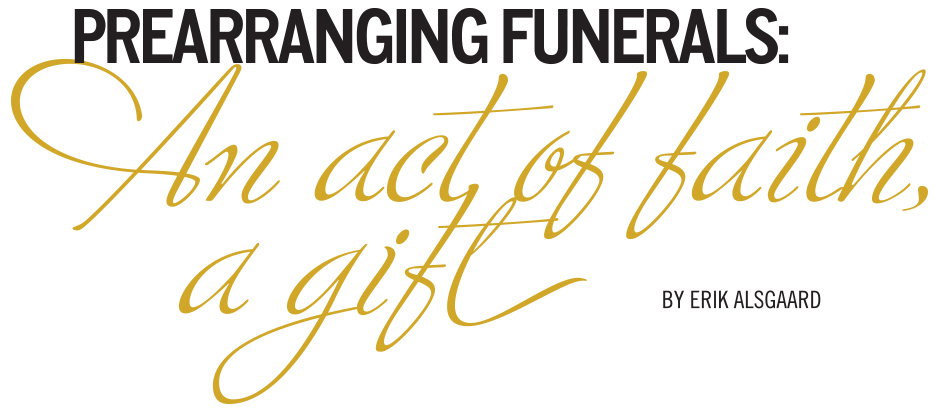
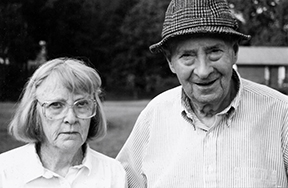
The Rev. Hugh E. Hendrickson serves the Colbert-Comer Charge in the North Georgia Annual Conference. He met with his grandparents, Rose and O. D. Loggins, to prearrange their funerals after learning about the importance of this at a license-to-preach school.
“They shared wonderful memories and stories about their relationship with each other and their faith,” Hendrickson said. “They also told me what hymns they would like played at their service and why such songs were requested.”
A few months later, his grandfather died on Thanksgiving Day, his grandmother on the day of her husband’s funeral.
“Their funerals were the first I ever officiated,” Hendrickson said. “Planning their service with them was such a blessing because I knew what they wanted. I was able to share why each song was special to them. It was also a blessing to my family because it took such a burden off of us in a difficult time.”
Hendrickson makes it a practice to mention at prearranged funeral services that the service was planned beforehand. “I make sure to let the congregation know ... that the person took time to make arrangements before their death, and that this worship (service) is really a gift of their faith to us as grieving friends and family.”
Hendrickson has also hosted workshops and planning events to help people think ahead. At Brighton First Church, Job has helped lead discussions in Sunday school classes and with senior groups. Often, though, she said, clergy at the church hold these conversations one-on-one.
We had a gentleman who came in years ahead of time,” said Job. “He sat with the lead pastor, and I sat with his wife. We picked out Scriptures and hymns, and he made sure to let us know: during the service, no one but clergy gets to have a voice.”
Job said the man came back three years later and changed things, and it was another few years before he died.
“The comment I heard from family members the most,” said Job, “is ‘I’m glad he’s doing that, because I don’t have to make those decisions.’”
Just getting into the topic can be the most difficult part of the prearrangement process. After I inadvertently broke the ice with my grandmother at that Christian bookstore, my grandfather made it clear to me: I was going to do his funeral whether I liked it or not.
I did, a few years later, and it was the most difficult worship service I have ever led. I also assisted at my grandmother’s funeral mass. Both were made easier, though, knowing they had helped plan them.
“I encourage people to have those conversations, as hard as they are,” said Job. “You never know what kind of gift it may be. You don’t get to practice this. You only get to make this decision once.”
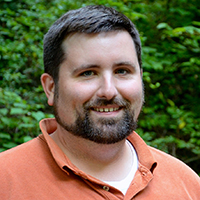
The Rev. Erik Alsgaard is managing editor, UMConnection, the newspaper of the Baltimore-Washington Conference.