To stand out from competitors, businesses must artfully craft experiences that resonate with customers and increase brand value | By Paul Korzeniowski

In creating its old logo, Google wasn’t afraid to buck convention on color and font style.
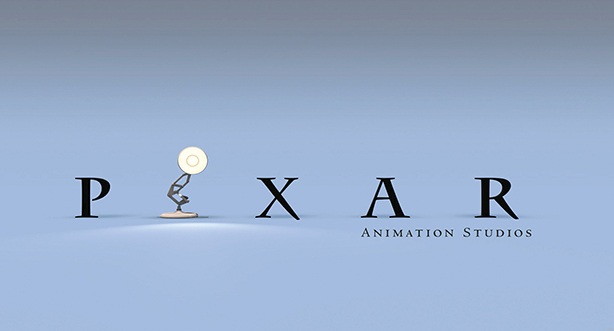
The film studio’s logo stars a Pixar character, Luxo, Jr.
the cliché “a picture is worth a thousand words” certainly holds up in marketing. With the number of customer touch points, as well as the volume of interactions, increasing dramatically, businesses must search for ways to distinguish themselves in easy and effective ways—and the overall look of their brands is a logical place to start. “We are seeing a growing awareness in corporations about the importance of presenting themselves positively and in a visually stimulating way to customers,” says Julie Mitchell, a partner at Parcel Design, a brand design firm.
Traditionally, a company’s design department was focused on the logo, but design’s mission is being broadened to encompass much more. Product design has become a key differentiator in markets such as smartphones. In areas such as e-commerce, system design (how information is presented to customers) has become paramount.
While enterprises strive to create effective designs, many of them (both established conglomerates and start-ups) fail to do so. The goals are easy to discern, but the process itself is strewn with potential pitfalls. An effective design must help deliver positive customer experiences in increasingly complex markets. The necessary commitment from management may be lacking, the messaging may be inconsistent, designs might not be able to keep pace with an evolving market, and some approaches simply miss the mark. But corporations that navigate the choppy waters successfully find that compelling designs are a linchpin in the success of their business.
The All-Encompassing Nature of Branding
As organizations deliver products and services, they try to build a brand, which is more than a logo, the company name, or a product or a service sold. Branding clearly distinguishes a business from its competitors in the minds of consumers. The brand is the relationship between the vendor and the consumer, and it touches upon marketing, sales, billing, product delivery, and customer services. A brand is the promise, the personality of the firm, and the real and perceived value of its products or services as viewed by the customer. In essence, the brand is a gut feeling consumers (current customers as well as potential ones) have about the enterprise. Brands present positive, negative, or mixed connotations.
And the connection is based more on emotional reactions by people than numeric relationships in spreadsheets. Consumers are feeling creatures and develop attachments with brands. For instance, some people love Coke. By itself, a low-priced product will not create a loyal customer base; the business has to build a level of intimacy and trust with the consumer. A good designer takes the supplier’s values and assets and transforms them into a product or a customer experience that is valuable to people.
As a result, design needs to be strategic and part of management thinking from the onset. Designs cannot be an afterthought or superficial trappings, cobbled onto finished products. “Design used to be something done just in the marketing department, but that is no longer the case; it is a board-level concern,” says Parcel Design’s Mitchell.
The emergence of the title “chief design officer” (CDO), a top manager responsible for design throughout the organization, underscores the change. Increasingly, design is being baked into every aspect of corporate operations. Smartphones such as Apple’s iPhone offer a “cool” factor that wows customers and differentiates them from competitors; Web sites need to move the visitor from place to place in an intuitive, helpful manner. The CDO is responsible for creating well-designed products, presentations, and services that captivate consumers’ attention. Businesses as varied as Apple, Johnson & Johnson, PepsiCo, Philips Electronics, and Samsung have embraced this notion and moved design decision making up the corporate ladder.
Identifying Design Challenges
Quality design may sound easy in theory, but it is difficult to deliver in practice. One issue is creating consensus. Different groups within a firm have various views of the enterprise, its products, and its customers. With so many cooks, vantage points, and ideas, reaching a consensus becomes challenging. In some cases, a hodgepodge design emerges that stitches everyone’s distinct ideas together into a “Frankenbrand” monstrosity, according to Tara Hornor, senior editor and content planner at Creative Content Experts.
In addition, today’s markets are quite crowded. The Internet has given small companies the kind of access to potential customers that large firms have traditionally owned. In such a climate, businesses looking to improve their customer experiences need to create something that facilitates a desired outcome quickly and in the right way.
Success can be fleeting because designs have a shelf life. “Companies no longer need to look authoritative, so they are dabbling with colors other than blue,” says Parcel Design’s Mitchell. If the business has prospered for many years, its visuals may start to look dated and old-fashioned. Today, the churn from cool to passé is quicker than ever before. If a business gloms on to what is trending right now, the design may become outdated later that day.
Finding a Starting Point
So where does one begin to create enticing visuals? Clarity is key. First, the business needs to clarify its mission, what it stands for, its personality, its history, its function, and its ethos. Who is its target market? How does the company wish to be perceived? What makes it special? These items may seem obvious, but many executive teams cannot easily and succinctly communicate what makes them stand out.
“The design needs to be approachable,” says Christopher Lehmann, executive director at Landor Associates, a branding company. Especially as more businesses are relying on technology to facilitate customer interactions, the interface must be easy to understand and use. Consequently, firms must exercise restraint when using color palettes, details, and typography.
Adding too many colors, for example, has a negative effect and ends up confusing the consumer. The colors must accurately reflect the purpose and tone of the business; for instance, black is typically associated with power and red with love and passion. Text is another item that must be used in moderation. Corporations need to keep their designs as simple as possible.
Design Extends Beyond Logos
In the old days, a logo and a brand were synonymous, but increasingly, design plays a primary role in the products and customer interactions themselves. “What is now clear in the consumer technology space is that we instinctively know that we don’t need more storage or speed because we don’t have any real use for it,” explained John Maeda, design partner at Kleiner Perkins Caufield & Byers, in a Forrester blog. “In the absence of the normal cues of ‘better,’ which used to be as simple as knowing the CPU’s clock speed, or how much RAM it has, or how big a screen to pair with it, we now are choosing based upon something else: design.”
The change is evident in the smartphone space. Samsung’s Web page touts the Samsung Galaxy 6 device’s edge lighting, curved screen, and clean design (Samsung’s best design ever, according to CNET) before its technical features: 6 megapixel rear camera and wireless charging. A few technical specs (3 GB of RAM, 5 megapixel front camera, and 3.6 megapixel display) are at the bottom of the page, but the device’s CPU speed, internal memory, and networking functions are available only if one clicks on a hyperlink.
Everyone Is in the Design Business
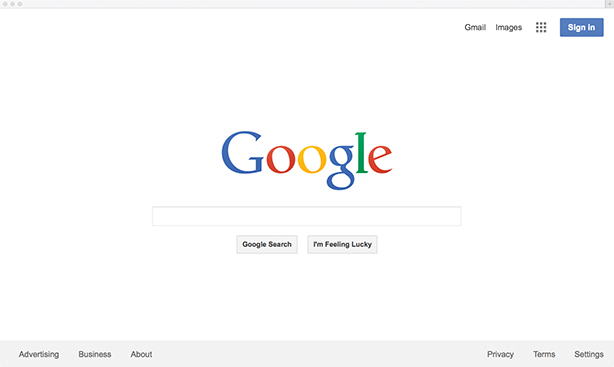
Design’s importance is seen in other areas—such as effective virtual displays. Google’s search system is a good example. Ironically, the firm withstood traditional market pressure to create a compelling design. The old Google logo actually went against a few standard branding rules, according to Rachel Sprung, product marketing manager at HubSpot. Google used colors that seemed to clash, included a slight drop shadow, and employed a serif font, all logo no-no’s. At press tiime, Google had unveiled a new logo that uses a sans serif font but keeps the same color scheme.
While the logo broke design “rules,” the interface plays into a broader view of customer interactions and conveys simplicity and an intuitive consumer experience. Competitors were pasting advertisements in, around, and seemingly through their search button. Google resisted that temptation and left its interface clean and clutter-free, one reason why it became the world’s most popular search engine.
E-commerce is another area where screen design, layout, and sequencing play important roles. “EBay’s job is to figure out how to simplify the shopping experience,” notes Kleiner Perkins Caufield & Byers’ Maeda, who is chair of the eBay Design Advisory Board. “EBay Marketplaces has 145 million users and 650 million items for sale, coming from a broad spectrum of sellers. It’s a unique challenge to make an ecosystem like that rational, sensible, and delightful.”
Creating a Complete Picture
Increasingly, visuals do not stand alone. They are living, breathing representations of the business and are woven into products, collateral materials, and, recently, even customer interactions. All of those items converge into the making of a brand. Consequently, even a simple visual display, such as a logo, needs to be flexible and play well across multiple touch points—mobile devices, PCs, videos, and locations (local, national, and global).
As a result, when creating strong brand images, vendors need to consider the big picture and how all of the smaller elements interact with one another. A good example is the talent agency Chokolate. Its entire system of collaterals revolves around the idea of chocolate; for example, business cards are wrapped in foil, leaving something memorable after each encounter.
Clever is a word often associated with the Pixar brand as well as its movies. A 1986 short film, Luxo, Jr., inspired the Pixar logo, which shows the lamp (Luxo, Jr.) as the I of Pixar. The animated version of the logo appears at the beginning and end of most Pixar movies and has become a staple adored by Pixar fans.
In addition, the logo helps to connect value to the enterprise. The business almost always includes an animated short at the beginning of each film, in effect turning the logo into a signature experience for customers: Come to a Pixar movie and experience a bonus animated short as well as a quality movie. Very effective marketing.
However, be careful not to overdo it when designing customer interfaces. Customers will appreciate a cute design element, but if it distracts them from their overall purpose—like paying a bill online—it can get old fast.
Design was once an item delegated to the marketing department. No more. Now, it plays a central role in companies’ attempt to connect with and build up their customer base. Businesses understand that a picture can be worth a thousand words, but an experience can be worth thousands, and occasionally millions and even billions, of dollars. That’s why they are investing time, effort, and money to create the next great compelling customer experience. 
Paul Korzeniowski is a freelance writer who specializes in technology issues. He has been covering CRM issues for more than a decade, is based in Sudbury, Mass., and can be reached at paulkorzen@aol.com.