On the Scene: Oracle Modern Customer Experience Conference
Oracle CEO Mark Hurd Is Firm on His CX Commitment
With only 10 percent of companies integrating CX processes, Oracle makes integration a priority
On the Scene: Oracle Modern Customer Experience Conference
Oracle CEO Mark Hurd Is Firm on His CX Commitment
With only 10 percent of companies integrating CX processes, Oracle makes integration a priority
On the Scene: Oracle Modern Customer Experience Conference
Oracle CEO Mark Hurd Is Firm on His CX Commitment
With only 10 percent of companies integrating CX processes, Oracle makes integration a priority
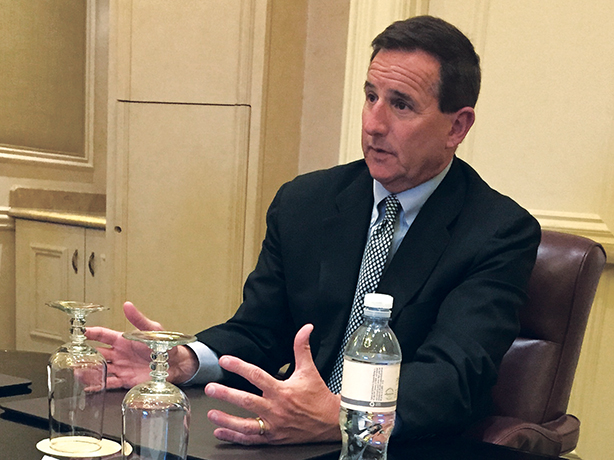
Oracle CEO Mark Hurd at the company’s Customer Experience Conference in Las Vegas in March
Oracle CEO Mark Hurd at the company’s Customer Experience Conference in Las Vegas in March
Modern consumers are willing to pay more for better service and care more about customer experience than price, Hurd said.
Since 1990, more than 70 percent of Fortune 500 companies have either gone bankrupt, merged, or been acquired, Oracle CEO Mark Hurd said at the Oracle Modern Customer Experience Conference in Las Vegas in March. Since 2000, he continued, more than 50 percent of Fortune 500 companies have gone down the same road.
The reason, according to Hurd, is that customer expectations have changed drastically and quickly. Many modern consumers, for example, are now willing to pay more for better service and care more about experience than they do about price.
Among the biggest customer experience challenges plaguing companies and preventing them from delivering outstanding customer experiences continue to be siloed processes and solution ecosystems. Only 10 percent of organizations are integrating processes, Hurd said.
As a result, in recent months Oracle has prioritized delivering cross-channel integration and agile solutions that leverage connections among data sources. “Companies that win are able to do multiple things at one time. This will be the difference between success or failure,” he said.
During his keynote, Hurd emphasized Oracle’s commitment to customer experience. “We bet with our wallet,” he said, referring to the vendor’s recent acquisitions of Eloqua, Responsys, and Bluekai, which have since been integrated into the Oracle Marketing Cloud.
To deliver on its promise of deeper integrations that ensure more seamless customer experiences, Oracle announced a number of product updates to the Oracle Marketing Cloud’s data management platform. Updates include look-alike modeling functionality for cross-channel marketing automation customers as well as OnDemand On-Board, both of which enable marketers to combine data from Web analytics, email marketing, and marketing automation tools and transform it into cohesive audience data for targeting.
The look-alike modeling will enable marketers to “use Bluekai to define an interesting segment, find more people like the ones in that segment, and then try to acquire them through advertising,” Steve Krause, group vice president of product management at Oracle Marketing Cloud, explained in a briefing. This function, previously only available in the Bluekai environment, can now reach into Responsys and Eloqua as well, Krause said. The OnDemand On-Board, in turn, can now pull data that normally lives in repositories, such as CRM systems and data warehouses, and “transfer it into the [data management platform] for the purposes of targeting,” according to Krause.
The updates that Oracle announced all had something in common—they aim to arm marketers with highly integrated, customer-centric solutions that offer something beyond traditional marketing content, presenters agreed. Content is no longer king, Kevin Akeroyd, general manager of the Oracle Marketing Cloud, said during his presentation. “What the CMO needs,” he said, “is the right data, married with the right behaviors, in the right context, in real time.” —Maria Minsker