Should Businesses Review Customers?
Reverse reviews hold customers accountable for their behaviors
Should Businesses Review Customers?
Reverse reviews hold customers accountable for their behaviors
Should Businesses Review Customers?
Reverse reviews hold customers accountable for their behaviors
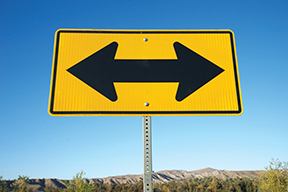
“Going forward, reviews will become [mostly] bilateral.”
For consumers, Yelp has added a level of transparency to customer-business interactions; for business owners, the online review site has been a source of stress. Even in a sea of positive feedback, one bad review can tarnish a brand’s reputation, and with no way to judge the validity of every comment, companies have been leaving the fate of their images in the hands of the Internet. But that’s about to change.
Companies such as Uber and Airbnb are redefining the traditional review model and giving their partners and employees an opportunity to review their customers. With these bilateral reviews, companies can choose which customers to serve based on their past experiences with them.
Though Uber has been secretive about its customer review policies, a number of drivers have confirmed that customers, like the drivers themselves, have ratings.
According to Bill Tancer, author of Everyone’s a Critic and general manager of global research at Experian, drivers have nine seconds to decide whether they want to pick up a certain passenger based on his rating, and if the passenger is turned down, the request is passed on to the next driver. After every ride, passengers are asked to rate their drivers and leave optional comments. Drivers are asked to do the same for their passengers, Tancer explains. They’re also encouraged to include in their comments any negative behavior, such as rudeness, lateness, or leaving trash in the car.
“Eighty percent of consumers now consult online reviews before making a purchase. These days, a disgruntled but ignorant customer on Yelp might have more clout than any expert guidebook, magazine article, or newspaper critic,” Tancer wrote in a blog post. “But my prediction is that, going forward, reviews will become even more like Uber’s— [mostly] bilateral,” he added.
Airbnb, a rental marketplace that pairs property owners with travelers who need an affordable place to stay, is more open about its bilateral review structure. On its Web site, the company clearly outlines review guidelines and encourages both hosts and visitors to provide feedback. “Reviews are your opportunity to build a good reputation in the Airbnb community, as well as share your experience with the Airbnb community,” the guidelines state, asking only that reviewers “stick to the facts.” And Airbnb takes reviews seriously—in one notorious June 2011 review, a host reported such extensive property damage that Airbnb paid roughly $50,000 to compensate her for her visitor’s behavior.
Other industries and businesses are experimenting with bilateral reviews as well, with loyalty programs laying much of the groundwork. Loyalty programs provide customers with an incentive to log their activities and purchases to earn rewards points, discounts, and freebies, while letting businesses track customers’ behaviors. That can serve as the foundation of a review or rating system.
“It all comes back to personalization,” Ray Wang, principal analyst at Constellation Research, says. “Loyalty programs are a win-win for customers and businesses because, as customers strive to earn that VIP status, businesses get a look at how those customers behave. That way, businesses can start to pick up on patterns—does a customer call to complain all the time? Do they change their reservations frequently? Do they constantly make returns? By answering these questions, companies can not only prepare front-end employees for interactions with these types of customers, but also develop strategies to better serve them in the future,” he explains.
Most likely to first gain traction in the travel, hospitality, and high-end service industries, where frequent flier or VIP programs are well-established, the trend could eventually trickle down to other areas, such as retail. “The challenge here is scalability,” Wang says.
Still, with iBeacons and similar tools making it possible for businesses to connect with consumers’ mobile devices, reviewing customers even as they browse in a brick-and-mortar location could become a reality.
As companies begin to incorporate bilateral review systems into their business models, they have to determine how transparent they want to be about their process.” On one hand, analysts say that by keeping the ratings a secret, companies aren’t giving customers an opportunity to change their ways. On the other, reviewers might not be completely honest if they know their feedback could eventually reach the customer, others argue. “Transparency has made a tremendous difference when you think about Yelp,” Wang says, “so businesses are going to have to determine a way to be transparent that works for them.” —Maria Minsker