The 3 Cardinal Rules of
CAUSE Marketing
There’s a fine line between giving and gimmick | By Maria Minsker
The 3 Cardinal Rules of
CAUSE Marketing
There’s a fine line between giving and gimmick | By Maria Minsker

A good cause marketing effort addresses a “real need, features real people, and makes a real difference.”
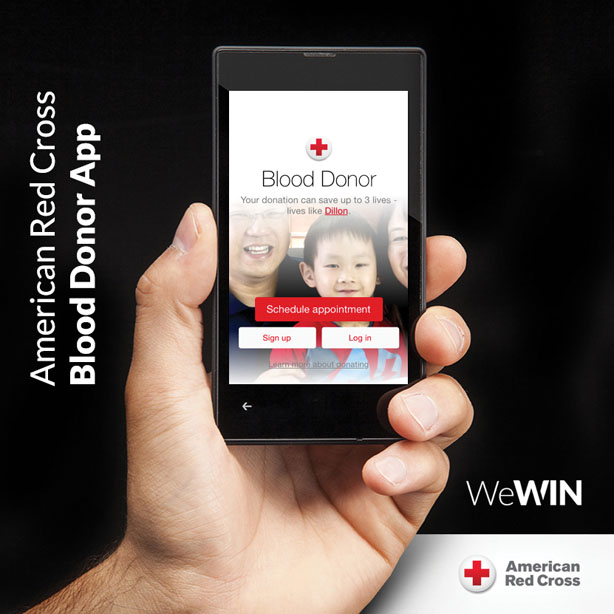
We WIN and the American Red Cross’ blood donor app was the most downloaded app on iTunes in the medical category.
We WIN and the American Red Cross’ blood donor app was the most downloaded app on iTunes in the medical category.
“It’s important that companies incorporate social media into their cause marketing. It’s a wildfire when it comes to spreading the word.”
As the holiday season approaches, the spirit of giving often prompts people to make charitable donations. Fortunately, thanks to cause marketing, that spirit can live on long after the decorations disappear. When cause marketing is done well, not only can the people in need benefit, but so can the companies that support them.
The concept emerged in 1983, when American Express coined the term to describe its Statue of Liberty Restoration campaign. For every purchase made with an American Express card throughout the campaign, a penny went to the restoration effort, and for every new card issued, a dollar was donated. Critics argued that consumers wouldn’t be happy that American Express was taking liberties with their pennies, but they were wrong—the partnership raised $1.75 million for the restoration, bumped up transaction activity by 28 percent, and drew 17 percent more new users.
Cause marketing has become an effective tactic for companies that demonstrate social responsibility by giving to organizations and individuals in need. According to market research firm Lab42, 80 percent of Americans think companies should strive to be more socially responsible. A separate study by Cone Communications, a public relations firm whose research focuses on cause marketing, showed similar results, revealing that 90 percent of consumers are likely to switch brands to support good causes.
“With everything else being equal, people will choose to do business with a company that has made it a priority to help others,” says Scott Pansky, an instructor at the UCLA Extension program and a nationally recognized speaker on cause marketing. “People want to be socially conscious, especially if it doesn’t mean they have to spend more,” he adds. And some groups are even willing to pay a little extra. According to recent research from PR Week, 64 percent of Millennials are willing to dish out an additional few bucks in the name of a worthy cause. “As humans, we all want to do good and we all want to help each other. If given the opportunity, we like to show support to companies that want to do the same,” Pansky says.
Nearly 87 percent of all corporations make charitable donations or participate in philanthropic programs, but cause marketing is tricky, and not every campaign is successful. For charitable organizations, working with a corporate partner is a chance to raise funds and awareness, so every opportunity is tempting. Nevertheless, organizations have to steer clear of corporations with conflicting interests that run the risk of attracting the wrong kind of attention.
In 2003, the American Academy of Pediatric Dentistry (AAPD) signed a $1 million agreement with the Coca-Cola Foundation to promote messages about children’s dental health. “There is such an important message our organization is trying to get to the public, and Coke has an exceptional reach to consumers, and the opportunity is there to help us reach them,’’ David Curtis, D.M.D., then-president of the academy, said in a statement that year.
The deal launched a polarizing discussion. Some dentists criticized the organization for working with a company selling sugary products that would damage children’s teeth, while others argued that soda is not any worse for kids than other types of sweets and that the value of Coca-Cola’s far-reaching marketing arm was worth the backlash. The reactions soon grew overwhelmingly negative, and the AAPD was accused of selling out to a corporate partner.
Corporations can make mistakes when choosing charitable partners, too, despite the best of intentions from both sides. A ubiquitous presence during Breast Cancer Awareness Month and year-round, the pink ribbon has become synonymous with the cause it represents. Organizations such as Susan G. Komen for the Cure have used the pink ribbon in their marketing and awareness campaigns for years, and brands have been eager to form partnerships with them during Breast Cancer Awareness Month to help a good cause and boost business. As a result, pinkwashing, which refers to the practice of “smacking a pink ribbon on products without a deep financial commitment to the cause,” has become a problematic phenomenon, Pansky says.
“Sadly, breast cancer is a reality for many people, so it’s no surprise that consumers sympathize and want to contribute to research efforts.… Pink ribbon marketing can be very effective at helping raise funds for research while helping brands sell their products. That balance can be achieved, and has been achieved by several companies. But, unfortunately, others are not completely transparent about their efforts, which raises suspicion and skepticism,” Pansky says.
In some cases, donations are capped. When Hershey’s turned its Bliss chocolates pink in honor of Breast Cancer Awareness Month in 2010, the company capped its donation at $300,000. The total wasn’t dependent on sales of the chocolate. The information was available in the fine print, but most consumers made purchases to support the cause without knowing the details. Other companies have been guilty of similar tactics. Last year, the NFL came under fire for allegedly donating only 8 percent of the funds raised through its pink ribbon campaign to cancer research, after suggesting it would donate more.
Campaigns structured in this manner make companies “tons of money,” Pansky says, and what’s more, these organizations “ruin it for others.” Pinkwashing has become so mainstream that pink ribbon campaigns are starting to feel like a gimmick. “There are pink ribbons everywhere, and there are all these stories that suggest it’s unclear where the money goes or how much of it actually reaches the cause at all. It detracts from the worthy cause behind it all, hurts the brands that have good intentions, confuses consumers, and makes them reluctant to participate,” he says.
Still, there are ways to get cause marketing right.
What sets a gimmicky campaign apart from a successful one is authenticity. From choosing the right charitable organization to spreading the word online, a good cause marketing effort addresses a “real need, features real people, and makes a real difference,” Pansky says. More than anything, the partnership has to make sense to the consumer.
Rule 1: Find the Right Fit
When CVS Pharmacy decided to stop selling cigarettes, the move symbolized a deeper commitment to transforming CVS’ image from a convenience store into a healthcare provider that makes its customers’ well-being a priority.
The company began pulling cigarettes off its shelves in the summer of 2014, vowing to have them completely removed from all locations by October. CVS became the first national pharmacy to make the bold move, and in May 2014, partnered with the American Lung Association (ALA) to not only raise awareness about its new commitment, but also educate consumers about lung cancer. By September, CVS succeeded at removing cigarettes from its 7,700 locations, fulfilling its promise nearly a month ahead of schedule, according to Eileen Howard Boone, senior vice president of corporate social responsibility and philanthropy at CVS Health and the president of the CVS Health Foundation.
As a sponsor of the ALA’s Lung Force campaign, an initiative aimed at raising lung cancer awareness, CVS has participated in in-store fundraising initiatives to encourage shoppers to donate when they check out and has engaged more than 200,000 of its employees to take up the cause as well through educational sessions, awareness-building events, and meetings with ALA representatives. Company employees also took part in Lung Force Walks around the country to help raise funds for research, advocacy, education, and awareness.
Partnering with the ALA was a logical choice for CVS because the two now share a set of values. “The partnership is authentic because here is a company that doesn’t just support a cause, but is actually embodying what the cause represents in its own business practices,” says Alana Burns, national senior vice president of strategic initiatives in marketing and branding at the ALA. Though other companies have partnered with the ALA in the past, few partnerships have been so well-timed and well-aligned. “There’s no question of why CVS is choosing to work with the ALA, because they’ve made it clear to the consumer. If they’re willing to give up cigarette sales to demonstrate their commitment to health and wellness, then they’re serious about the cause, and serious about helping the ALA fight for this cause,” Burns adds.
Both the ALA and CVS say the ongoing partnership is a success. “We have seen a tremendous amount of engagement from our customers and our colleagues for the Lung Force initiative,” Boone told CRM in an email.
In addition to asking customers to make a donation at the register during the in-store campaign, CVS engaged customers at more than 45 educational events in the communities it serves, and held Turquoise Takeover days, where CVS colleagues wore turquoise in honor of the cause. Customers also had the opportunity to get involved in the Lung Force movement through CVS’ social media channels, where they were invited to share their stories, take the Lung Force pledge, and donate to the cause, Boone explained.
“Our customers have been strong supporters of this very important cause that affects the health of [people] nationwide…. We knew that the sale of cigarettes and tobacco products was inconsistent with our company purpose and that ending the sale of cigarettes and tobacco products was simply the right thing to do for the good of our customers and our company…. Many have expressed their gratitude [to us] for taking a stand against tobacco, and have thanked us for inspiring them to quit smoking,” she wrote.
As for the ALA, Burns says the organization is glad to be working with CVS. “When you find a good fit, it’s a win-win for both sides,” she adds.
Rule 2: Drive Digital Engagement
Whether consumers see a product in cause-related packaging or are asked to donate at the register, most traditional cause marketing happens in the physical store. Mobile, social, and other digital channels have been largely underutilized as cause marketing tools, despite being among the most effective means of driving word of mouth and engagement, says Megan Strand, director of communications at the Cause Marketing Forum. WeWIN, a mobile app development company that has designed an API-based rewards program capable of tying into e-commerce systems, is seeking to change that.
At the Wireless Association’s (CTIA) Super Mobility Week earlier this year, WeWIN launched a blood donor app as part of its work with the Red Cross. The free app allows users to schedule blood donations, earn rewards for their participation, and share their activity on social media. Through the Red Cross’ corporate partnerships with brands such as Legal Sea Foods, ProFlowers, Plow & Hearth, Shari’s Berries, CitySports, 1A Auto, and others, WeWIN’s app enables consumers to collect rewards from the companies in the form of exclusive offers and discounts. So far, the app has been well received; in less than one month after the launch, it became the most downloaded app on iTunes in the medical category.
For the Red Cross, the benefits are clear, but for its corporate partners, the return is a little more nuanced. While programs like CVS’ Lung Force campaign encourage shoppers to donate at the register after the purchasing decision has already been made, Red Cross donations happen before any purchases from a specific brand take place. This flips the business model, and gives brands an edge.
“Customers are going into stores with a coupon that they received after donating blood. It’s almost like retailers are saying, ‘Thank you for doing this great thing. We believe in it, too, which is why we’re giving you this discount.’ It creates an emotional connection for consumers and makes them feel like brands are sharing in their mission,” Syd Dufton, CEO of WeWIN, says.
Dufton explains that when a purchase is predicated on a cause marketing campaign, the campaign is likely to be more effective because it’s often the reason a customer walks into the store. Though point-of-sale campaigns can be successful, they often “feel like an afterthought” and are less likely to be memorable, he says. Plus, rewards-based campaigns are more transparent because corporations aren’t tasked with the actual donation process—donations take place first through the charitable organization and reward redemption takes place later.
WeWIN’s app also taps into the reach of social media to raise awareness about important causes. Through the Red Cross app, blood donors are encouraged to take selfies during the donation process and share them with their friends, as well as share personalized status updates about the reward they received. “It’s important that companies incorporate social media into their cause marketing. It’s a wildfire when it comes to spreading the word,” Dufton says.
The awareness-raising potential of social media culminated in the summer of 2014, when the ALS Ice Bucket Challenge became a viral campaign. The challenge started spreading in July when Pete Frates, a former Boston College baseball player diagnosed with amyotrophic lateral sclerosis (ALS), also known as Lou Gehrig’s disease, started posting about it on social media with his father’s help. The campaign was spread through videos, which consisted of the participant dumping a bucket of ice water on his or her head, and then inviting three friends to either do the same and share their video using the ALS Ice Bucket Challenge hashtag, or donate to support ALS research within 24 hours.
Frates’ friends and family took part in the ice bucket challenge, and within a week or so, it went viral. Even celebrities, athletes, and several government officials took part in the challenge, with many participants opting to donate and dump the ice water. By September, more than 2.4 million videos were made, raising more than $70 million for the ALS Association.
“Social media can be extraordinarily powerful in spreading the word about a great cause because it’s all about being inspired by friends and people you know,” Strand says.
The ALS Ice Bucket Challenge was particularly effective, Pansky adds, because it began organically and was driven by organic engagement. “It wasn’t the ALS Association that started this. It was a regular person who was touched by the disease. It’s hard to say whether this level of engagement could be replicated if the campaign is started by a corporation,” Pansky says. But that doesn’t mean they shouldn’t try.
Rule 3: Tell an ‘Impact Story’
For brands that want to drive the kind of engagement that organic campaigns such as the ALS Ice Bucket Challenge achieved, showing how people are benefiting from their efforts is key. Social media can play a pivotal role here, too, Strand says.
In 2007, Office Max and Office Depot (which are now one company) partnered with Adopt-a-Classroom, an organization that helps raise funds for teachers to use on supplies and learning tools for the classroom. Typically, teachers spend more than $1,000 of their own money on supplies annually, so to help, the organizations joined forces to launch A Day Made Better, an annual one-day event that awards more than 1,000 educators more than $1,000 each in school supplies.
The campaign has enjoyed such longevity, Strand says, largely because of the “impact stories” Office Depot has shared. Using the TeachersChangeLives hashtag, the company encouraged teachers and students to share YouTube videos of outstanding teachers in action to serve as a reminder of “the difference a great teacher can make,” says Pansky, whose firm, Allison + Partners, did pro bono public relations work for a project Office Depot and Adopt-a-Classroom launched. Teachers and students who benefited from donations through the A Day Made Better program also began recording messages and making videos thanking the companies. One message, from Courtney Lobert, a first-grade teacher at Northtowne Elementary School in Columbus, OH, struck a chord with executives at Adopt-a-Classroom.
“I just want you to know that I’m so grateful to you and, on behalf of my twenty-seven first-graders in a city school where we frequently feel forgotten, it was such a gift,” Lobert said in a recording through tears. “I know today that people saw how hard we work, and not just me, but also my students every day…. Just to know that we’re supported and people believe in us is so encouraging. The kids kept asking me if it was Christmas,” she added. Adopt-a-Classroom was so touched by Lobert’s words that the organization asked her to speak at fundraisers and other events, according to Pansky.
Though the project was created through a cause marketing partnership rather than formed organically, the campaign incorporated organic elements. The thank-you videos and messages came from campaign beneficiaries, as did the videos of teachers doing what they do best in their classrooms.
“By sharing impact stories that demonstrate the difference that the campaign can make, companies are showing consumers that the efforts are paying off. People are actually benefiting from what this brand is doing, and that’s a reason to support it by making purchases there, instead of elsewhere,” Strand says.
Since Adopt-a-Classroom began working with Office Max and Office Depot, A Day Made Better has contributed more than $4 million worth of products. The program was expanded earlier this year, with more events scheduled annually.
From programs that reward consumers for contributing to a good cause to initiatives that simply make shoppers feel good about buying from a certain brand, cause-related campaigns come in many forms. Though brands have made gimmicky mistakes in the past, there’s still a tremendous amount of value in cause marketing when it stems from a healthy desire to help those in need and earn consumer loyalty. “Once companies start doing it just for profit, that’s where they go wrong,” Pansky says. 
Associate Editor Maria Minsker can be reached at mminsker@infotoday.com.