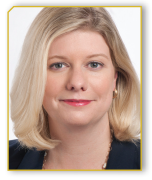
Rachelle Considine
President,
Future U.S.
Takeaway: Future U.S. is headed back toward profitability with an emphasis on digital products and live-event connections.
Like many publishers, Future’s U.S. business faced declining revenues after the recession. Legacy costs from print magazines and dwindling advertiser support led to an emphasis on digital products.
Rachelle Considine has headed the group as it continues to transform. The division has made some tough choices, shedding several titles, but is now growing consistently.
It drew 43 percent of its revenue from digital in the fiscal first half of 2013, including 77 percent of its total ad dollars.
Most importantly, Future U.S. is expected to return to profitability by the end of this year.
Tying its traditional media properties to face-to-face experiences has been critical from a sponsorship perspective.
The company has had success with a range of events from local meet-ups to banner parties at Comic Con International in San Diego.
“We try to wrap our media properties where people are coming day-to-day online, with an actual event so they can meet [each other and our
editors] in person,” Considine says. “Digital advertising, in many ways, has become a commodity. All media companies have done that to
themselves—the phrase ‘premium programmatic’ is in almost every sentence they have. We had to diversify, so we believe in content marketing.
We look at [our event partnerships] as a content marketing play because we can create content for you, but we can also amplify it.” 

Etienne Uzac
Co-founder, CEO,
IBT Media
Uzac oversees 12 properties with more than 200 employees in 10 countries. The network generates over 30 million unique monthly visitors, led by flagship brand, the International Business Times.
IBT Media purchased Newsweek in August as part of an aggressive growth strategy. Uzac launched three sites and a video portal earlier in the year, and has plans to unveil a b-to-b technology site this fall.
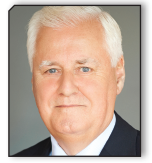
Joe Ripp
CEO,
Time Inc.
Formerly the CFO of Time Inc., Ripp was named Laura Lang’s successor in July, officially taking the position in September.
Ripp oversaw the purchase of American Express Publishing’s five titles in September, just a week into the job.
Preparing the company for its break from Time Warner in early 2014 will be Ripp’s next challenge.

Bridget Williams
President,
Abrams Media
Williams joined Abrams in May, coming from Business Insider where she served as SVP of business and audience development.
Since then, Williams has overseen the relaunch of one site and is preparing to overhaul another.
Abrams has also released a new proprietary ad product line, Engagement Plus, that allows brands to customize engagement with readership.
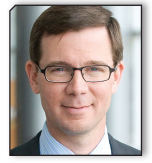
Robert Allbritton
Chairman, CEO,
Allbritton Communications
Allbritton sold off a portion of its local TV empire for $985 million in July with the intent to invest in pureplay media.
The company’s banner brand, Politico, has continued to innovate, launching several new verticals while experimenting with revenue generators like paywalls and sponsor-generated content.
Allbritton acquired Capital New York in September.
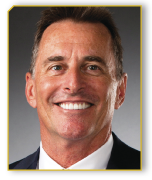
David Freygang
CEO,
Bonnier Corp.
Takeaway: Video is the way forward for Bonnier after a series of tough decisions focused on the future.
Just a few months into his tenure as CEO, David Freygang was forced to pare down Bonnier Corp. by almost a third. The company was active this spring as it went from 45 brands to 32 and from about 950 full-time employees to 650. Even some successful titles that didn’t show promise in digital products were jettisoned, looking to the future.
“In Parenting [Parenting was sold to Meredith for an undisclosed sum], we had great stats [in print],” Freygang says, noting that the brand was second in the print marketplace, but just fifth in digital. “[We] just didn’t see an opportunity to get that brand toward the top of the pack [in digital]. With limited resources to invest, we felt it made more sense to divest of that brand and that allowed us to invest in other areas.” The continual churning of Parenting’s audience makes it a unique situation, but overall, Freygang says it’s indicative of the changing reader habits Bonnier will need to cater to. From here, they’ll have to focus on building organic revenue. Video is one of the ways Bonnier will try to do that.
They’re training editorial staff, building edit bays and hiring videographers to grow inventory, but monetization is another challenge. Freygang hopes to sell at least a quarter of their inventory in-house—an “exponentially more profitable” solution than selling through third-party networks.

Tony Mamone
CEO, Co-founder,
Livingly Media, Inc.
Mamone’s team purchased and relaunched digital home décor title Lonny, leading to a 10-fold increase in monthly traffic.
StyleBistro, Livingly’s celebrity style site, cracked the Top 5 in comScore’s rankings for Fashion & Beauty sites with more than 8 million readers.
Mobile has been a focus for Mamone—40 percent of Livingly’s audience and 30 percent of its revenue is coming from devices.

Jim Bankoff
CEO,
Vox Media
Bankoff took over Vox in 2011 after a successful stay at AOL where he acquired tech blog Engadget and launched Hollywood gossip brand, TMZ.
Vox properties—SB Nation, The Verge and Polygon—now reach more than 41 million unique readers each month, doubling their traffic from last year.
Polygon, a gamer site, launched in late 2012 and now attracts over 1 million monthly visitors.

Don Peschke
Founder, CEO,
August Home Publishing
Peschke shut down the print product for one of his titles, My Home My Style, and launched what he calls the industry’s first “demizine.” The new product converted the bimonthly print title into a biweekly digital one, using proprietary software solutions.
August Home has also experimented with premium print content, adding a separate members-only add-on to another title, Cuisine at Home.

Ben Lerer
CEO,
Thrillist
Thrillist has turned its city-based lifestyle newsletters into e-commerce engines with men’s shopping club, JackThreads. The e-retailer is approaching 5 million members.
The group continues to expand with a new site, The Crosby Press, and a travel vertical.
Lerer is also the co-founder of Lerer Ventures, an angel fund with investments in media companies including BuzzFeed, Circa and PandoDaily.

Nicole Vogel
Founder, President,
SagaCity Media, Inc.
Takeaway: Actively monitoring the competition, Nicole Vogel has been able to expand her network of city and specialty titles across the Western U.S.
Nicole Vogel has established a network of city and specialty titles across the Western U.S., but her most recent launch was a trip back home. Houstonia, which began publishing in April, is SagaCity Media’s first new major title since 2006.
Vogel has kept the company at the forefront of change with its other city magazines—Seattle Met and Portland Monthly—and a stable of special publications. Close to 20 percent of revenue for its main titles is now coming from digital business.
Informed product development is key, she says. Your own analytics are a big part of it, but so is competitive intelligence. The decline of local newspapers has created a void that Vogel’s team actively looks to fill.
“As newspapers have had to focus in on their core newsgathering as they lost personnel, they gave up lifestyle to us,” she says. “We feel very much that we’re holding the news of lifestyle. That’s something we report on every day—culture, entertainment, food and restaurant coverage.”
But while the magazines share management, their geographic markets are too diverse to syndicate content, even if the editorial segments are similar.
“There’s not a really fantastic way of creating synergies from a cost standpoint, but there is from a know-how standpoint,” she says. “We’ll know what people want in each market, but we’re not going to phone it in by putting the same content in Portland as in Houston.”

Bill Carter
CEO,
ALM
Launching mobile websites, mobile-optimized newsletters and apps across their product lines in the past year, Carter has been pursuing a digital-first model for ALM.
ALM has bolstered its Legal Intelligence group by 30 percent, in part due to the acquisition of social listening platform, RivalEdge.
International expansion has also been a core element for the company—ALM started three international events in 2013.

John Siefert
CEO,
Virgo Publishing
Virgo filled gaps in education services under Siefert, including the launch of the Infection Control Today Digital Summit.
Siefert saw a 30 percent bump in attendance after rebranding what is now the Cloud Partners Tradeshow and Conference with an emphasis on education.
The company’s e-commerce play, the Inside Self Storage Store, is generating six-figure revenue through content sales since opening last fall.

Jonathan Moffly
President, Publisher,
Moffly Media
Moffly relaunched the regional media company’s sites this summer, leading to an immediate 5-percent bump in traffic.
Moffly hasn’t abandoned print though—it now has the only paid circulation magazines in its respective markets and continues to find value with advertisers.
Brand recognition is at an all-time high after investing in its awards programs.

Peter Goldstone
CEO,
Hanley Wood
Hanley Wood made key buys in data services and events with the purchases of market research firm, Metrostudy, and the Greenbuild International Expo.
Goldstone oversaw a reorganization of the company’s content teams that’s delivered more than $500,000 in cost savings and a 23-percent increase in unique visitors.
The company’s construction group databases were centralized, eliminating brand-specific silos.

David Kieselstein
CEO,
Penton Media
Takeaway: Utility and frequency are paramount as Penton transforms from a traditional b-to-b media company into a professional information services unit.
Less than a year into his tenure, new CEO David Kieselstein is turning Penton Media from a traditional b-to-b media player into what he calls a “professional information services company.”
Data and software solutions, user communities, decision-making products, virtual education and extending the life of events are at the core of the transition—all designed to make Penton increasingly relevant to its users on a daily basis. That means news, traditionally a staple of most b-to-b media companies, is less important, he acknowledges.
“We view news as somewhat commoditized now,” Kieselstein says. “In the five sectors and 17 submarkets we claim, they’re fairly specific so you can’t always get news. But we don’t necessarily look to break news. Our value is in adding insight beyond the news.”
Kieselstein says the content mix for most Penton titles now combines proprietary insight with aggregation and curation from outside sources.
And in a model that’s becoming more popular with b-to-b publishers in technical industries, they’re giving the audience a more central role in the conversation. User-generated content is seen as a valuable resource that they try to leverage wherever possible.
With those tenets as a backdrop, Kieselstein says Penton intends to launch eight new products before year’s end.

Marissa Mayer
CEO,
Yahoo
Yahoo has been on an acquisition tear under Mayer, buying more than 20 companies since she was named CEO last year, including Tumblr for $1.1 billion in May.
Many of the moves have been focused on upgrading the company’s core products like email, apps and news.
Despite criticism over revenue growth, Yahoo’s stock is trading at a five-year high.

Justin Smith
CEO,
Bloomberg Media Group
Smith was named Bloomberg Media’s CEO in July after leading Atlantic Media’s efforts as president for four years. The launches of Quartz and Atlantic Wire were among his successes, as well as leading the company to profitability.
Though new to his role, Smith has laid out a vision for Bloomberg that includes an emphasis on entrepreneurial development and individual talent.

Jonah Peretti
Co-Founder, CEO,
BuzzFeed
By shunning traditional ad models and other ancillary revenue streams, BuzzFeed has nevertheless become a profitable business under Peretti, four years after it was founded.
BuzzFeed will run 600 to 700 custom ad campaigns in the next year, more than doubling its current amount.
The site attracted more than 85 million unique visitors in August.

Andy Weber
CEO,
Farm Journal Media
Farm Journal Media grew its print business while reducing dependence on print advertising—now less than a third of total revenue.
The company instead relies more on end-user revenue. A new p-to-p network now accounts for close to 30 percent of total earnings.
Weber was also behind the acquisition of Commodity Update, a mobile media provider of agriculture business info.

Alex Ford
CEO,
Praetorian Group
Takeaway: The Praetorian Group is merging traditional b-to-b publishing strategies with new technological foundations under Alex Ford.
Alex Ford’s Praetorian Group is based in San Francisco—apart from the publishing world’s traditional hubs, but at the center of the technological community that’s revolutionizing media.
With end-to-end initiatives like their grant assistance program for the safety and security markets they service, Ford has been bridging the gap between publishing and technology. The program combines traditional outreach—like hands-on help navigating the often-complex grant application process—with a technical infrastructure for suppliers that mirrors major CRM platforms.
“We’ve been able to connect fire and police departments that really need products to protect their communities, but don’t have the budget, with the vendors who want to sell the products,” Ford says. “We then help those departments through the funding process so they can buy product from the companies we work with.”
“In a market where, over the past couple of years, ad budgets have been shrinking,” he says, “it’s been a nice way for us to connect the dots and get money to the people who our advertisers are trying to reach.”
It started with a single sponsor in 2009, but Ford says the Praetorian Group now works with 60 companies and receives up to 1,000 requests for assistance each month. So far, the program has helped get more than $28 million in grant funding for departments around the country.
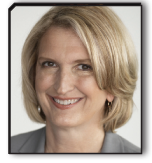
Elisabeth DeMarse
Chairman, CEO,
TheStreet, Inc.
DeMarse orchestrated a financial turnaround for TheStreet, generating $13.5 million in Q2 for an 8-percent year-over-year increase—the company’s first YOY improvement since 2011.
Subscription revenues improved organically. Nearly one-third of new subs were conversions from its free site and the acquisition of The Deal, a content provider focused on the M&A and restructuring markets.
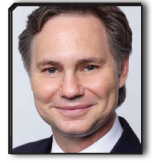
Jason Binn
Founder, CEO,
DuJour Media Group
Binn founded the luxe title in 2012, after heading Niche Media until 2010.
Each issue combines national coverage from high-profile contributors with reporting customized for specific markets, employing what Binn calls a “glocal” model.
DuJour, a controlled-circ publication, carefully targets its audience based on defined criteria like net worth and annual spending on luxury goods.

Cindy Jeffers
CEO, CTO,
Salon Media Group
Salon posted a 43-percent year-over-year gain in net revenue, including a 57-percent increase in ad dollars, in the second quarter of 2013.
Jeffers led the expansion of the site’s editorial offerings with the launch of a news division and new verticals in tech, business and sustainability.
The company has partnered with brands like Siemens and HBO on several custom-built ad solutions.

Julie Hansen
President,
Business Insider
Growing to more than 26 million unique monthly visitors, Business Insider is on track to increase revenue by 80 percent this year.
An expanded advertiser list has been at the heart of the revenue gains—the company’s client roster grew by more than 60 percent.
Hansen also helped launch international editions in Australia and India, with two more planned for 2013.