B-to-B Media Company Bisnow Takes Its Fun Seriously
Irreverence is baked into the company’s $11 million content model.
by Bill Mickey
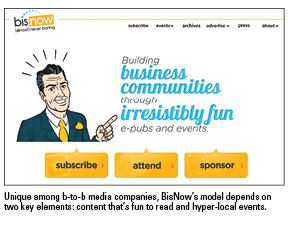
Yes, b-to-b media is mostly straightforward and dry. But one company has spent the last eight years putting humor at the core of its b-to-b media model—and has grown rapidly. Bisnow, founded in 2005 by Mark Bisnow, produces newsletters and summits targeting the local commercial real estate market. It has grown at a 70 percent compounded rate since 2009, says CEO Ryan Begelman.
In 2012, Bisnow made almost $11 million in total revenue. Begelman expects to hit about $14 million by the end of this year.
The company launches newsletters and events targeting regions that have a thriving real estate development community. Instead of Manhattan, think Williamsburg, Brooklyn. Currently, the company is in 22 markets, producing 31 newsletters. Collectively, the newsletters reach about 500,000 subscribers.
Each market has a dedicated beat reporter who works the phones to build sources and news. Newsletter content is primarily people-focused, a tactic that, especially when breaking into a new market, helps the virality of the newsletters. “You still get the facts, but they’re packed into 200 words, and the bulk of it is focused on the people behind it,” says Begelman.
People-First Content Promotes Virality
When a real estate executive is featured in a newsletter, it often gets forwarded around that market’s tight-knit group of developers. According to Bisnow’s media kit, 88 percent of subscribers forward an issue to colleagues.
“We’re still very much focused on original content,” says Begelman. “We don’t sit back and gather news off of RSS and Twitter feeds.”
The fun starts as the newsletter content gets forwarded from the writer to a copy editor and then filtered through a stable of full-time humorists. “They put a little color and flair into everything we do to give it more of a bite,” says Begelman. From there, a top editor polishes the copy. All the newsletters are daily.
But it’s the events that are the main revenue driver, accounting for 85 percent of the company’s topline.
The company produced about 250 events last year, selling about 70,000 tickets. Attendance at each event ranges from 125 to 1,100, depending on the market. Ticket prices average $67.
The newsletter subscribers are key to a market’s event viability. “Once we’ve built a newsletter to 5,000 to 10,000 subscribers it becomes economically feasible to start producing events on a hyper-local level,” says Begelman.
Programming is short. An event starts at 7:00 am, kicking off with an hour of breakfast schmoozing, followed by a 90-minute session featuring a panel discussing the latest industry topics. “We keep the content very short, the key is to get everyone back to the office by 10:30,” says Begelman.
Native From the Beginning
Marketing packages are inherently “native,” combining newsletter display ads and sponsored content with event sponsorships that can include traditional table tops to spontaneous, 30-second man-on-the-street interviews with a sponsor that “interrupt” a panel discussion. Sponsors can also be integrated into the panels.
Up to now, Bisnow has not taken any outside investment, but Begelman hints that might change as the company explores expansion opportunities. “We’re doing our homework now to figure out if we grow by raising capital or keep on bootstrapping,” says Begelman. 