Subscribe to Connections magazine

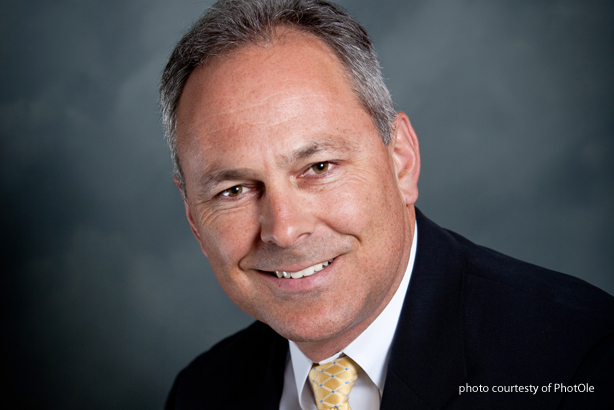
It’s been said that life’s different in the Southern End; and if Rhoads Energy is any sign, so is business. In southern Lancaster County, work is still infused with old-fashioned values and business still has merit based of your father’s reputation.
CEO Michael DeBerdine and his mother Faye Book DeBerdine own a third-generation, small, closely held company. DeBerdine, having literally grown up in the company since his infancy, examines the organization under the legacy of his father, Michael F. DeBerdine. He was the former secretary and president of Rhoads Energy Corp. and though he battled Parkinson’s disease, he continued to work up until his last two years of life. He would sit in his wheelchair as he labored in the office as chairman of the board.
DeBerdine also works under the legacy of Jerome H. Rhoads, the founder of the company who began selling kerosene from the back of a rail car in Lancaster County in 1917.
DeBerdine respects the character of these two men. In fact, even though he’s the number one guy at the company, he still refers to the founder as “Mr. Rhoads” out of respect and he still has yet to be called “Mr. Deberdine” at his company. His predecessors’ actions shaped his leadership style without his examining it.
DeBerdine believes that because the two men ran the company with fairness and hard work that even though they’re gone, if he follows in their footsteps, he’ll be well positioned for future growth.
“It’s just the way I’ve been raised,” said DeBerdine.
Many of the decisions he makes are the way his Dad would have done it or the way Rhoads would have done it. He studied under Rhoads as though he were his grandfather, although he had a true grandfather, Mike, Sr. or the ‘Hey You Guy’ as was his moniker within the company.
Through the men’s collective example, “I learned that I always sleep better at night when I do the right thing. Sure, sometimes it would be easier or less expensive to just do it another way but …we try to challenge ourselves and we challenge our employees to put ourselves in the customers’ shoes,” said DeBerdine.
These days it’s more important than ever to look at decisions under the microscope of how his predecessors would have done it. With little new construction happening his potential customer base is shrinking. DeBerdine has to rely on the company’s 95-year reputation for survival and growth, holding the core business and growing it. DeBerdine’s company nurtures long-term relationships with tons of customers. In this way the company makes incremental income.
But to get there, the company had to develop a long withstanding reputation, which was built on the backs of his father and Rhoads. Their legacy continues to carry the company.
“If we had a bad reputation after 95 years of doing business, that would be a big problem. This business isn’t a flash in the pan activity,” said DeBerdine. “It’s important to do things the right way because I believe if you’re in a place where you’re playing in the grey or your integrity is being challenged, it’s going to catch up with you. I never saw that happen with my Dad or Mr. Rhoads.”
Because of the ethical decisions made by the generations before him DeBerdine is carrying on the history as the oldest locally owned energy company in Lancaster.
“I’m proud of that. I’m proud that we’ve stuck to our core values, that we treat our employees with respect and that we can make a profit,” said DeBerdine. “I think that will carry us in the future. It’s just simple. You don’t have to over think it.”
Although he doesn’t sit back and self-reflect, DeBerdine recognizes the heaviness of his position. His father and Rhoads taught him that people—from management to employees to customers—just want fair treatment. More than 70 mortgages ride on that premise. So when he makes a decision, he thinks back to the lessons that his father and pseudo-grandfather taught him during their years of working together before his father’s death.
“I … follow their lead and try to do what was right,” said DeBerdine.
Although the way in which he does business has changed, the driving force behind it remains constant. His father led by example and taught him that his actions impact others. Still business was different back then. According to DeBerdine in the ’70s there was no such thing as coaching, as is a common practice today.
“You learned by trial and fire and you learned by hard knocks and figuring things out,” said DeBerdine. Back then, “it was, ‘Here’s your job, now do your job.’ Go out with this guy and he’ll show you how to do it. There weren’t coaching sessions. You just watched someone do it and then you’d do it.”
He realized that although the principle was sound, his methodologies needed to change to meet today’s workforce. He recognizes that it’s common practice in today’s business climate to coach and be coached.
Coaching is where someone receives positive support, feedback and advice to improve their effectiveness and reach goals. Sometimes it takes the shape of an informal relationship between someone who has greater knowledge and ability than another. The mentor, so to speak, offers guidance as the protégée learns. It’s a way to get someone from where they are to where they need and want to go.
In stark juxtaposition to how his father taught him through example and trial by fire, DeBerdine has had to adapt. He now takes his management team throughout the company so that they can see first-hand how different offices run. They do so monthly with face-to-face updates. During that time DeBerdine harkens back to the values of his father. He reminds his employees that if they’re not making mistakes they’re not working. He’s teaching his father’s and Rhoads’ values but he’s doing so in today’s terms.
Just like his father, he doesn’t penalize people for stretching and growing beyond their comfort zone. They learn by experience—they just have a coach along the way—and DeBerdine is comfortable with their mistakes because, just like his father let him learn, growing employees has given him his father’s perspective.
“I’d rather work with someone who is making mistakes by growing and stretching than someone who is afraid to make a mistake and is just stuck,” said DeBerdine.
Not only did his father and Rhoads give him the opportunity to learn and grow, but also they led by example. They didn’t tell an employee to do work that was beneath them.
For example, when his father ran the company, he wasn’t above getting in the truck during the ’60s to ride along with the servicemen on challenging calls. At that time there were trucker strikes and his crew had to go into the city every day. He would hop in the truck and ride with the drivers because there were strikers who were attacking the truck and endangering the drivers.
“Here’s the president of the company running the transport that was literally being damaged as it went down the road,” said DeBerdine. “He was a real lead-by-example kind of guy.”
According to oral history, his father was never one to brag. He was a humble man who wasn’t outspoken and he didn’t want to call attention to his efforts. He was the kind of man who took things as they came, was calm and respectful. He was a quiet leader and DeBerdine aspires to that standard, even though he feels he lacks those qualities.
“My Dad led by example and people really rallied around that. If he asked you to run through a brick wall they would say, ‘How many times would you like me to do that?’ And instead he would just show them how to do it,” said DeBerdine. “He was never one to ask anyone to do anything he wouldn’t do.”
DeBerdine’s father was also in the military and although he was never stationed abroad, he had reverence for the soldiers for their sacrifice in WWII, the Korean War and later battles. To show his respect he put flags on cemeteries.
“It became a family tradition and we grew up doing that,” said DeBerdine. “My sister Jennifer Goldbach [the Vice President of Business Development, Benchmark Construction] and I grew up distributing flags for all of the soldiers’ headstones for the Southern End. I didn’t know any different and to this day we still do it with scouting troops.”
But he doesn’t do it because someone told him and his sister to do so; they do it because their father led by example and Rhoads modeled behavior for his father to witness.
The men led by example and so, as a leader, DeBerdine doesn’t “go through life looking back on self-reflective questions,” DeBerdine. “I just live the values that I was brought up with” proving that old-fashioned values and a predecessors’ reputation still pave the way for 21st century success.
Get more from DeBerdine


