Subscribe to Connections magazine
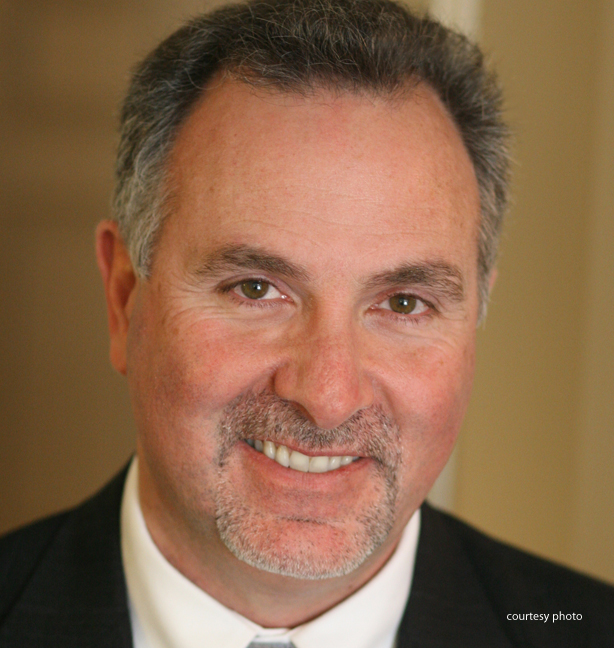

When it comes to innovation at Luthercare profit isn’t the driving factor. But at the office at 600 E. Main Street, in Lititz, the team has mastered coming up with rules and processes that have made the company money during the past 64 years while serving the community’s needs. The local company provides senior and childcare in the area but they’re fraught with local competition. In fact, they’re vying against 19 other retirement communities just in the local area. To stay competitive in a saturated market where all providers offer cutting-edge services, Carl McAloose, president and CEO, has to stay current by using competitive analysis, hiring employees with a heart for servitude, and being unafraid to build for future retirees.
“We’re always looking for ways to come up with new … ideas,” said McAloose.
It’s become second nature for the industry. Not only does McAloose have to fight to stay unique within the saturated market, the company has to stay profitable and still make room for innovation.
“We just live with it … it’s not unusual for us to look for new and better ways. It’s not something we have to adapt to now, it’s something that’s always been in place for us so we’re always looking at our processes and figuring out how to refine them,” said McAloose.
For example, last year McAloose finished an $8 million expansion because the company looked at their facility and the team decided it wasn’t good enough for the future. The expansion wouldn’t generate revenue but it would better position Luthercare to be more competitive in the future market.
“It was a huge upgrade not only for the residents but also for the staff,” said McAloose. “It made us more competitive than we had ever been in the past. It was transformative. It transformed the lives of the residents and gave them the ability to have more common areas, better dining facilities, a theater, a dedicated chapel, and resident run store. They also have outdoor areas with fireplaces and a pub. Residents are as happy to go outside and new people drawn into the facility. I think the usage has increased 100-fold.”
That’s one example of innovation.
The idea became a venture worth taking because the team assessed the environment with employee and resident surveys. The results of those surveys sparked a need for a change.
“We decided it was something that needed to be done. It’s hard to invest in renovation. We do many capital-intensive renovations. However this project gave us the opportunity to not only serve our residents now better but also develop a building that would serve our future clients,” said McAloose. “We talked with the residents about it and said that the things they were enjoying today were decisions that were made 10 to 15 years ago so we’re making decisions now so that people can enjoy the facility in the future.”
In fact, the idea came to fruition in part because McAloose and his team assessed what Baby Boomers are going to want during retirement. McAloose would know. He’s a Boomer himself. Although there is a lot of anecdotal evidence on what Boomers would like for their lifestyle, McAloose isn’t sure if future residents will be able to afford them. The wealth that many would-be residents accrued up until ’08 isn’t available now due to the personal hits they took during the Great Recession. As such, McAloose’s company wouldn’t be able to serve them because clients simply don’t have the funds to pay. Consequently, not only is the company expanding physically, but the teams are also expanding their minds and thinking about how they can impact the quality of care for residents outside of their walls so they can make their services more cost-effective. It’s a pressing problem. The future market is the largest generation so McAloose and his team have to adapt for the future.
“We’re looking at home-based services [to serve Boomers] but we’re cautious now about not just jumping into new ideas. It’s a tumultuous market,” said McAloose.
Innovation for the future is critical and Luthercare doesn’t have autonomous business units on the lookout for new ideas and no employee incentive programs exist for innovation.
Rather McAloose relies on the culture and employees to drive new ideas just because they have a culture of servitude.
“It’s just a call to serve in the Lutheran position. Through our board and through our employees we find the ability and the desire to do more as an organization,” said McAloose. “Profit isn’t the motivator here…the more we can do to hold costs down and expand services for residents is what we do. It’s driven by the desire to serve and serve more.”
McAloose empowers people to tap into their networks—for him it’s Vistage—and for others it may be the Lions Clubs or Lutheran Services in America. All of these organizations plant seeds of thought that could grow into innovation at Luthercare.
Of course, not all great ideas come into fruition. There’s always the potential for a great idea to go by the wayside due to timing, finances, or market shifts.
For example, “we have areas where we were land rich. We’ve had companies approach us for development near adjacent properties to see if it’s something that we could develop together for a common project,” said McAloose. “But we’re price sensitive…we took a good, hard look at some of those ideas … but we couldn’t develop products from it that we could sell [at a price that clients were willing to pay]. We’ve had to walk away from those ideas.”
In the end, according to McAloose’s experience, the best way to stay innovative in a saturated market is to assess the competition, hire employees with a heart of servitude, and be willing to spend the money now to build for the future market’s needs.
Get more from McAloose


