Subscribe to Connections magazine
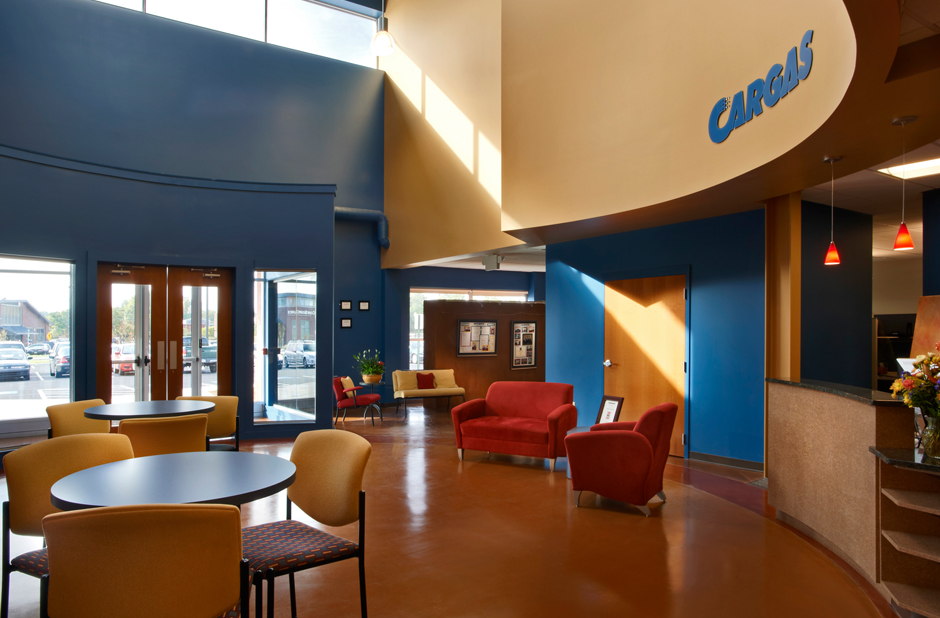
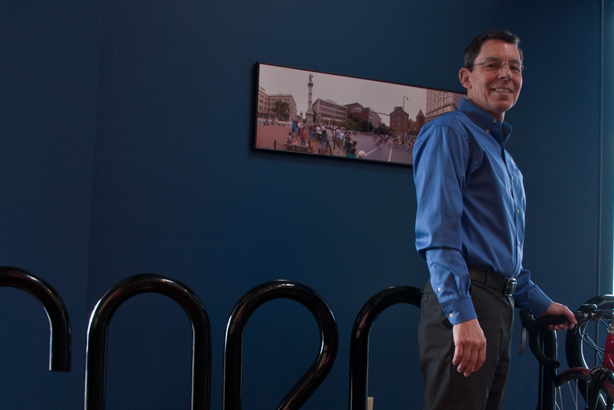
Thanks to the Internet, Chip Cargas can now be “pretty much anywhere in the world” without ever leaving his office. He’s part of a global economy and his business, Cargas Systems, is one of Pennsylvania’s largest Microsoft Dynamics partners. The company develops software for fuel oil, propane, motor fuels and HVAC services. Cargas recognizes that he has unprecedented access to worldwide decision-makers. Although that’s huge potential, he understands the power of harnessing local opportunities first before jumping into a global market.
Cargas does so by bringing on employee-owners with flexible working schedules in lieu of traditional 9 a.m.-5 p.m. employees, focusing on local emerging leadership instead of assigned leadership, and looking at local, small-scale innovation.
Cargas Systems at 1310 Marshall Ave., hires from Lancaster County and affords workers the opportunity to buy into the business and become employee-owners. According to their website, since the first offering in ’98, Cargas reduced his stock ownership from 100 to 54 percent and as a result, the company has been able to attract and keep homegrown talent, which is often a challenge in the tech industry.
It’s interesting to note that employee-owners also volunteer their time to support local organizations and charities. It’s uncertain whether because they take ownership at work [if] they’re more apt to become leaders in the community or if Cargas attracts more community leaders because of their reward system. Regardless of the driving factor, it gets results. The message at one of the Best Places to Work in PA is clear: Take ownership because you make an impact, your decisions matter, and your influence impacts everyone. Right now more than 75 percent of the people at Cargas have employee-ownership status.
“Pretty much everyone at Cargas is a leader in his or her own way,” said Cargas.
This bodes well for the company because trust and confidence in leadership are the best predictors of worker satisfaction. It’s apparent at Cargas that employee-ownership and open book management result in greater engagement because everyone knows where their company stands at all times and they know how their contributions directly impact the bottom line. When they’re high, they’re celebrating together and when the business is in a slump, they take ownership and figure out how to get out of the predicament. They care about Cargas as if they started it up themselves; and in a sense, they become entrepreneurs without the magnitude of the risk.
Cargas himself thinks of leadership itself not in terms of focusing on who reports to whom or assigned leadership. Rather he looks at emergent leadership, people who take responsibility for their actions and want to make an impact.
“I don’t believe you have to have someone report to you to be a leader,” said Cargas. He believes his company is chock full of leaders to take the helm not only at their jobs but who also get on the boards of nonprofits or volunteer for leadership positions within schools.
It’s unclear whether employee-owners are motivated by the incentives they receive at Cargas or are just motivated people, but the fact of the matter is, “people jump in where they’re passionate. I think it’s interesting that when they become a leader at Cargas through employee-ownership, it helps hone their abilities in the community. I know from experience that the opposite is also true. From the boards and committees I have been on during the years, I learned so much…that I was able to take back to the company. It’s mutually beneficial,” said Cargas. “Not only does [volunteer work] hone each talent but it’s an opportunity to do great things in the local community.”
This directly impacts the quality of life for the broader community while bringing new ideas back to the company.
There is a clear projection of their company’s leadership values and as such they’re often able to find valuable partnerships with local companies and build long-term, mutually beneficial relationships. In fact, Cargas has had a few local companies that have been with them for more than a decade.
“We care about their success and they care about ours,” said Cargas. “Those are the ones we treasure and we’re always striving for that level of partnership.”
What’s important about these partnerships—especially the decade-long ones—is that historically Cargas offered local companies computer service and as the company grew and began making their own software products, their first dozen or so companies were local or semi-local. These partnerships afforded mutually beneficial opportunities. Local companies were guinea pigs, in a sense, to test out new ideas. Cargas had the opportunity to work out the kinks in the programs on a local level and get face-to-face feedback in real-time and in return their customers received cutting-edge products and services.
“I think if you can have an open and honest relationship with your customers then they will tell you what they really find valuable and what they find less valuable,” said Cargas. “You just have to keep listening to that feedback.”
In this way Cargas continually finds added value for its customers. It gives the company an opportunity just to listen, “and it’s so much easier when people are local,” said Cargas.
As a result the local community helps drive the company’s global value. Once they develop an idea on a small scale, they can grow it through demos, through the phone and Internet, and to companies across the country, and then the world.
Yes, technology, communication and commerce have leveled the global economy and yet before scaling Cargas believes building strong relationships—from employees-owners to clients—in his own backyard are some of the best stones for a foundation on which to build a thriving business and make the local company a strong global contender.
Get more from Cargas


